

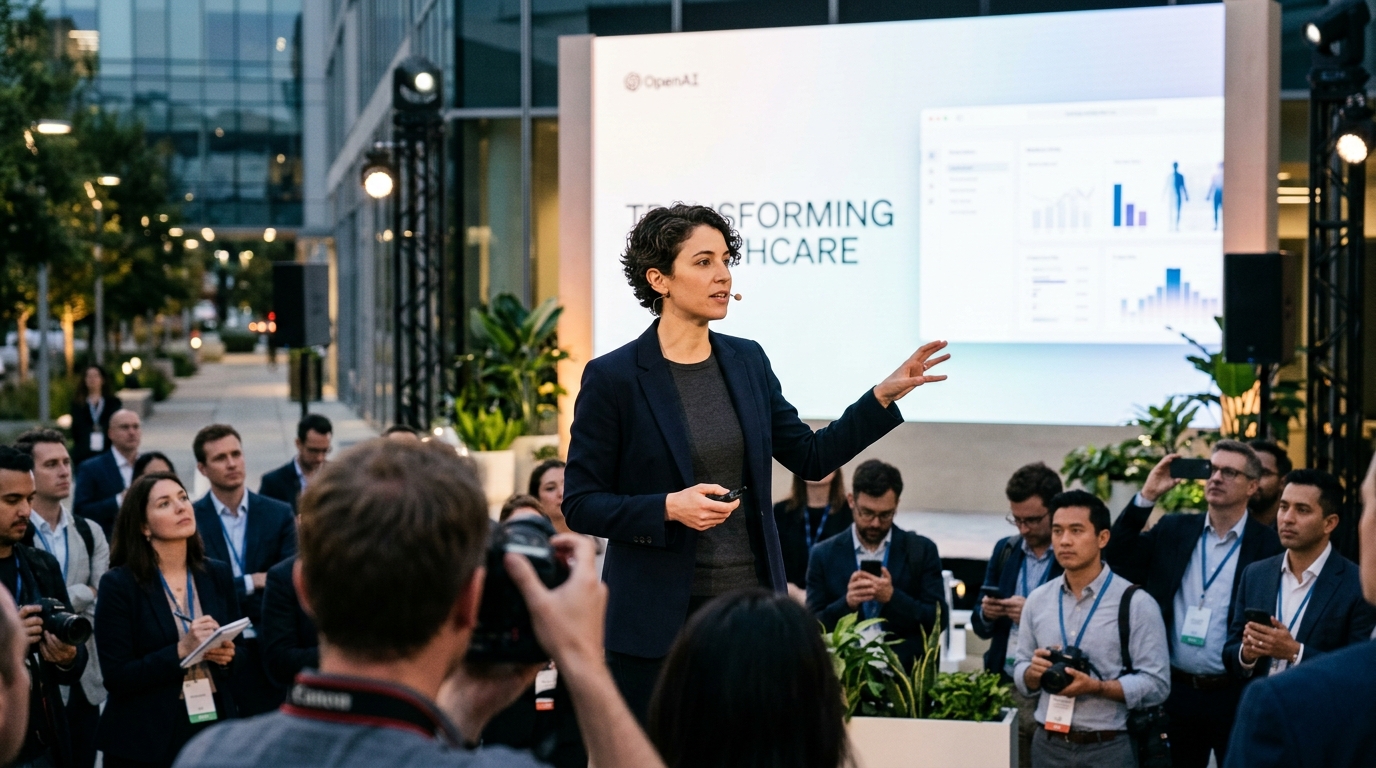
The transition of OpenAI from a niche research organization to a global tech conglomerate with products touching every aspect of daily life continues unabated. However, its most ambitious and perhaps most critical mission is not about writing essays or generating images, but about human life itself. At the heart of this strategy is Andrew White, one of the company's leading researchers, who envisions ChatGPT not merely as a digital assistant, but as a healthcare "giant" that will reshape the medical landscape.
Expertise in the Service of Life
For years, artificial intelligence in healthcare was limited to narrow, specialized models that could identify tumors in X-rays or predict protein folding. The approach of White and OpenAI is radically different. By leveraging the power of Large Language Models (LLMs), the company seeks to create systems that can understand a patient's entire medical history, synthesize data from thousands of scientific studies, and suggest personalized treatment plans in real-time.
Andrew White, with a background in chemical engineering and bioinformatics, understands that biology is, in essence, an information system. "If we can encode the language of life the way we encoded human language, the possibilities are limitless," he has stated in recent interventions. OpenAI is not just trying to build a "smart" medical manual, but a partner for the physician that will reduce administrative burdens and eliminate diagnostic errors caused by fatigue or information overload.
The Partnership with Color Health and the Future of Oncology
One of the most tangible examples of this effort is OpenAI's partnership with Color Health. The two companies developed an "AI assistant" specifically for oncology. This system utilizes the GPT-4o model to analyze patient data and help doctors make faster decisions regarding cancer screening and treatment. According to early data, the use of AI reduced the time required to prepare a treatment plan from weeks to just minutes, while ensuring that no critical information is overlooked.
This application represents the "spearhead" of White's vision. The idea is that ChatGPT can function as a care coordinator, monitoring the patient 24/7, answering queries, reminding them of medication, and alerting the treating physician only when a real need arises. This marks a shift from reactive medicine (treating when we get sick) to proactive and continuous monitoring.
Challenges, Ethics, and the Specter of Hallucinations
Despite the excitement, the path toward universal adoption of AI in healthcare is fraught with obstacles. The primary issue remains reliability. In medicine, an AI "hallucination" is not just a funny mistake; it is a matter of life and death. White and his team are working feverishly on "grounded generation" techniques, where the model is required to cite sources from approved medical protocols for every suggestion it makes.
Furthermore, there is the issue of data privacy. Managing sensitive medical information by a private technology company raises serious questions about security and the potential use of this data for other purposes. While OpenAI claims its healthcare models are fully HIPAA-compliant, regulators in the US and Europe remain cautious, demanding more transparency in how the AI arrives at a diagnosis.
The Doctor of the Future: Human and Machine
Andrew White's ultimate vision is not the replacement of doctors, but their empowerment. In a world where healthcare systems are collapsing under the weight of understaffing and aging populations, artificial intelligence offers a lifeline. The healthcare "giant" envisioned by OpenAI could democratize access to high-level medical advice for millions who currently lack basic care.
However, the success of this venture will be judged by trust. If OpenAI can convince the medical community and patients that ChatGPT is a reliable and ethical ally, then June 19, 2026, will be remembered as the era when technology truly began to heal the world. The challenge is immense, but the stakes—human health itself—are worth every effort.





