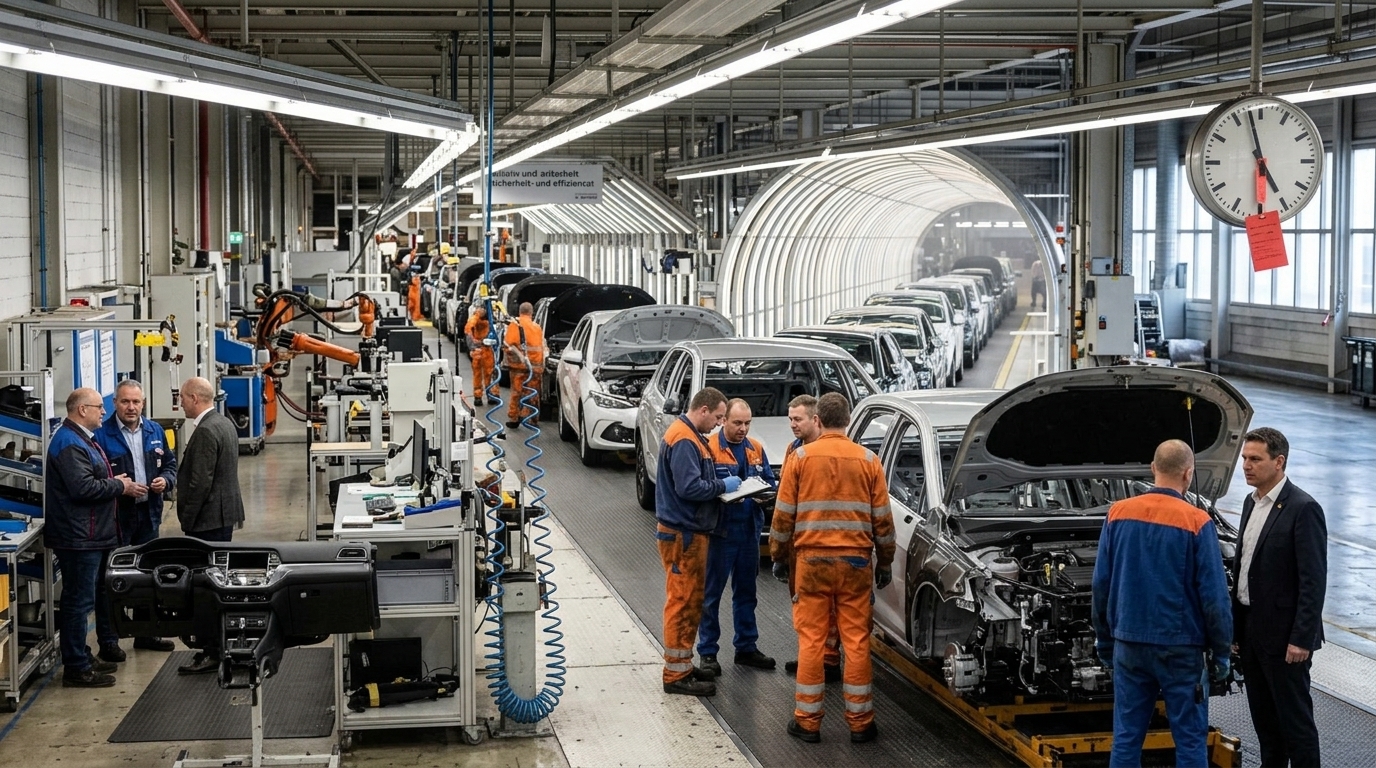
The European automotive industry, which accounts for 7% of the EU's GDP and provides nearly 13 million jobs, is currently facing an existential challenge. Data from the German consultancy Roland Berger indicates that 30% of the 260 assembly plants for vehicles, engines, and batteries across the EU and the UK are at risk of shutting down.
Declining Production and Excess Capacity
Before the pandemic, European facilities produced 21 to 22 million vehicles annually. Projections now suggest that output will level off at 16 to 17 million units for much of the coming decade. This annual shortfall of 5 million vehicles represents a fundamental shift in the market rather than a brief downturn. Since 2019, passenger car registrations in the EU have fallen by 17%, while overall vehicle sales across the continent have dropped by 20%.
The Impact of Asian Competition and the EV Transition
The industry is under intense pressure from Asian manufacturers, who saw their European market share jump from 5% to 9.5% in a single year. Their influence is even more pronounced in the plug-in hybrid sector, where they hold over 25% of the market. These competitors benefit from significant advantages, including 25% to 30% faster development cycles and production costs that are 20% to 30% lower than their European counterparts.
The shift toward electric vehicles (EVs) has exacerbated these structural difficulties, acting as an "amplifier" for issues like industrial fragmentation and lost competitiveness. With European overcapacity estimated at 30%, manufacturers are taking drastic measures:
- Nearly 150,000 job cuts have been projected through 2035.
- Volkswagen is evaluating the potential closure of up to four German plants.
- Companies like Stellantis and Renault are relocating some production to overseas sites with lower operational costs.
Global Trade Dynamics
International trade tensions are further complicating the landscape. While US tariffs restrict Chinese vehicle imports, Europe’s relatively lower barriers have led to a diversion of trade toward the region. By 2026, China could be exporting nearly 10 million vehicles to the EU, cementing its position in a market that is struggling to adapt.