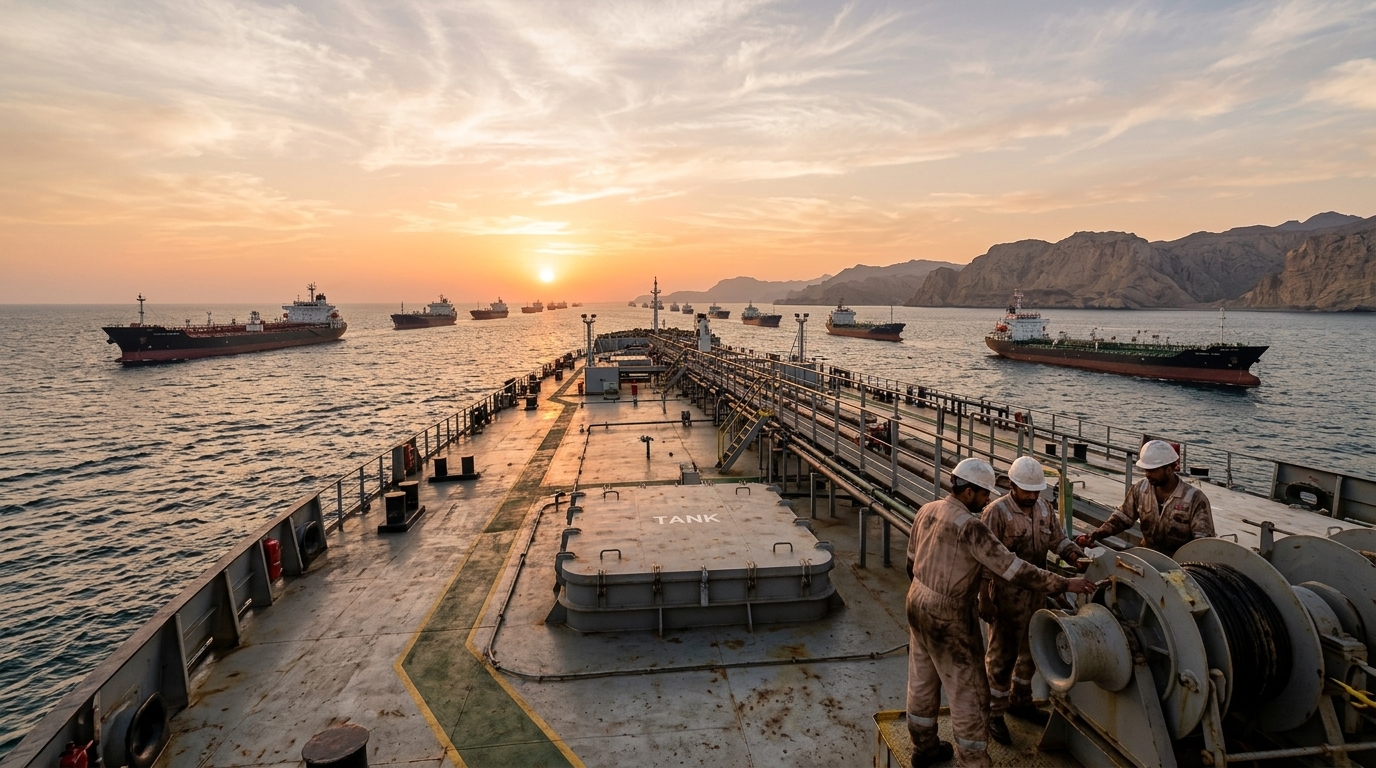
In early July 2026, the global energy market is facing a significant structural shift. TotalEnergies, one of the world's leading energy giants, has made a move that many analysts consider the beginning of a new era for oil supply: the distribution of millions of barrels of Iraqi crude oil with immediate delivery capability to the Asian market. This development, centered on flows through the Strait of Hormuz, is not merely a commercial act but a powerful signal of shifting balances between producers and consumers.
TotalEnergies' Strategy and Iraqi Crude
The French major's decision to increase the supply of Iraqi oil—specifically the Basrah Medium and Basrah Heavy grades—comes at a time when Asia, led by China and India, is seeking cheaper and more direct energy sources to fuel its industrial recovery. TotalEnergies is leveraging its long-term contracts with Iraq’s State Organization for Marketing of Oil (SOMO), turning its access to physical product into a potent tool for spot market influence.
The fact that this oil is available for "immediate delivery" means that Asian refiners can bypass the time-consuming processes of futures contracts, exerting direct downward pressure on benchmark prices like Brent and Dubai Crude. This flood of supply adds to an already saturated market, where US inventories remain high and European demand shows signs of fatigue due to the slow but steady transition toward green energy.
The Geopolitical Weight of the Strait of Hormuz
The Strait of Hormuz remains the world's most critical artery for the oil trade. With flows returning to full capacity and geopolitical tensions in the region subsiding (at least temporarily), supply security has improved. However, the increased tanker traffic from Iraq to the East highlights a new reality: the Middle East is decisively pivoting toward Asia, leaving the West in a state of energy re-evaluation.
Iraq, as OPEC's second-largest producer, is attempting to maximize its revenues despite production cut commitments. Collaborating with international majors like TotalEnergies allows Baghdad to funnel its oil into international markets with greater flexibility. However, this creates friction within OPEC+, as the increased supply from Iraq undermines Saudi Arabia's efforts to keep prices above the $80 per barrel mark.
Impact on International Prices and the Global Economy
Analysts warn that if this trend continues, we will see a prolonged period of suppressed prices. For importing nations, including Greece and most EU states, this could mean relief from inflationary pressures in transportation and manufacturing. However, falling oil prices are often a double-edged sword, as they can slow down investments in renewable energy, making fossil fuels the most economically attractive option once again.
Furthermore, TotalEnergies' move highlights the role of the "Oil Majors" as market regulators. It is no longer just states that determine energy geopolitics, but also the corporations that manage the supply chain. TotalEnergies' ability to move vast quantities of crude from the Persian Gulf to refineries in Shanghai or Mumbai within days changes the game for traders worldwide.
Conclusions for the Future
As we move through the second half of 2026, the oil market appears to be entering a phase of "abundance" that stands in stark contrast to the shortage forecasts that dominated a few years ago. The return of Hormuz flows and the aggressive placement of Iraqi oil in Asia are clear signs that competition for market share is more intense than ever. The balance of power is shifting, and the players with the best logistical infrastructure will be the ones to set the price of "black gold" in the coming years.