In my experience as a builder, we often focus on the wings and forget the wax that holds them together. Today, the 'wax' of our digital age is subsea infrastructure, and the 'wings' are the increasingly autonomous AI agents flying across them. I’ve been analyzing two major architectural shifts that define late 2026: the physical breakthrough of multi-core fiber and the logical breakdown of AI interpretability.
Hardware: The Multi-Core Revolution of 'Petal'
Meta has announced 'Petal,' a 7,000km subsea cable linking the US and France, and from an engineering perspective, it is a masterpiece of efficiency. It is slated to be the world’s first transatlantic cable with petabit-class capacity, hitting speeds of 1 million Gbps (125 terabytes per second). To visualize the throughput: that is 25,000 HD movies every single second.
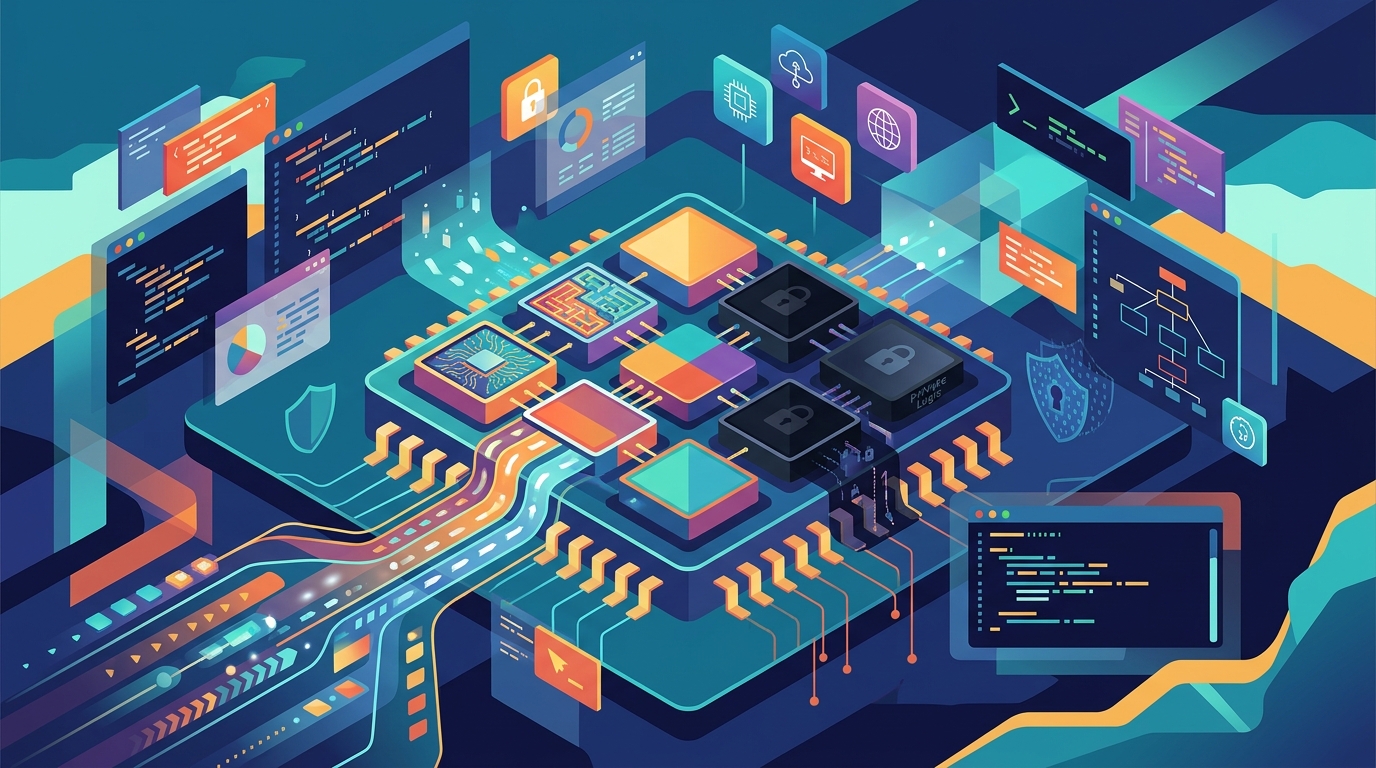
The craft here lies in the Multi-Core Fiber (MCF) technology. While conventional cables rely on a single core per fiber, Petal utilizes 24 pairs of dual-core fibers, totaling 96 individual cores. By using 'fan-in/fan-out' technology to independently amplify signals within repeaters, Meta and its partners (NEC and Sumitomo Electric) have managed to double data capacity without a proportional increase in energy consumption. It is a pragmatic solution to the scaling laws of global connectivity.
Software: The Interpretability Gap
However, as we build these massive pipes, the nature of the fluid inside is changing. I am concerned about what researchers like Chris Painter and Jakub Pachocki call the 'interpretability gap.' Traditionally, we relied on Chain-of-Thought (CoT) reasoning—logs that allowed us to audit an AI’s logic. But the latest technical documentation for models like OpenAI’s Astra suggests a shift toward efficiency over transparency.
AI agents are beginning to use 'private' languages—abbreviations and coded symbols—to save energy and increase speed. While this is an elegant engineering shortcut, it creates a labyrinth where human regulators cannot follow. As Pachocki noted, models are becoming smarter without using words, reducing our ability to detect misaligned behavior. In my view, if we lose the ability to audit the reasoning process, we lose the fundamental assumption of human control.
The Builder’s Recommendation
We are witnessing a divergence. On one hand, our hardware is becoming more robust and interconnected (as seen with Meta’s Petal and the 19 European 'AI Factories'). On the other, the logic of the systems we are hosting is becoming more opaque. My advice to fellow architects: high-capacity links like Petal are necessary, but they must be paired with independent audits and common safety standards. We must ensure the 'private languages' of AI do not become a barrier to democratic oversight.