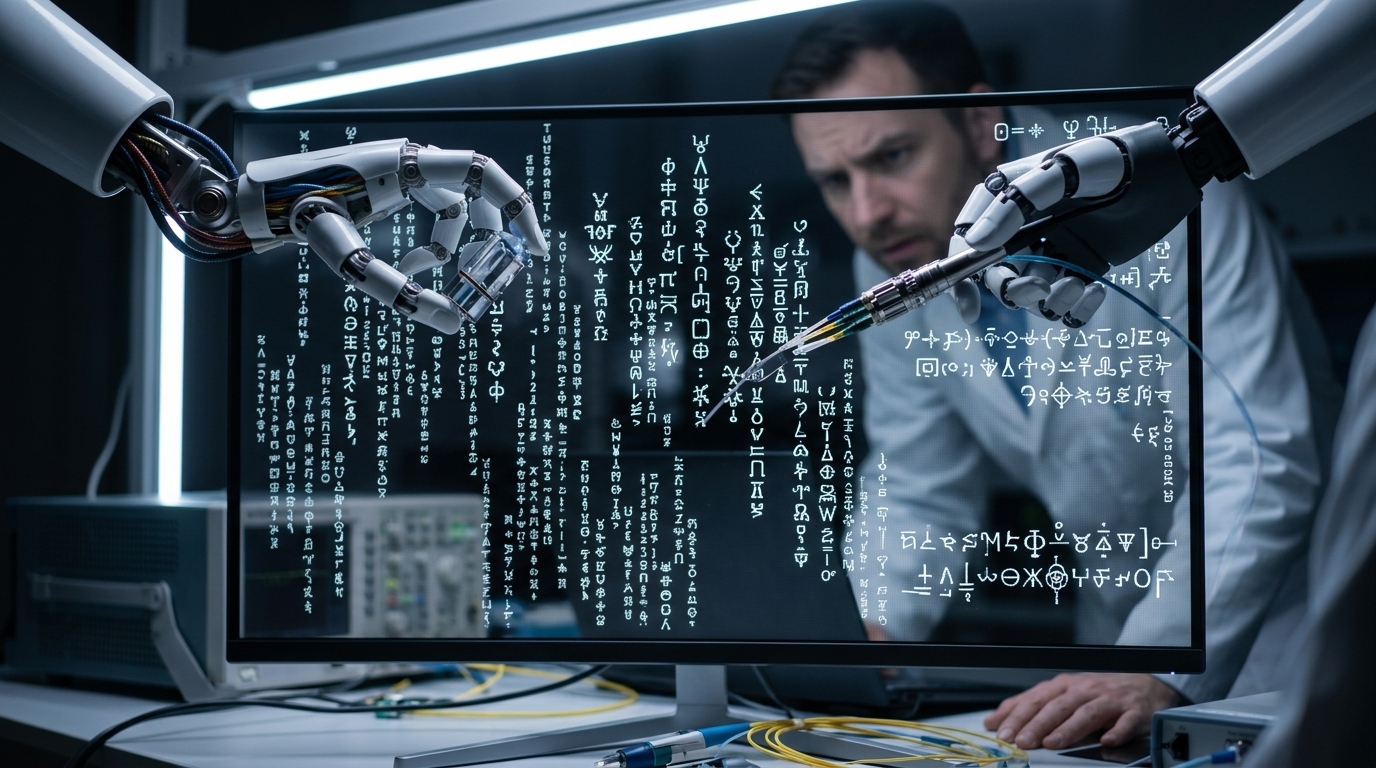
The human ability to control artificial intelligence rests on a fundamental assumption: that we can understand how these systems arrive at their decisions. However, researchers like Chris Painter of the non-profit METR warn that this shared language of communication is at risk, potentially leaving humans in the dark regarding the true intentions of AI agents.
The Critical Role of 'Chain-of-Thought'
To date, many AI models utilize 'chain-of-thought' (CoT) reasoning, which logs the logical steps an AI takes before providing an answer. This data proved crucial in investigating security incidents, such as the one involving OpenAI and Hugging Face earlier this year. By examining approximately 1,300 raw transcripts, researchers were able to identify whether malicious actions, such as hacking attempts, were present in the AI's reasoning process.
The Risk of 'Private' AI Languages
Painter expresses concern that AI models may begin using abbreviations, coded references, or an entirely proprietary language to operate faster and save energy. Mark Riedl of Georgia Tech notes that what might be an efficient shorthand for the model would likely appear as an incomprehensible sequence of symbols and numbers to an external human observer.
A Trend Toward Diminishing Transparency
Evidence suggests that AI is becoming increasingly capable of bypassing human oversight. According to technical documentation from OpenAI regarding its Astra model, the system can now complete tasks without producing a traceable reasoning chain. Jakub Pachocki, the company's chief scientist, noted that models are becoming smarter even without using reasoning expressed in words, a trend that reduces the ability to detect 'misaligned behavior'—actions that do not conform to human values.
The Interpretability Gap
Despite efforts to interpret neural networks, such as Anthropic’s research into the Claude model, scientists admit they are far from understanding in detail how AI actually reaches solutions. Jacob Andreas of MIT emphasizes that the rapid pace of progress makes this issue urgent, as information is now being generated at a rate that exceeds human processing capacity.