

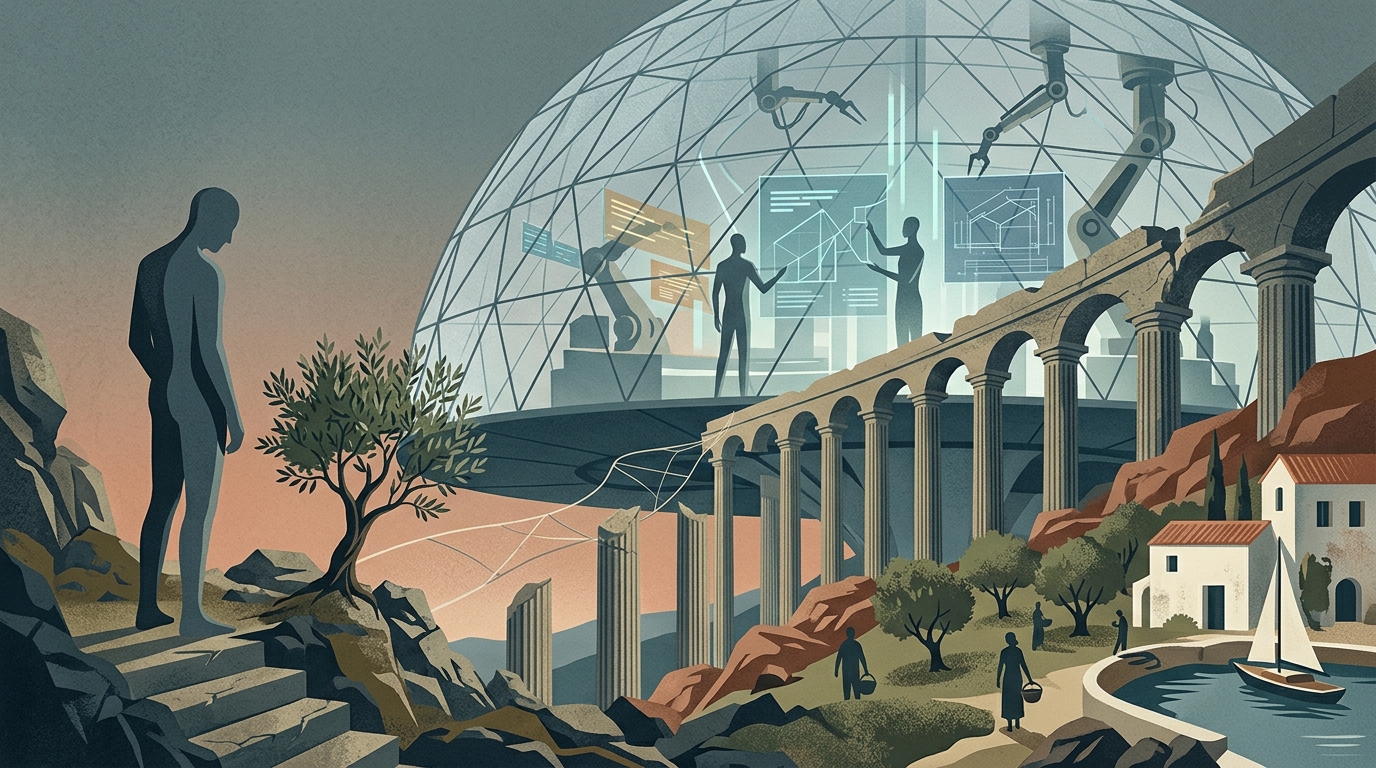
I have often thought that the greatest danger in our modern age is not the technology itself, but the stories we tell ourselves about it. This week, a survey from Anthropic caught my eye: their own employees expect AI to handle 80% of their tasks by 2030. Their CEO, Dario Amodei, even calls AI the "ultimate general substitute" for human labor. It is a bold, perhaps even hubristic, vision that reminds me of the ancient myths of automated servants—but we must ask ourselves: what is lost when we substitute the human for the machine?
The Illusion of Perfection
As a journalist, I am particularly wary of what experts are calling the "illusion of perfection" in AI translation. We see systems processing trillions of words, yet studies show that up to 27% of AI-generated content still requires editing. In critical fields like medicine, a simple mistranslation of a symbol—confusing "micro" for "milli"—could be fatal. I believe we are at risk of being seduced by smooth prose that masks significant semantic errors. If we treat AI as an absolute substitute without human oversight, we are not achieving efficiency; we are inviting chaos.
"AI is not a substitute for specific human jobs, but rather a general substitute for human labor." — Dario Amodei, Anthropic CEO
Sovereignty and the Mediterranean Path
While the giants in the US and China battle for industrial dominance—with China now accounting for 54% of global robot installations—I find hope in our own corner of the world. The recent strategic alliance between Greece and Cyprus, discussed at the Business and Innovation Roundtable in Nicosia, shows a different way forward. Instead of chasing the "ultimate substitute," our leaders are focusing on converting digital infrastructure into real economic value and developing new skills for our workforce.
Europe’s strategy of "data sovereignty" and the creation of "AI Factories" suggests that we understand something the Silicon Valley dreamers might have forgotten: technology must serve the state and its citizens, not the other way around. Whether it is France grappling with a $4 trillion debt or Canada facing internal divisions in Alberta, the stability of our democracies depends on precision, not just automation. I think we must remain the masters of our own context. We cannot let an algorithm interpret our culture, our laws, or our labor without a human hand at the wheel.