In the heart of Paris, a team of scientists and entrepreneurs is attempting what many considered impossible just a few years ago: building a European counterweight to Silicon Valley's dominance. Mistral AI, the startup that has become the emblem of the continent's technological ambitions, is reportedly in advanced talks to raise $3.5 billion. This move is not merely about the survival of a startup; it represents a strategic effort to establish an autonomous European AI infrastructure.
The Battle for Compute Power
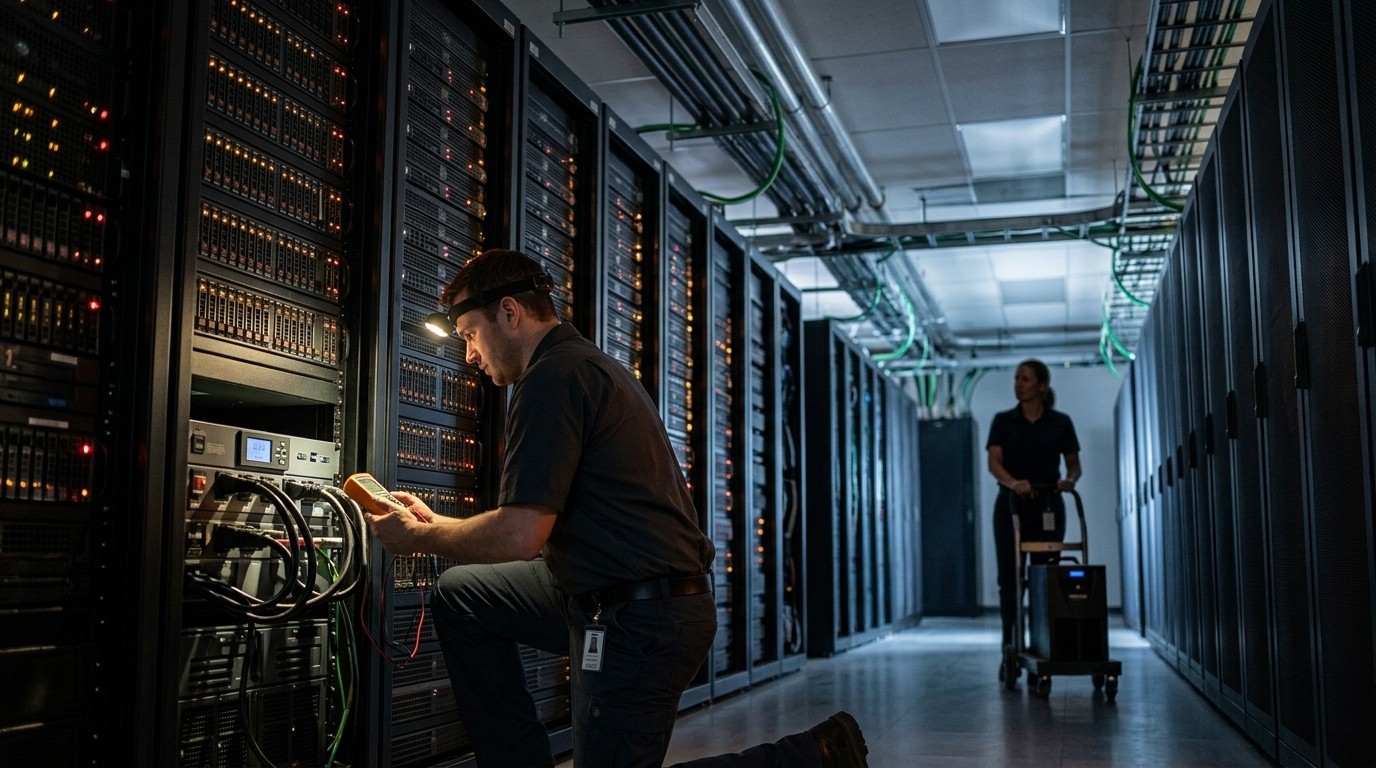
The primary hurdle for any AI firm today is not just the sophistication of its code, but access to raw computing power. The $3.5 billion Mistral seeks is largely earmarked for securing latest-generation processors from Nvidia and leasing massive data center capacity. In the realm of Large Language Models (LLMs), scale is paramount, and training models capable of rivaling GPT-4 or Claude 3 requires capital that has traditionally been the sole province of American tech giants.
Mistral, however, champions a different philosophy. By promoting 'open-weight' models, it allows developers and enterprises to run AI on their own infrastructure, ensuring data sovereignty and privacy. This approach has resonated deeply with European industries, which are often reluctant to entrust sensitive corporate data to American-owned cloud services.
Political Backing and the Geopolitical Chessboard
Mistral's meteoric rise is no accident. It enjoys the staunch support of the French government and President Emmanuel Macron personally, who views the company as the "national champion" destined to lead Europe into the fourth industrial revolution. As the European Union implements the AI Act, it seeks to balance regulation with innovation. Mistral serves as living proof that Europe can produce cutting-edge technology within the framework of its legal and ethical values.
- Strategic Autonomy: Reducing reliance on Microsoft, Google, and Amazon.
- Energy Efficiency: Developing models that deliver high performance with lower environmental impact.
- Cultural Nuance: Better alignment with European languages and diverse cultural contexts.
"We aren't just building a company; we are building Europe's digital future," say sources close to the leadership.
Challenges and the Shadow of Silicon Valley
Despite the optimism, the path forward is fraught with challenges. Mistral has already accepted investment from Microsoft, a move that raised eyebrows in Brussels. Critics question whether a European firm can remain truly independent when it relies on American capital and American-made chips. Furthermore, the war for talent is brutal. Salaries offered by OpenAI and Google in San Francisco often triple what is available in Paris, forcing Mistral to rely on its mission-driven culture to retain top-tier researchers.
The new $3.5 billion funding round will also be used to scale the company's commercial operations. Mistral must prove it can translate technological excellence into sustainable revenue by attracting major enterprise clients from Europe's banking, manufacturing, and pharmaceutical sectors.
Conclusion: An 'Airbus Moment' for AI?
Analysts are increasingly comparing Mistral to the creation of Airbus in the 1970s. Just as Europe united then to challenge Boeing's aerial supremacy, Mistral is now expected to be the rallying point for European AI. The success or failure of this venture will determine whether Europe remains a mere consumer of digital services or emerges as an equal player on the global stage. $3.5 billion is the entry price for a seat at the table of the powerful.