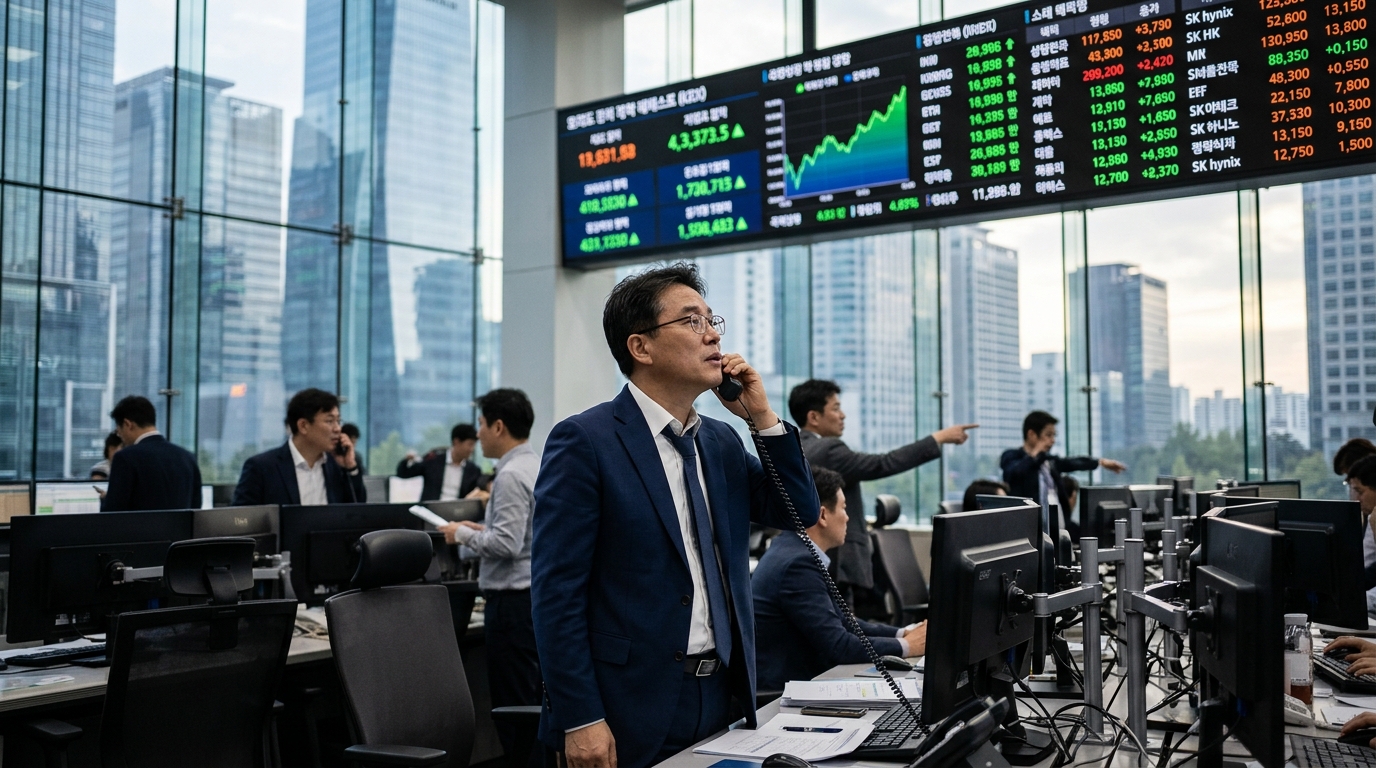
In an era of global economic uncertainty, South Korea is emerging as the preeminent victor of the digital revolution. According to the International Monetary Fund’s (IMF) latest World Economic Outlook update for July 2026, the East Asian nation received the most significant upgrade to its growth projections among the world’s 30 largest economies. This development is far from accidental; it is the direct consequence of an insatiable global demand for high-end semiconductors, which serve as the central nervous system of Artificial Intelligence (AI) systems.
The Semiconductor Engine and the Memory of Growth
The primary catalyst behind this impressive upgrade is South Korea’s dominance in the High Bandwidth Memory (HBM) market. As global tech giants scramble to construct massive data centers to train and deploy generative AI models, the demand for specialized memory products from industry leaders like Samsung Electronics and SK Hynix has reached record levels. The IMF highlights that the country’s exports are not merely recovering; they are undergoing a structural transformation.
Unlike previous growth cycles that were heavily reliant on consumer electronics and cyclical retail demand, the current surge is fueled by infrastructure investment. This shift means that South Korean exports are less sensitive to fluctuations in consumer spending and more tethered to the long-term strategic capital expenditures of Big Tech firms. By becoming an indispensable partner in the AI supply chain, South Korea has built a formidable economic buffer against external volatility.
Geopolitical Resilience and Emerging Challenges
The IMF’s upgrade arrives at a critical juncture where conflicts in the Middle East and energy price instability continue to dampen the outlook for most developed economies. However, South Korea appears to be decoupling from this trend. The Fund’s analysis suggests that the high value-added nature of tech exports is effectively offsetting the increased costs of importing energy and raw materials.
- Domestic consumption is showing signs of stabilization, bolstered by job growth in high-tech sectors.
- Government-led initiatives, including "AI clusters" and tax incentives for semiconductor R&D, are beginning to yield tangible dividends.
- Strategic diversification of trading partners is mitigating reliance on single markets, though China remains a pivotal player.
Nevertheless, the report cautions that the nation is not immune to risks. Intense competition from Taiwan’s TSMC and the aggressive industrial policies of the U.S. and the EU to reshore chip manufacturing present long-term strategic threats. Furthermore, South Korea’s demographic crisis remains a "ticking time bomb" that could undermine growth over the next decade if not addressed through radical automation and immigration reforms.
The Future: Transitioning from Hardware to Software
To maintain this momentum, Seoul is now looking to expand beyond hardware dominance. The government is actively promoting the development of domestic AI software solutions and applications in sectors like healthcare and autonomous driving. The IMF notes that the success of this transition will determine whether the current boom is a transient cycle or the dawn of a new golden era for the Korean economy. The ability to innovate across the entire AI stack will be crucial for sustaining the high growth rates projected for 2026 and beyond.
"South Korea is not just manufacturing chips; it is building the foundations of the 21st-century global economy," the report emphasizes.
In conclusion, the IMF’s upgrade is a resounding vote of confidence in South Korea’s economic model. In a world increasingly hungry for computational power, the nation that holds the keys to production is uniquely positioned. The challenge for Seoul will be to translate this technological edge into sustainable, inclusive prosperity for all its citizens while navigating the complex geopolitical landscape of the late 2020s.