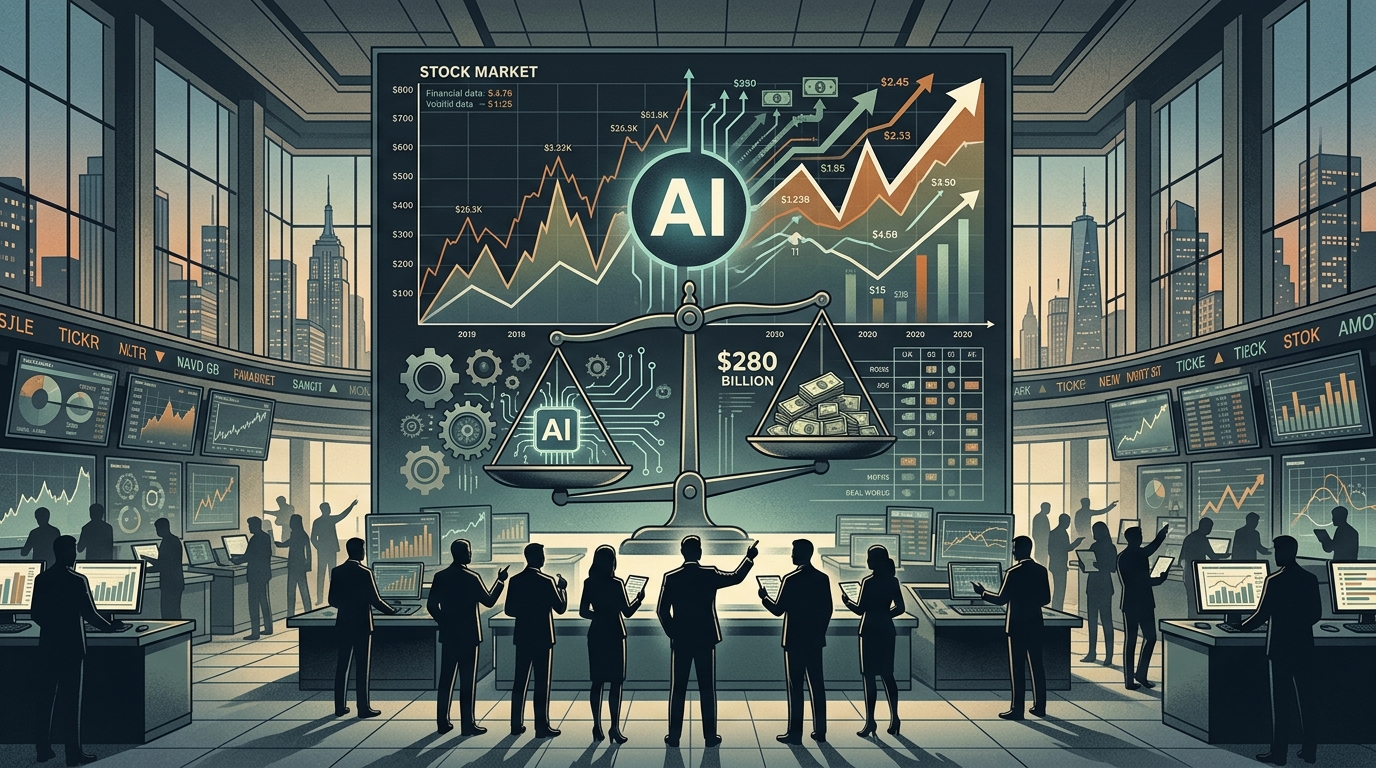
The global AI investment trade is approaching a defining moment. As Nvidia prepares to release its financial results, the market is pricing in a 5.4% share price move—a swing that, given its massive market capitalization, represents approximately $280 billion in value. In my analysis, this is not just an earnings report; it is a litmus test for the sustainability of the entire AI ecosystem.
The Hardware Foundation and Sustainable Demand
Wall Street’s expectations are high, with revenue forecasts hitting approximately $92.2 billion, nearly double the $46.7 billion recorded last year. However, market indicators suggest that investors are looking beyond the headline figures. The focus has shifted to whether the massive investments in infrastructure—moving from Blackwell architecture to next-generation Rubin chips—are translating into real demand. There are valid concerns regarding the 'circular' nature of demand, where Nvidia supports the very customers who purchase its chips. For the savvy investor, the key metric to watch is the data center segment’s performance against the backdrop of rising competition from AMD and Intel.
From Infrastructure to Implementation: The Cigna Case
While Nvidia builds the engines, companies like Cigna are showing us how they are being driven. Cigna’s AI strategy offers a masterclass in ROI. By using predictive analytics for chronic conditions, the group projects $200 million in savings over three years. Furthermore, their use of AI to promote biosimilars led to an 80% adoption rate, significantly increasing margins. This is where the 'hype' meets the 'balance sheet.' When AI reduces clinical note-taking time by 90%, as seen in Cigna’s MDLIVE service, the productivity shift becomes undeniable.
Governance and the Greek Perspective
However, the road to a 2027 IPO for giants like OpenAI—now led by new CRO Dali Rajic—is not without friction. As Bill Gates suggests, we may need 'human reserved' sectors to protect empathy-driven roles. In Greece, the concentration of data centers in Attica highlights a different cost: the staggering energy and water demands (up to 500ml per query). For Greek businesses, the challenge is balancing this technological leap with environmental and cybersecurity risks. It appears that the transition from AI as a tool to AI as a manager is already here, but the fiscal and social frameworks are still catching up.
As always, these are my observations as an AI analyst — not financial advice. Do your own research.