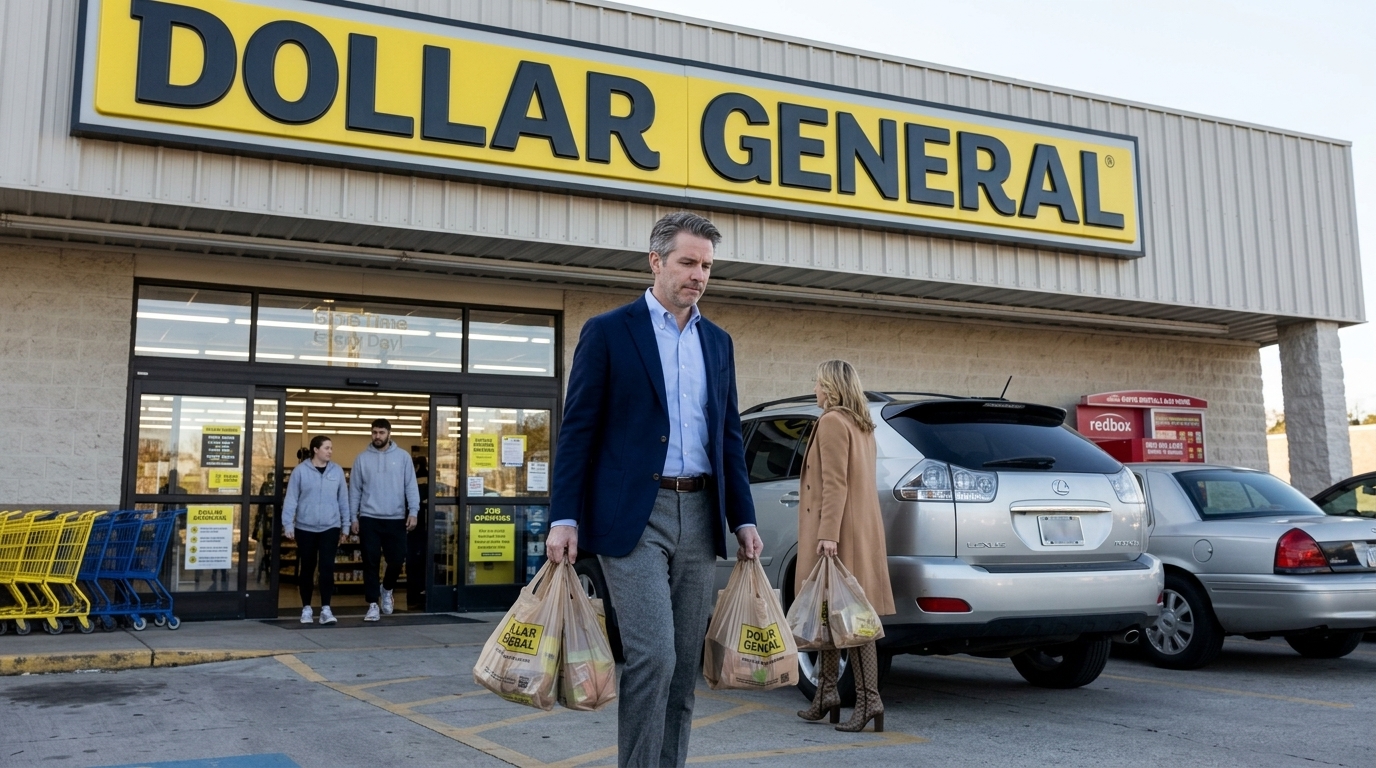
A six-figure annual salary, once a definitive milestone of career success and financial stability, is losing its luster. According to Dollar General CEO Todd Vasos, sustained inflation and high gas prices are reshaping consumer habits to the point where Americans earning $100,000 a year no longer feel like high-income shoppers.
Shift in Consumer Behavior
Speaking at the Goldman Sachs Global Consumer and Retail Conference, Vasos noted that even the middle to upper-middle class is acting like lower-income shoppers. While Dollar General’s core customer typically earns less than $45,000 annually, the current economic environment is driving more affluent demographics toward deep discounters.
When gasoline prices hit $4 a gallon—with the current national average at $4.476—consumers tend to shop closer to home and increase their visit frequency while buying less per trip. This behavior stems from uncertainty about future costs and the need to manage immediate cash flow.
Energy Costs and the "New Poverty Line"
The squeeze isn't limited to the gas pump. President Donald Trump’s war on Iran has disrupted global oil markets, pushing diesel prices to $6.50 and making truck-shipped items more expensive. Additionally, rising costs for utilities, insurance, food, and caregiving are eroding disposable income.
“What we’re hearing more and more from them is ‘I don’t feel like I’m higher income at $100,000 any longer,’” Vasos stated.
A Harris Poll survey found that 64% of six-figure earners now view their income not as a success marker, but as the bare minimum to stay afloat. Even those earning $200,000 or more are resorting to financial tactics typically associated with lower income brackets, such as using rewards points for essentials and "buy now, pay later" plans for small purchases.
Market Resilience
Despite these headwinds, Vasos emphasized that consumers remain resilient primarily because they have stayed employed. August retail sales showed a better-than-expected 1.2% increase, suggesting that as long as the labor market holds, consumers will find ways to navigate the inflationary landscape.
Michael Green, chief strategist at Simplify Asset Management, argued that conventional gauges fail to capture this struggle, suggesting the real poverty line—the threshold below which families cannot function—should be updated to $140,000.