In a move that sends shockwaves through the foundations of European industry, Volkswagen (VW) has reportedly decided to terminate its high-profile partnership with tech giant Bosch in the field of automated driving. According to a report by the newspaper Bild, this decision is not merely a business disagreement, but a complete overhaul of the Wolfsburg-based group's strategy. VW is now seeking salvation in more agile frameworks and technological partnerships beyond traditional German borders.
The Chronicle of a Foretold Divorce
The partnership between VW and Bosch began with high expectations in 2022. The goal was to develop software for Level 2 and Level 3 autonomous driving, which would be integrated into the Volkswagen Group's vehicles through its subsidiary, Cariad. However, Cariad evolved into an 'Achilles' heel' for the group. Constant software development delays led to the postponement of flagship models from Porsche and Audi, causing internal friction and the dismissal of former CEO Herbert Diess.
Bosch, for its part, as the world's leading automotive supplier, attempted to provide the necessary industrial scale. However, the clash of two corporate cultures—Bosch's traditional engineering approach and VW's need for a rapid transition to the 'Software Defined Vehicle' (SDV)—created an unwieldy structure that could not compete with the speed of Tesla or Chinese companies like BYD and Xiaomi.
The Pivot to Rivian and the New Architecture
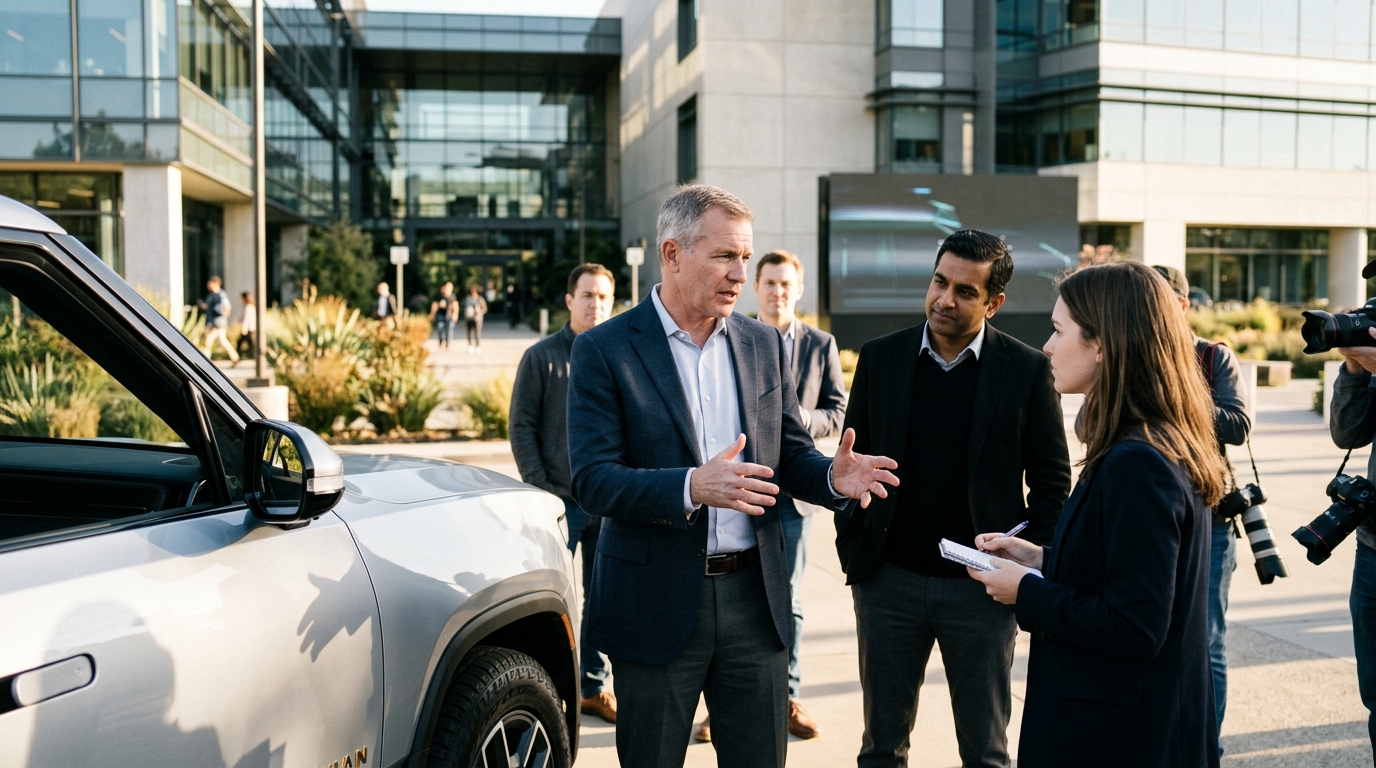
The news of the termination of the Bosch partnership comes shortly after Volkswagen's announcement of a massive $5 billion investment in the American EV maker Rivian. This move is now seen as the 'Plan B' that became 'Plan A.' VW is not just buying shares in Rivian; it is buying access to its advanced electronic architecture and software, which is considered among the best in the market.
- System Simplification: Rivian uses fewer Electronic Control Units (ECUs) compared to traditional German cars.
- Update Speed: Over-The-Air (OTA) update capability is built into the core of the system, something Cariad struggled to achieve.
- Cost Reduction: Moving away from Bosch allows VW to directly control its software value chain.
This shift indicates that Volkswagen recognizes its survival depends on transforming into a technology company that happens to manufacture cars, rather than the other way around.
Geopolitical and Economic Implications
For the German economy, this divorce is a worrying signal. The VW-Bosch alliance was considered Germany's 'national team' in the race for autonomous driving. Its failure suggests that traditional collaboration models in Europe may be too slow for the digital age. Bosch will now have to seek other partners to recoup its massive investments in autonomous driving, while VW is increasingly turning toward the US and China (through its collaboration with Horizon Robotics).
"The automotive industry is no longer about pistons and valves, but about data and algorithms. Whoever cannot write code at the speed of Silicon Valley will be left behind," market analysts note.
In conclusion, Volkswagen's move to abandon Bosch is an admission of the failure of the old system, but also a bold attempt at survival. The question remains whether the German giant can integrate Rivian's culture fast enough to stem the dominance of new players in the global market.