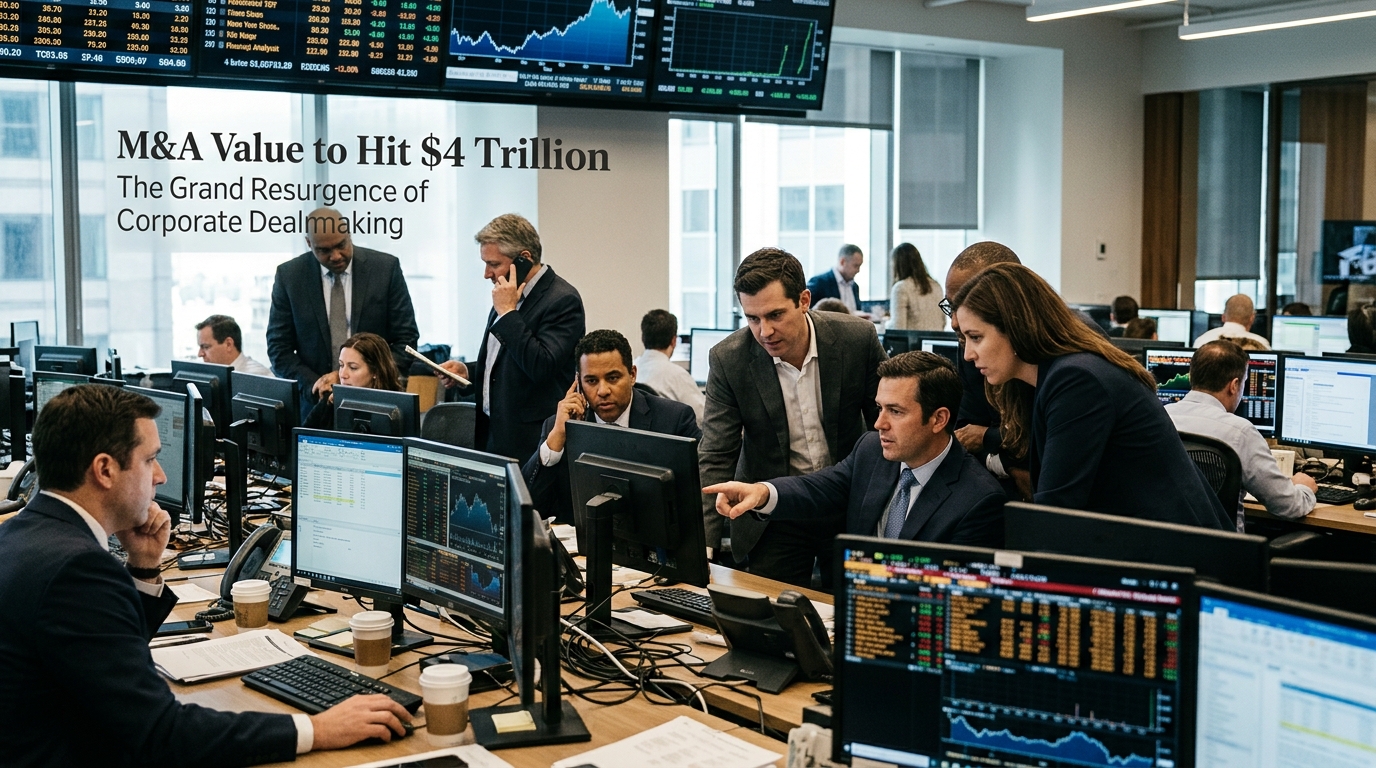
After a prolonged period of relative stagnation and cautiousness, the global Mergers and Acquisitions (M&A) market appears to be entering a new phase of hyper-activity. According to the latest report by PwC, the total value of global deals is expected to reach a staggering $4 trillion within the current year. This forecast is not merely a statistical estimate; it signals a fundamental shift in the psychology of investors and corporate boards, who seem to be moving past the fears of high interest rates and geopolitical instability.
AI as the Primary Growth Engine
It is no surprise that Artificial Intelligence (AI) lies at the heart of this resurgence. Companies no longer view AI as a simple automation tool but as the key to survival and competitiveness in the 21st century. The "buy vs. build" strategy dominates the landscape, as tech giants and traditional industries alike rush to acquire startups possessing specialized algorithms and proprietary data.
As PwC points out, the urgent need for digital transformation is pushing enterprises toward strategic moves that allow them to integrate Generative AI into their core operations. This creates a domino effect: when one player in an industry makes a significant AI acquisition, competitors are forced to follow suit to avoid obsolescence, driving valuations to new heights.
Energy Transition and ESG: Moving Beyond Compliance
Another critical pillar fueling the $4 trillion market is the green transition. Net Zero targets and ESG (Environmental, Social, and Governance) criteria have evolved from ethical commitments into financial imperatives. Companies in the energy, transportation, and manufacturing sectors are seeking acquisitions that provide immediate access to clean technologies and sustainable energy sources.
PwC observes that energy-related deals are no longer just about consolidating traditional players but about completely restructuring corporate portfolios. This trend is bolstered by government subsidies and incentives offered in major economies like the US and the European Union, making investments in green M&A highly attractive from a return-on-capital perspective.
The Resurgence of Private Equity
After a period of "wait-and-see," Private Equity (PE) firms are returning with vigor. With massive amounts of unspent capital—known as "dry powder"—estimated to exceed $2 trillion, fund managers are under pressure from their investors to deploy capital. The stabilization of interest rates provides the necessary framework for financing large-scale deals (leveraged buyouts), which had largely frozen in previous years.
- Increased activity in secondary markets.
- Focus on sectors with stable cash flows, such as healthcare and infrastructure.
- "Buy-and-build" strategies to create regional champions.
Despite the prevailing optimism, challenges remain. Regulatory bodies in the US and the EU have become significantly more stringent in antitrust enforcement, delaying or even blocking mega-mergers. Furthermore, geopolitical polarization is forcing companies to be more selective in cross-border acquisitions, focusing increasingly on "friendly" jurisdictions (friend-shoring).
Conclusion: Shaping the Future
PwC’s $4 trillion forecast underscores the resilience of global capital during periods of transition. The businesses that will successfully navigate this environment are not necessarily those with the deepest pockets, but those with the clearest strategy for integrating technology and sustainability. 2026 is emerging as a pivotal year for the reconfiguration of the global business map.