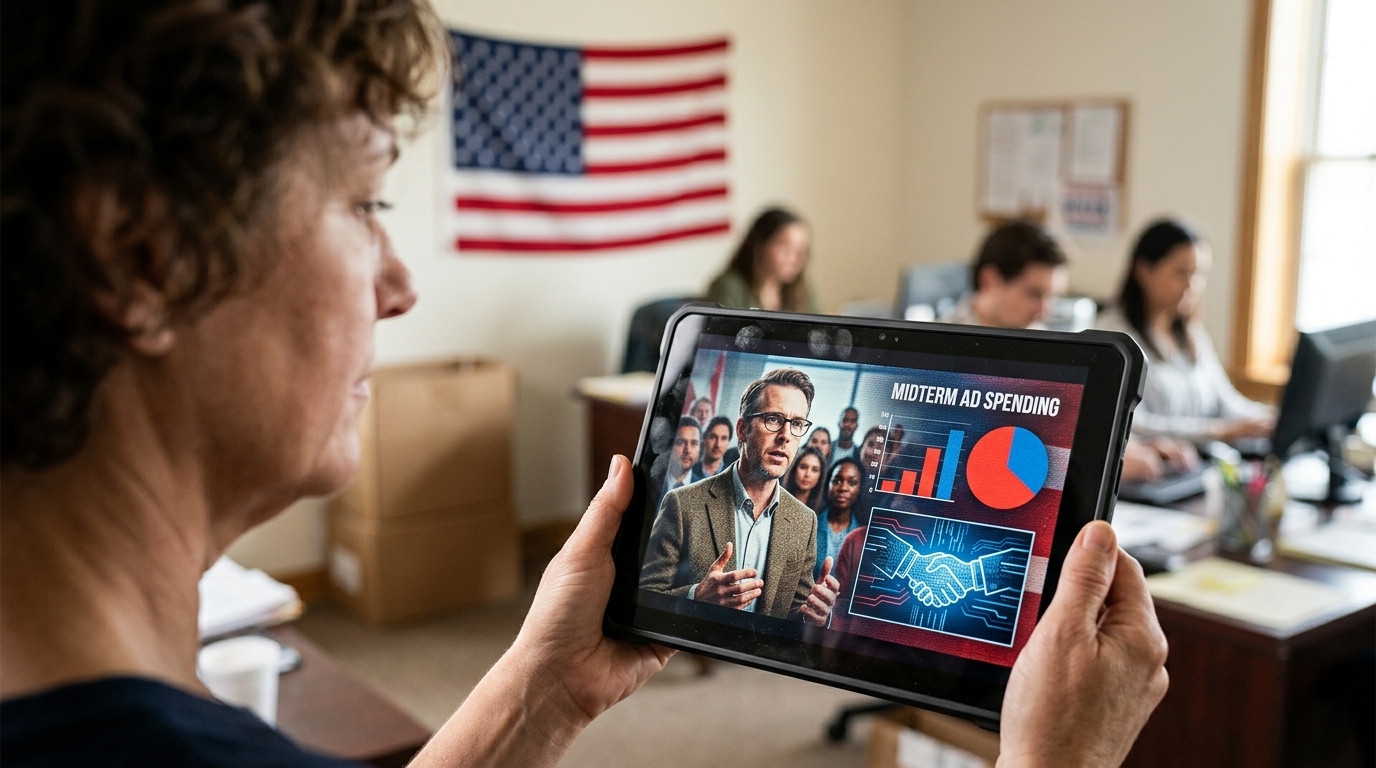
The 2026 U.S. midterm campaigns mark the first election cycle where AI-generated political ads have become a regular fixture on television and social media. Researchers from the Wesleyan Media Project have tracked approximately $80 million in spending across nearly 170 unique ads utilizing AI technology.
Republican Dominance in AI Adoption
The study reveals a significant partisan divide in the adoption of generative tools. Republican candidates and pro-Republican groups, such as super PACs, were behind 80% of the tracked ads and 83% of the total spending. Researchers suggest this disparity reflects broader party philosophies: Democrats often favor a regulatory mindset with strict disclosure requirements, while Republicans generally lean toward a free-market approach.
From Deepfakes to Visual Enhancements
The application of AI in these campaigns ranges from hyperrealistic deepfakes to subtle visual edits. Notable examples identified by the researchers include:
- Deepfakes of prominent figures including Donald Trump, Kamala Harris, and Alexandria Ocasio-Cortez.
- Fabricated scenarios, such as a candidate driving a bus of undocumented immigrants or political rivals carrying pitchforks on the White House lawn.
- A synthetic depiction of Dr. Anthony Fauci wielding a large syringe at a state fair.
In some instances, AI was used less for deception and more for utility, such as generating crowds or enhancing the visual quality of an ad, which complicates the viewer's ability to discern reality from synthesis.
The Transparency Gap
Despite polling showing that 78% of registered voters favor a ban on deceptive AI content, transparency remains elusive. Only 31% of the ads tracked—representing just 22% of total spending—included a disclaimer. Interestingly, state-level regulations appear to have little impact on behavior; in states with AI disclosure laws, only 29% of ads carried disclaimers, compared to 32% in states without such mandates.