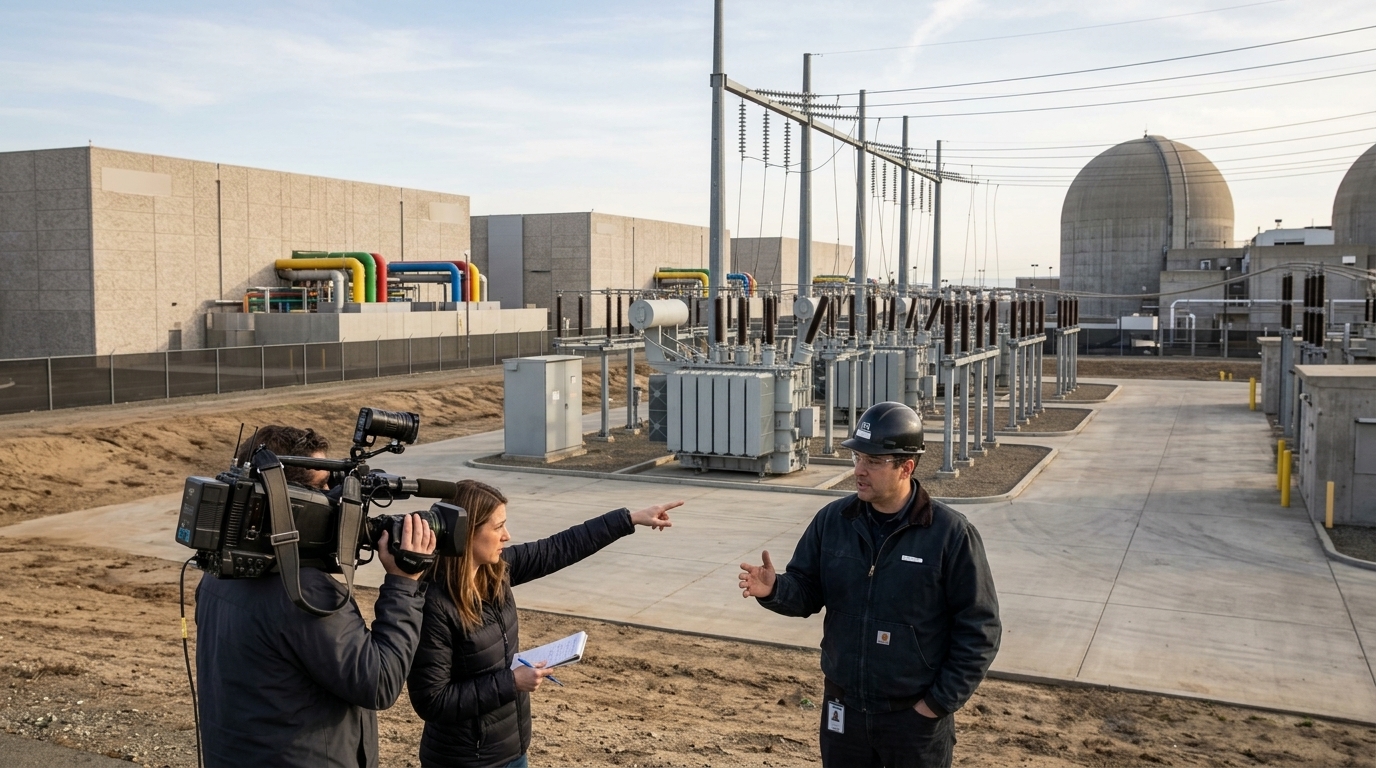
In a strategic move to secure its energy future, Google has announced a new agreement to modernize six nuclear power plant sites across the United States. The 20-year deal with Constellation, the nation’s leading nuclear operator, aims to generate more electricity for the tech giant’s power-hungry data centers.
Billion-Dollar Investments and Capacity Growth
The power purchase agreement (PPA) is intended to guarantee the revenue needed for efficiency upgrades at existing plants, representing more than $4.3 billion in new investment by Constellation. Over the next five years, the companies expect new equipment at 11 reactors to collectively add 890 megawatts of nuclear capacity—roughly equivalent to one large new nuclear reactor.
Grid Strain and Rising Costs
The targeted sites are connected to the PJM Interconnection, the largest power grid in the US, which has recently struggled to meet the surging demand from AI data centers. This strain has led to warnings of potential blackouts and skyrocketing electricity rates; in states like New Jersey, prices have climbed 54 percent over five years. Federal regulators and state governors have expressed concerns that data centers could further raise bills for ordinary customers.
The Sustainability Paradox
While the nuclear deal highlights a shift toward carbon-free energy, Google also inked a separate, larger 15-year supply agreement for 2,700 MW that includes fossil fuels like gas and oil. Google’s carbon emissions rose by 18 percent last year alongside a 37 percent jump in electricity demand, illustrating the growing conflict between AI expansion and corporate sustainability goals.