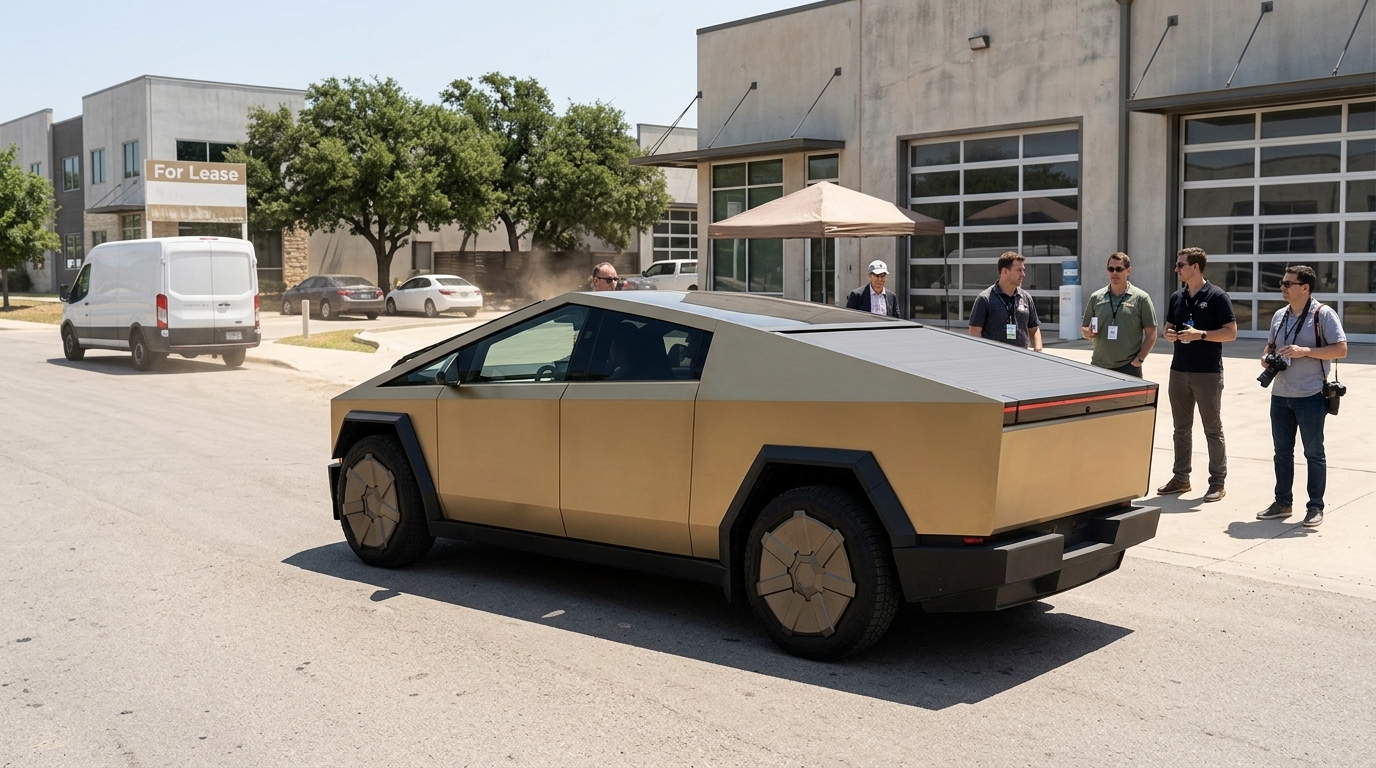
At a private, closed-door event in Austin, Texas, Tesla officially launched the Cybercab, a vehicle Elon Musk has touted for years as the cornerstone of the company's future. Despite the significance of the milestone for a firm betting heavily on AI and robotics, the event was unusually muted, lacking a livestream and restricted to a select group of influencers under strict NDAs.
Technical Specifications and Design
The Cybercab is a two-seat sedan featuring gullwing-style doors and an interior completely devoid of traditional controls like steering wheels, pedals, or mirrors. It relies solely on eight cameras for navigation, a choice that contrasts with competitors who utilize radar and lidar sensors.
According to EPA filings, the Cybercab is Tesla's lightest and most range-efficient vehicle to date, weighing in at 3,113 pounds. It features a 48kWh battery pack and a 219 horsepower front-mounted motor. While Tesla has registered 45 Cybercabs with the Texas DMV, the timeline for full commercial deployment remains uncertain.
Competition and Market Standing
While Tesla supporters view the launch as a historic moment, the company faces stiff competition. Tesla currently operates 256 unsupervised autonomous vehicles across six cities, whereas Alphabet’s Waymo has approximately 4,000 vehicles in 14 cities. Furthermore, Musk’s track record of missed deadlines looms over the project, with "unsupervised" FSD now promised by the end of 2026 "at the earliest."
- No steering wheel or pedals included.
- Camera-only navigation system (no lidar/radar).
- Children under 13 are currently banned from riding.
- Weighs 700 pounds less than the lightest Model 3.