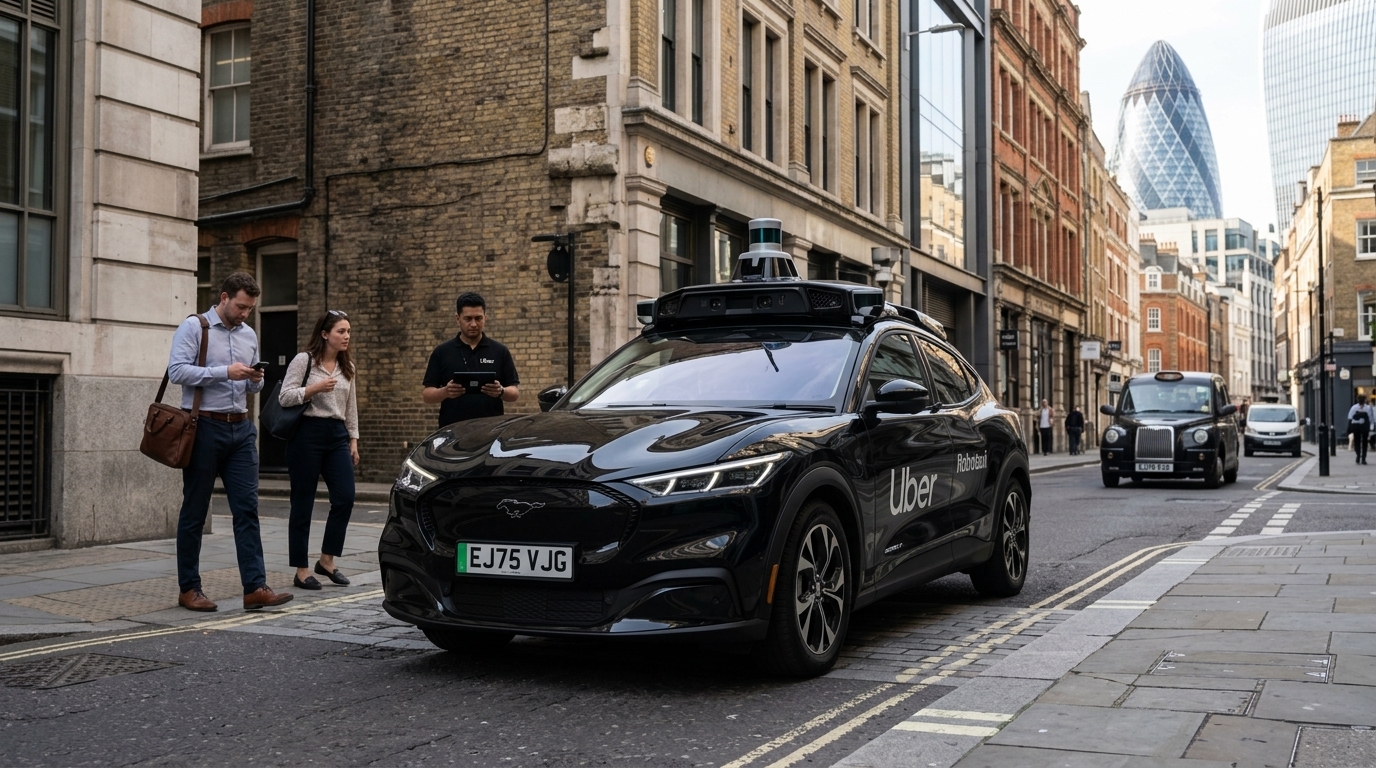
Uber has secured a first-mover advantage in London by launching the city’s first commercial robotaxi service. The vehicles utilize autonomous driving technology developed by Wayve, a UK-based startup. For the initial phase, the cars will feature safety drivers licensed by Transport for London (TfL) to monitor operations from the front seat.
No Lidar, No Geofencing
Wayve’s approach marks a departure from industry norms. Its AV2.0 system operates without lidar sensors or geofencing—the virtual boundaries typically used to constrain autonomous vehicles. Instead, the technology relies on cameras, radar, and a "single, learned AI driver" designed to adapt to new environments and risks much like a human would.
Wayve describes its system as a move beyond "traditional AV1.0," which relies on hand-engineered stacks and high-definition maps. The startup claims its software stack is hardware agnostic, capable of running on various sensor suites and chips provided by different automakers.
Fleet Details and User Access
London-based Uber users can opt-in to the service via the app's settings. When booking through UberX, Uber Comfort, or Uber Electric, riders may be paired with a Wayve-developed vehicle, though it is not guaranteed. The current fleet uses Ford Mustang Mach-Es, with Nissan Leafs expected to join in the future.
Maintenance and servicing will be handled by Uber in partnership with UK fleet operator Otto Car, while Wayve remains in charge of the autonomous driving system itself.
Market Competition and Strategy
The launch is a significant milestone for Uber, which intends to spend upwards of $10 billion to build out its robotaxi business. While Uber and Waymo collaborate in some US cities, they are increasingly competitors. Waymo has announced plans to launch in London before the end of the year, and Lyft is partnering with China’s Baidu for a service in the Brent neighborhood.
Uber is advocating for a "hybrid network" of human drivers and autonomous vehicles, contrasting with Waymo’s vision of a rider-only system. Wayve’s recent $1.2 billion funding round included backing from Uber, Nvidia, Stellantis, Nissan, and Mercedes-Benz, highlighting the broad industry interest in its AI-driven approach.