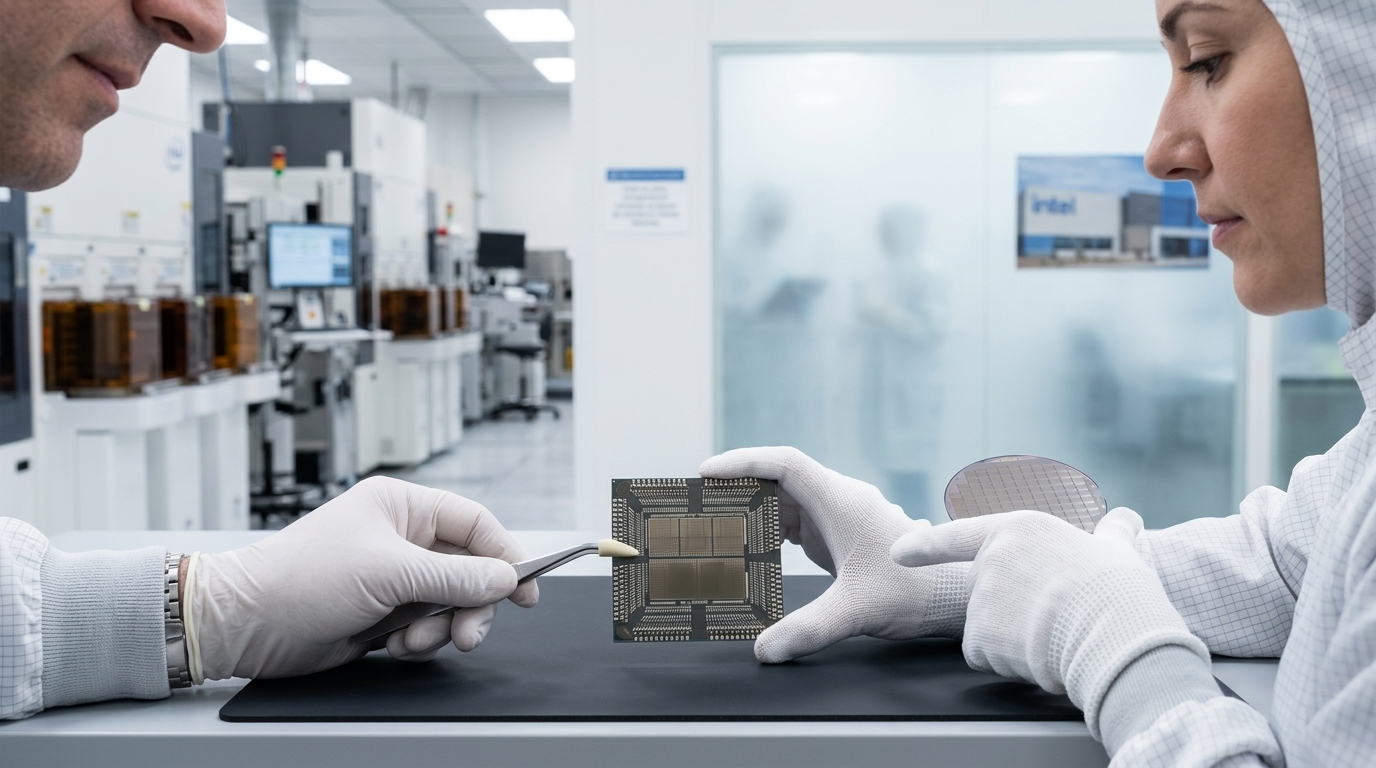
South Korea’s SK Hynix is in discussions with Intel regarding potential memory chip production in the United States. If finalized, the deal would mark the first time the South Korean semiconductor giant manufactures memory products on American soil.
Proposed Cooperation Scenarios
According to sources, two primary scenarios are currently on the table. The first involves SK Hynix leasing a portion of Intel’s massive production facility in Ohio. The second scenario envisions a joint venture between Intel, SK Hynix, and major cloud service providers. These cloud giants are eager to secure a reliable supply of memory chips to fuel the ongoing AI and data center boom.
For Intel, such a partnership could provide a much-needed financial lifeline. Although Intel announced plans for up to $100 billion in investments in Ohio back in 2022, the completion of its two main factories has been delayed until 2030 and 2031.
Geopolitical Tensions and Economic Hurdles
The potential deal is unfolding against a backdrop of intense geopolitical pressure. U.S. Commerce Secretary Howard Lutnick has issued sharp warnings, suggesting tariffs of up to 100% on South Korean and Taiwanese firms that fail to commit to increased U.S.-based production. Meanwhile, the South Korean government remains cautious; technologies like HBM (High Bandwidth Memory) and DRAM are classified as "national core technologies," and their production transfer abroad may require official state approval.
- Manufacturing costs in the U.S. are significantly higher than in South Korea due to labor and construction expenses.
- The semiconductor supply chain remains heavily concentrated in Asia, complicating U.S. investment logistics.
- While SK Hynix is building a packaging facility in Indiana, it currently lacks a wafer fabrication plant in the U.S.
SK Group Chairman Chey Tae-won noted in July that the company is facing immense pressure from both customers and governments to expand its American manufacturing footprint, stating that building a U.S. plant is increasingly necessary despite the strategic and financial complexities.