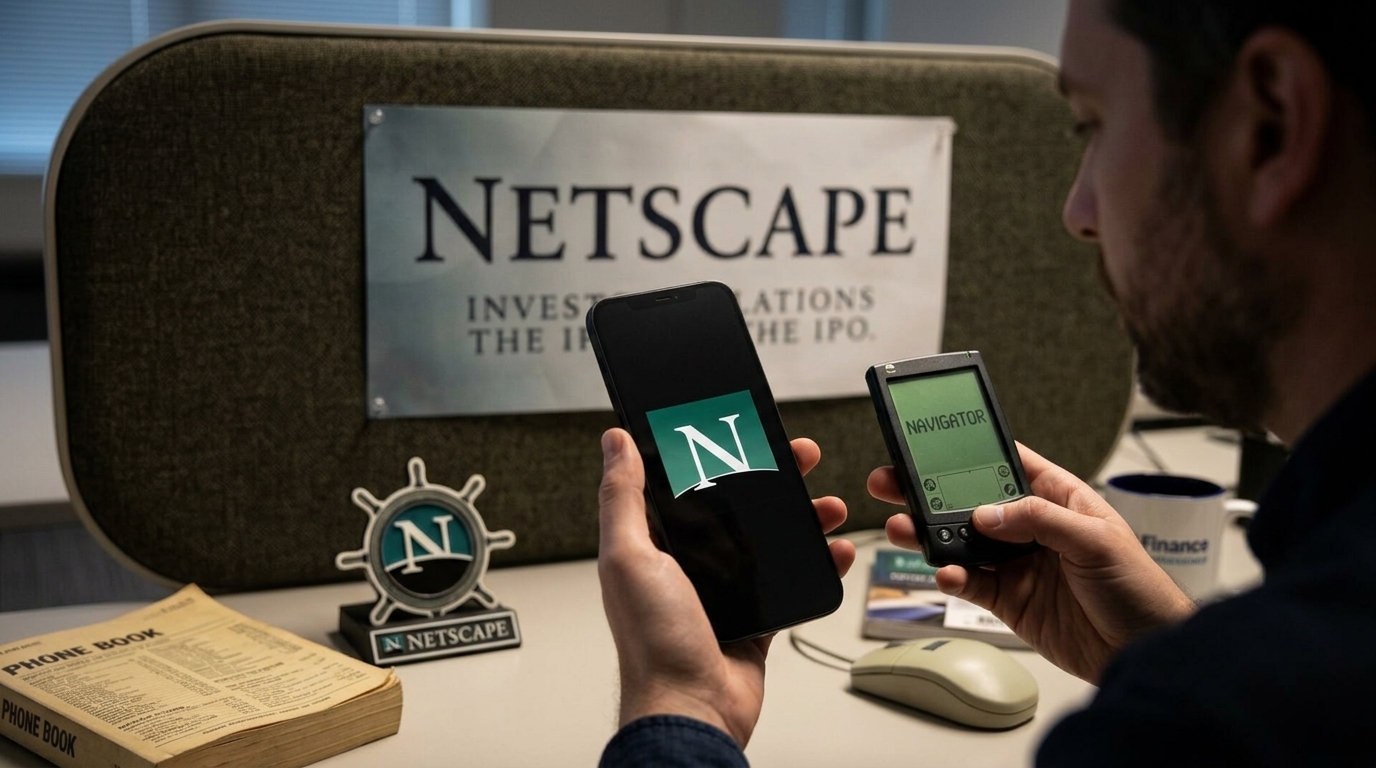
On August 9, 1995, Wall Street experienced a seismic shift triggered not by an industrial titan, but by a 16-month-old startup. Netscape Communications, the company behind the browser that made the Internet accessible to the masses, debuted on the Nasdaq, sparking an unprecedented frenzy. Despite never posting a profit, the company's valuation reached nearly $3 billion within hours.
Overturning Market Rules
Until that day, investors typically demanded proof of profitability before granting high valuations. Netscape shattered this convention. With revenues of $16.6 million and losses of $4.3 million, the market chose to invest in expectation rather than the balance sheet. Marc Andreessen, the 23-year-old programmer behind Mosaic and Navigator, became the face of a new era where growth and platform dominance outweighed immediate cash flow.
The Browser Wars and Lasting Legacy
Netscape's explosive rise alarmed Bill Gates and Microsoft, leading to the first great "browser war." Although Netscape eventually lost the commercial battle and was acquired by AOL in 1998, its technological legacy remains a cornerstone of the modern web. The development of SSL for secure transactions, the creation of JavaScript, and the birth of the Mozilla organization (Firefox) are all direct results of Netscape's innovation.
From 1995 to Artificial Intelligence
Today, Netscape's story echoes in the massive investments surrounding Artificial Intelligence. Just as in 1995, vast amounts of capital are flowing into technologies whose ultimate commercial value has yet to be fully proven. The case of Netscape serves as a reminder that while the market may correctly predict a technological revolution, it often fails to identify the ultimate winner.