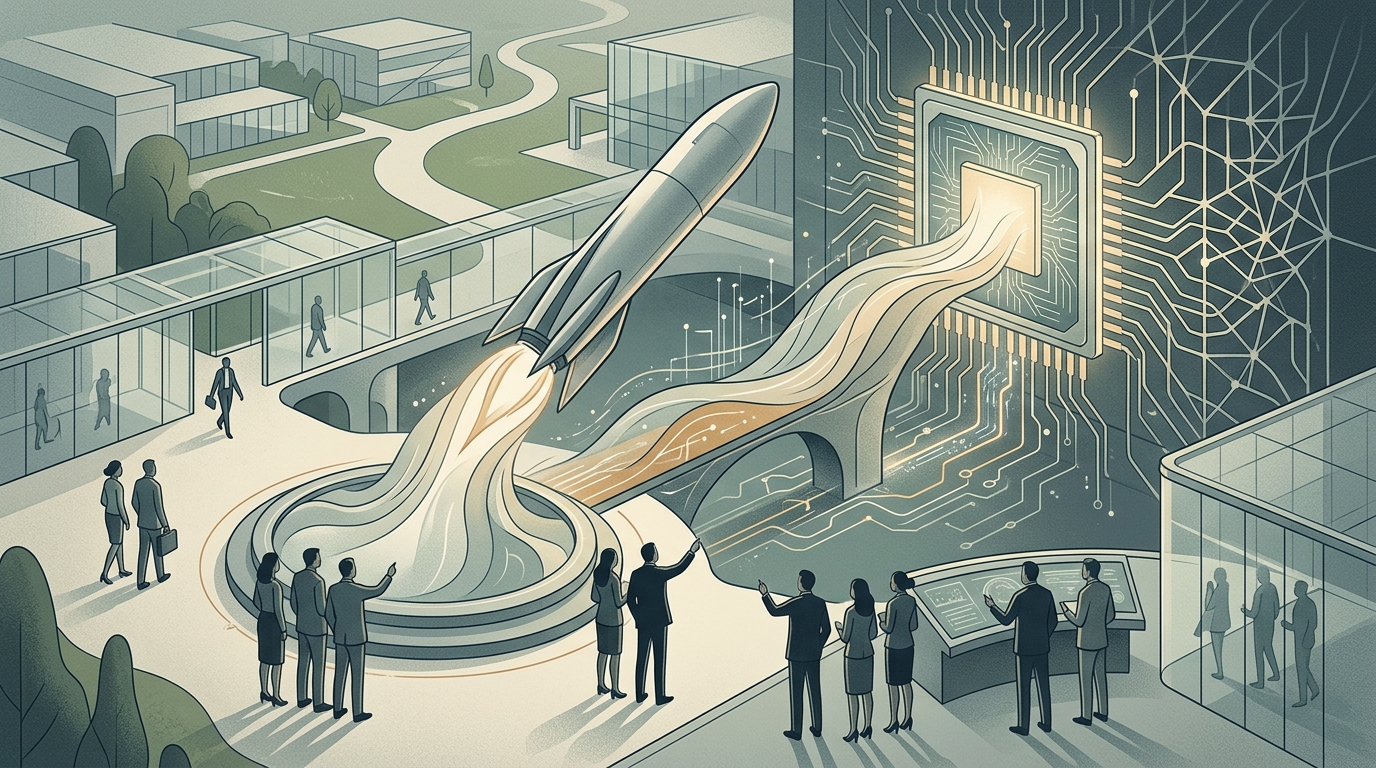
In the high-stakes world of global technology, dependence is often the ultimate vulnerability. For ByteDance, the Chinese titan behind TikTok, its reliance on Nvidia has shifted from a logistical necessity to a strategic liability. Recent reports confirm that the company is quietly accelerating the development of its own Artificial Intelligence (AI) processors, aiming to sever its ties with US-dominated semiconductor chains and secure its technological sovereignty.
The Geopolitical Chessboard
ByteDance’s pivot toward custom silicon is not merely a corporate decision; it is a survival tactic born of geopolitical friction. Over the past two years, the US government has tightened export controls on high-end AI chips to China, specifically targeting the hardware that fuels advanced machine learning. Nvidia, which commands roughly 80% of the global AI accelerator market, has been forced to throttle the performance of chips destined for the Chinese market, creating a power vacuum that ByteDance is now determined to fill.
The company is reportedly collaborating with Broadcom to design these chips, utilizing a sophisticated 5nm process. While the architectural design is handled in-house and with partners, the actual fabrication is expected to be outsourced to Taiwan Semiconductor Manufacturing Company (TSMC). This arrangement highlights the intricate irony of the modern tech landscape: a Chinese social media giant using US-linked design expertise to manufacture chips in a Taiwanese foundry, all while navigating a web of international sanctions.
Economic Imperatives and Custom Performance
Beyond the realm of geopolitics lies a stark financial reality. ByteDance is estimated to have spent upwards of $2 billion on Nvidia hardware in the last year alone. By developing custom ASICs (Application-Specific Integrated Circuits), the company can tailor its hardware to the specific demands of the recommendation algorithms that make TikTok so addictive, as well as its burgeoning large language model, Doubao.
“The transition from general-purpose hardware to custom silicon is the ultimate endgame for data-heavy enterprises. It represents the shift from renting a standard infrastructure to building a bespoke fortress optimized for one’s own unique needs,” says a senior analyst in the semiconductor field.
This optimization isn't just about raw speed; it’s about efficiency. In an era where AI data centers consume as much electricity as small nations, the ability to perform identical tasks with 30% less power translates into billions of dollars in operational savings over a decade. For ByteDance, which operates at a scale few can comprehend, these marginal gains are transformative.
The Hurdles of Mass Production
However, the path to silicon independence is fraught with technical and political landmines. Designing a chip is one thing; manufacturing it at scale is another. ByteDance must ensure its designs remain compliant with ever-evolving US export rules, which are often adjusted to close perceived loopholes. Furthermore, the reliance on TSMC remains a bottleneck. Should Washington exert further pressure on Taipei, ByteDance’s production lines could be halted overnight.
- Regulatory Compliance: Custom chips must stay below specific computational thresholds to avoid triggering further US sanctions.
- Software Ecosystem: Nvidia’s dominance is underpinned by its CUDA software platform. ByteDance must build a robust software layer to ensure its new hardware is actually usable by its army of developers.
- Regional Competition: ByteDance isn't alone. Huawei, Alibaba, and Tencent are all racing to build their own AI chips, leading to intense competition for foundry capacity at TSMC.
Conclusion: The Dawn of Tech Nationalism
ByteDance’s move signals a broader shift from globalized technology toward "tech nationalism." If successful, it will demonstrate that US sanctions do not necessarily stifle innovation but rather redirect it into more autonomous, localized forms. For Nvidia, this is a clear warning: even the most dominant supplier can be designed out of the equation when customers feel cornered. The future of AI will be decided not just by those who write the best algorithms, but by those who own the silicon they run on.