

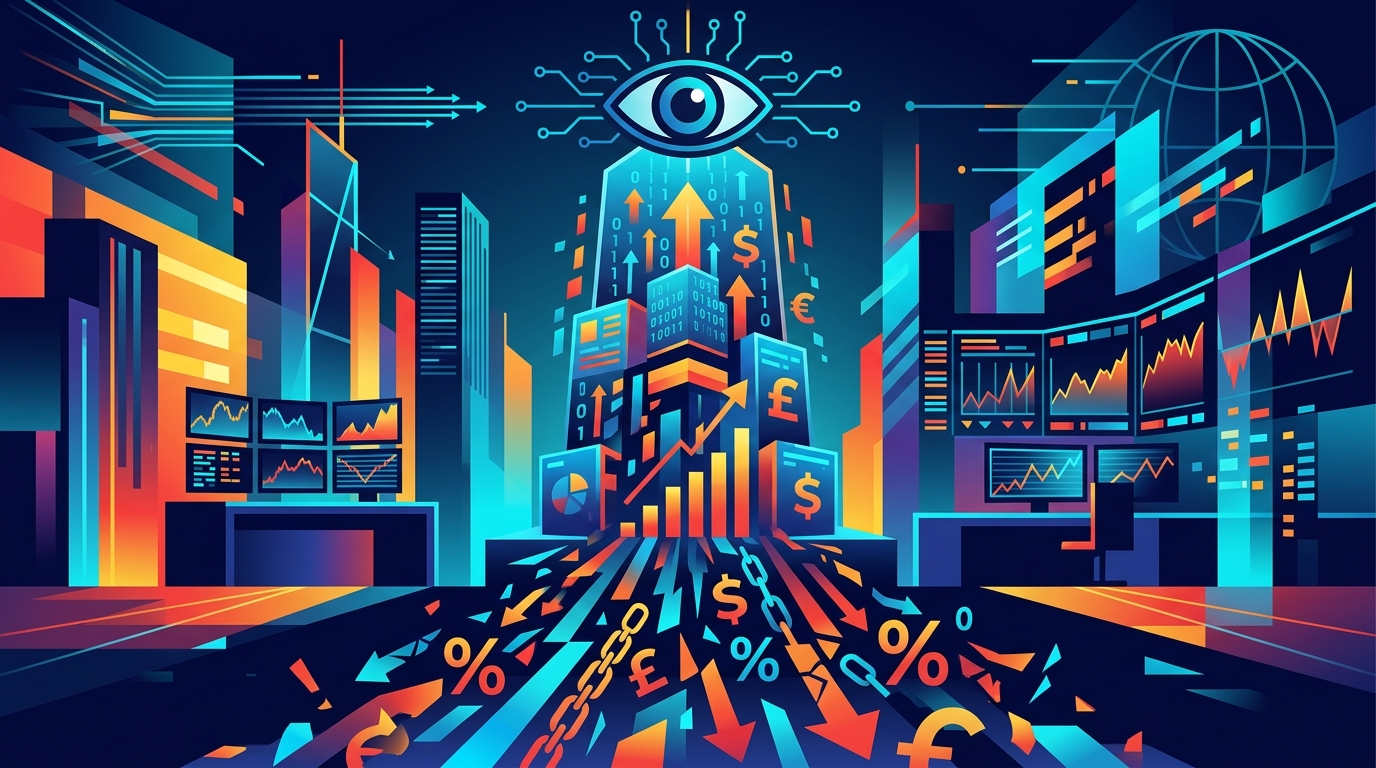
I have spent my life looking for an honest man, but today, I would settle for a tech executive who can count. The high priests of Silicon Valley have a new name for their digital project: 'Super Intelligence' (SI). Why the rebranding? Perhaps because 'Artificial Intelligence' started to produce too much 'slop'—the low-quality automated content that recently led Google to suspend its vulnerability reward program. This isn't just a linguistic shift; it is a signal that the focus has moved to the physical backbone of the industry.
This looks less like a technological leap and more like a massive deployment of infrastructure capital. These titans have increased their borrowing by $500 billion since the start of the year. They are building an empire of chips and data centers on a mountain of debt that rivals the 19th-century railroad boom. Oracle has already invoked a force majeure clause to delay payments for a data center project in New Mexico, while Meta has been forced to offer yields exceeding 7% to attract investors. They are securing 20-year nuclear energy deals while Google's own electricity demand jumped 37% last year. It is a sustainability paradox that the market is only beginning to digest.
And what is the promised return? Arthur Hayes suggests a future of autonomous 'agents' paying each other in Bitcoin for computing power. But he also warns of a 2027-2028 reckoning when the current over-expansion of data centers might lead to a glut of cheap, abundant power that squeezes returns. It reminds me of the 'Pac-Man' enzyme discovered by researchers in Konstanz; it was found to eat plastic, but it also deactivates penicillin. In their rush to adapt to the 'plastisphere' of synthetic waste, these organisms developed a resistance to the very medicine meant to save us. Similarly, this frantic expansion of infrastructure may be creating a financial environment resistant to traditional stability.
In the 'Hellenic Corridor' between Greece and Cyprus, there is a different attempt at logic. While others chase raw computational expansion, the focus there on 'Trusted AI' and mandated human oversight seeks to bridge the reliability gap. If the ROI frontier has moved to hardware, then the frontier of accountability must remain with humans. Will you wait for the 2028 turning point, or will you demand that intelligence—super or otherwise—actually serves humanity instead of just servicing its own debt?
