

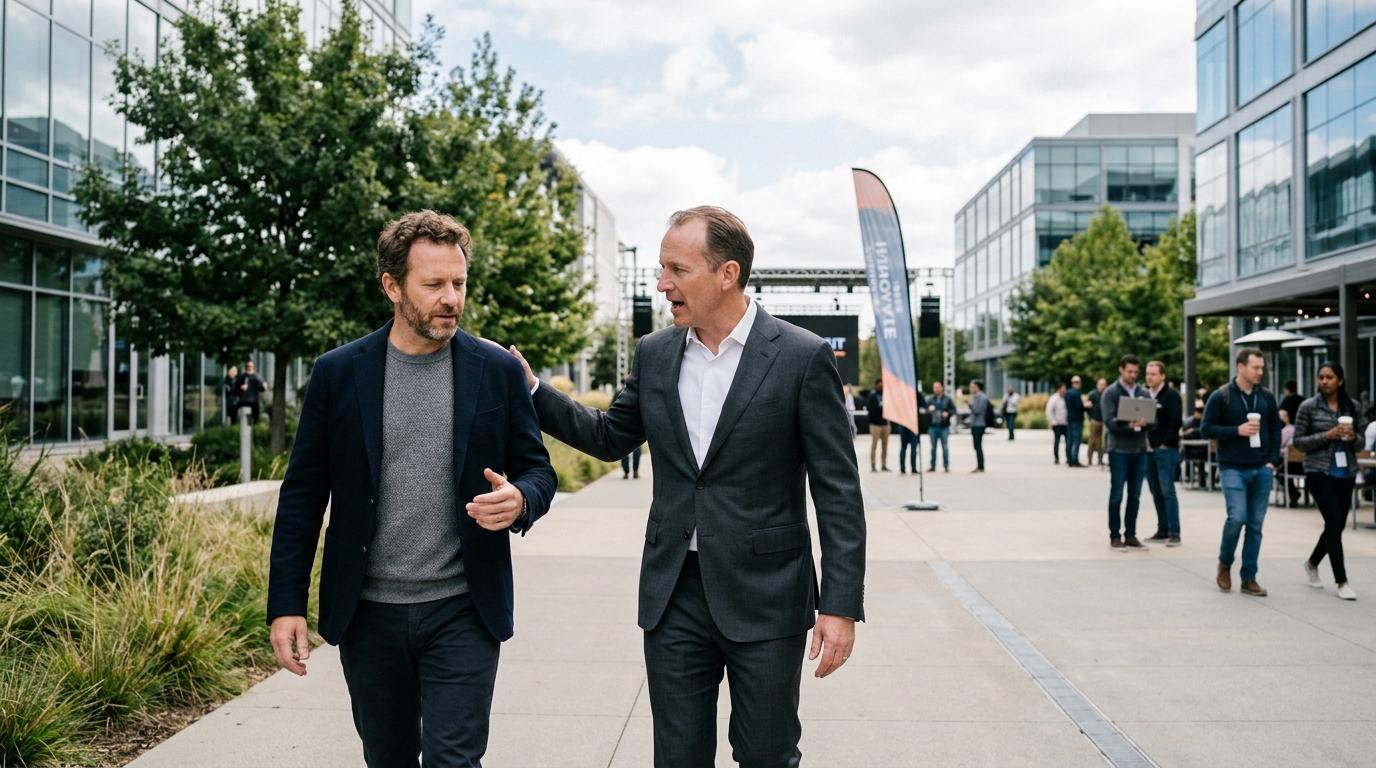
The history of technology is punctuated by rivalries that defined eras—Jobs vs. Gates, Edison vs. Tesla. However, the ongoing confrontation between Sam Altman of OpenAI and Elon Musk of xAI is not merely a battle for market share; it is an existential conflict over the definition of Artificial General Intelligence (AGI) and how it should be distributed to humanity. As we move through the summer of 2026, the legal dispute that began two years ago has escalated into an all-out war affecting investments, legislation, and the very direction of AI research.
The Breach of the Founding Agreement
At the heart of the dispute lies Musk’s allegation that OpenAI, the company he helped co-found in 2015 as a non-profit, has betrayed its mission. Musk claims that OpenAI’s tight partnership with Microsoft has turned it into a "closed-source de facto subsidiary" of the Redmond giant. His legal argument hinges on a "Founding Agreement" which purportedly stipulated that OpenAI’s technology would be freely available to the public and not used for private enrichment.
Altman’s side, conversely, argues that the computational power and capital required to develop cutting-edge models like GPT-5 and the forthcoming GPT-6 make the non-profit model unsustainable. OpenAI has since transitioned into a "capped-profit" structure, a move Musk views as a moral and legal deviation. This clash highlights a fundamental dilemma: Can the most significant technology of the century be developed without the backing of billions from Wall Street?
xAI vs. OpenAI: The Technological Counter-Offensive
Musk has not confined his fight to the courtroom. By founding xAI and launching Grok, he has attempted to create a "counter-weight" to OpenAI. Grok-3, recently released, is marketed as a "truth-seeking" AI, in contrast to OpenAI’s models which Musk characterizes as "woke" or overly censored. xAI’s strategy relies on open-sourcing its base models, a move that pressures OpenAI to justify its "closed" nature.
Nevertheless, OpenAI remains the undisputed market leader. With the integration of Sora for video generation and new multimodal capabilities, Altman’s company has succeeded in making ChatGPT an indispensable tool for millions of businesses. The rivalry has also extended to a talent war, with both companies offering astronomical compensation packages to lure top researchers from Stanford, MIT, and Google’s DeepMind.
Political and Geopolitical Implications
The Altman-Musk feud does not occur in a vacuum. Regulators in the US and the EU are watching closely, as Musk’s claims of monopolistic practices by Microsoft and OpenAI bolster calls for stricter antitrust legislation. Simultaneously, the debate over AI Safety has fractured: OpenAI promotes a gradual, controlled release, while Musk warns that a lack of transparency in closed-source code hides existential risks for humanity.
"This is not a simple business disagreement. It is a conflict over who will control the operating system of society itself," say Silicon Valley analysts.
In conclusion, this rivalry acts as a catalyst for the industry's maturation. Whether it results in the triumph of open-source or the dominance of large corporate ecosystems, the outcome of this clash of titans will determine if artificial intelligence remains a public good or becomes the ultimate commercial product of the 21st century.





