

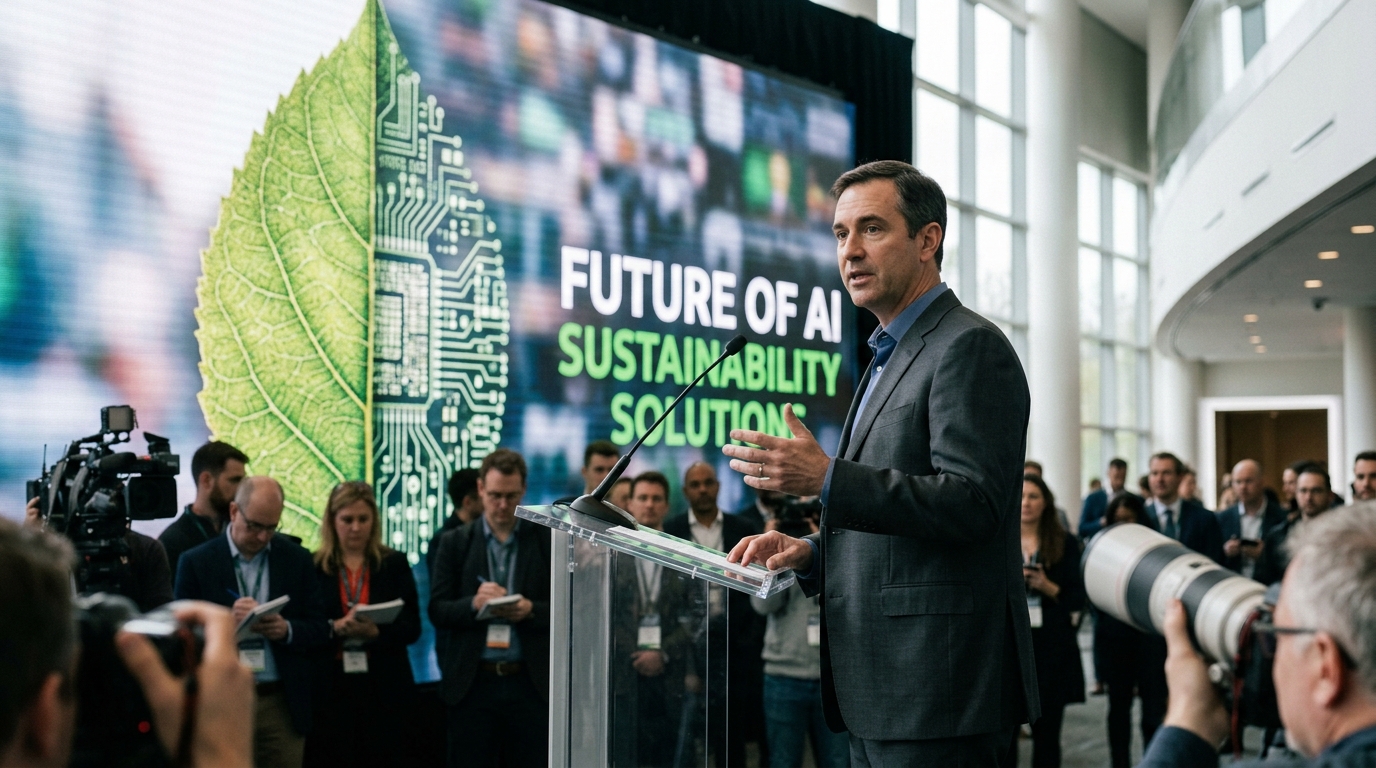
The promise of Big Tech for a "green" future is colliding with the cold, hard reality of computational physics. Microsoft’s recent sustainability report has unveiled a sobering truth: the company’s total carbon emissions have surged by nearly 30% since 2020. This spike is almost entirely attributed to the construction and operation of the data centers required to fuel the Artificial Intelligence (AI) revolution. For a corporation that has publicly committed to being "carbon negative" by 2030, these figures represent more than just a setback; they are an existential challenge to its corporate identity.
The Physicality of the Cloud
We often conceptualize "the Cloud" as something ethereal and weightless, but its physical footprint is profoundly industrial. Training large language models like GPT-4 and serving AI features to millions of users requires vast arrays of specialized semiconductors, which in turn must be housed in gargantuan facilities. Microsoft’s emissions increase stems primarily from what is known as "Scope 3": indirect emissions that occur in the supply chain. This includes everything from the mining of rare earth minerals to, most significantly, the massive amounts of steel and concrete used to build new data centers.
Concrete and steel are among the most carbon-intensive industries globally. As Microsoft races to maintain its lead in the AI arms race, its hunger for physical infrastructure has outpaced its gains in energy efficiency. Despite Microsoft being one of the world's largest corporate buyers of renewable energy, the sheer velocity of AI expansion is creating a carbon gap that current green technologies cannot immediately bridge. The company is essentially building the infrastructure of the future using the polluting materials of the past.
Water Scarcity and the Energy Appetite
Beyond carbon, AI carries another often invisible environmental price tag: water consumption. Data centers generate immense heat, and cooling them requires millions of gallons of water. Analysts note that Microsoft’s water consumption spiked by 34% in a single year, reaching approximately 6.4 billion liters—enough to fill thousands of Olympic-sized swimming pools. In drought-prone regions, this demand creates friction with local communities and highlights a growing ethical dilemma: should limited water resources prioritize silicon brains or human needs?
The energy appetite of the Nvidia chips that power this revolution is also unprecedented. A single query to an AI chatbot consumes roughly ten times more electricity than a standard Google search. As AI becomes embedded in every facet of our digital lives—from drafting emails to writing code—the total demand for power is projected to double in certain markets over the next decade, potentially straining aging power grids.
The Microsoft Strategy: Can AI Save Itself?
Microsoft President Brad Smith has acknowledged that the AI boom is a "moonshot" that has made their 2030 climate goals significantly harder to reach. However, the company’s counter-argument is that AI itself will be the ultimate tool for decarbonization. They envision algorithms optimizing power grids, discovering new materials for high-capacity batteries, and managing complex carbon capture systems.
- Investments in next-generation nuclear energy (Small Modular Reactors).
- Large-scale Power Purchase Agreements (PPAs) to stimulate new wind and solar projects.
- Research into "green" steel and low-carbon cement for future construction.
The fundamental question remains: can technological progress accelerate fast enough to offset the damage caused by its own expansion? Microsoft’s predicament serves as a bellwether for the entire tech sector. The climate crisis does not wait for software patches, and "digital intelligence" cannot thrive on a planet that can no longer sustain its own physical foundations.





