

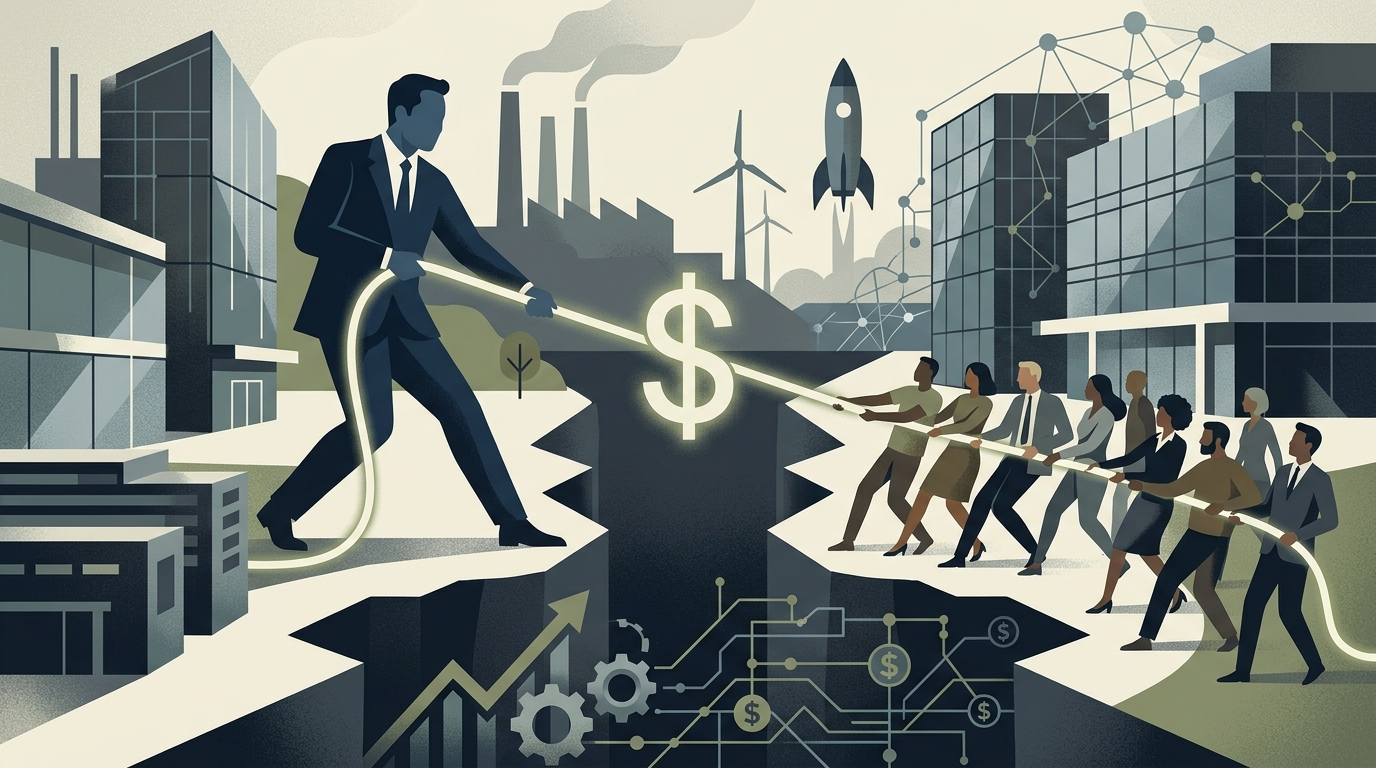
Human history has seen emperors, kings, and industrialists amass fortunes beyond imagination, but the case of Elon Musk seems to usher in a new, uncharted era. In mid-2026, the debate is no longer about whether Musk is the world's richest man, but when he will break the one-trillion-dollar barrier. This prospect has ignited a fierce digital and political clash with Zohran Mamdani, a New York State Assembly member and mayoral candidate, highlighting the deep fissures in the American economic fabric.
The Clash of Two Worlds: Mamdani vs. Musk
The confrontation began when Mamdani used the X platform—which Musk himself owns—to attack the model of wealth accumulation the billionaire represents. Mamdani argued that Musk's ascent toward trillionaire status is not a product of the "free market" but the result of systematic exploitation of state resources and tax breaks. "While New Yorkers struggle to pay rent, a man subsidized by their own dollars is preparing to become history's first trillionaire," he stated emphatically.
Musk, known for his direct and often pugnacious social media presence, was quick to respond. He defended the value created by his companies—Tesla, SpaceX, xAI—emphasizing that the subsidies he received in the past were a tiny fraction of the taxes and economic activity he has generated. For Musk, Mamdani's criticism represents an "ideological blindness" that punishes success and innovation. However, this spat is more than just a personal feud; it is the crystallization of a global debate over whether the existence of trillionaires is a sign of economic health or systemic failure.
State Subsidies: The Backbone of an Empire?
One of the thorniest points of criticism concerns the scale of state support Musk's ventures have received. Analysts point out that Tesla would not have survived its early stages without U.S. Department of Energy loans and the carbon credit systems mandated by the government. Similarly, SpaceX is now the de facto partner of NASA, securing billions in taxpayer-funded contracts.
- Tesla has received billions in tax incentives for its Gigafactories in Nevada and Texas.
- SpaceX relies on government contracts for satellite launches and astronaut transport.
- The Starlink network benefits from rural broadband expansion programs.
For his part, Musk argues that these subsidies are investments that pay back many times over. Tesla led the global shift to electric vehicles, reducing carbon emissions, while SpaceX drastically lowered the cost of space access. The question remains, however, whether the fruits of these public investments should be concentrated so heavily in the hands of a single individual.
The Path to a Trillion and the AI Factor
According to an Informa Connect Academy report, Musk's wealth is growing at an average annual rate of 110%. If this trend continues, 2027 will be the year history records its first trillionaire. The driving force behind this explosive growth is no longer just cars, but Artificial Intelligence. xAI, Musk's newest venture, has seen its valuation skyrocket as it is viewed as the primary competitor to OpenAI and Google.
"This is no longer about wealth; it's about power. A trillionaire possesses economic resources exceeding the GDP of many developed nations, allowing them to influence global politics and humanity's technological direction without any democratic mandate."
This analysis by political scientists highlights the risk of a "techno-oligarchy." When one individual controls satellite communications (Starlink), future transportation (Tesla), space exploration (SpaceX), and AI infrastructure (xAI), the balance of power between the state and the individual shifts dangerously. Mamdani and other progressive politicians propose a "wealth tax" targeting unrealized capital gains, a move Musk characterizes as "the beginning of the end of capitalism."
Conclusion: The Social Challenge of 2026
The Musk-Mamdani clash is a prelude to a larger conflict that will define the second half of the 2020s. As technology automates labor and AI generates unprecedented wealth, society must decide how that value will be distributed. Musk remains a visionary pushing the boundaries of the possible, but his ascent toward a trillion dollars forces the world to look in the mirror and ask: How much wealth is "enough," and what is the price of absolute economic dominance?





