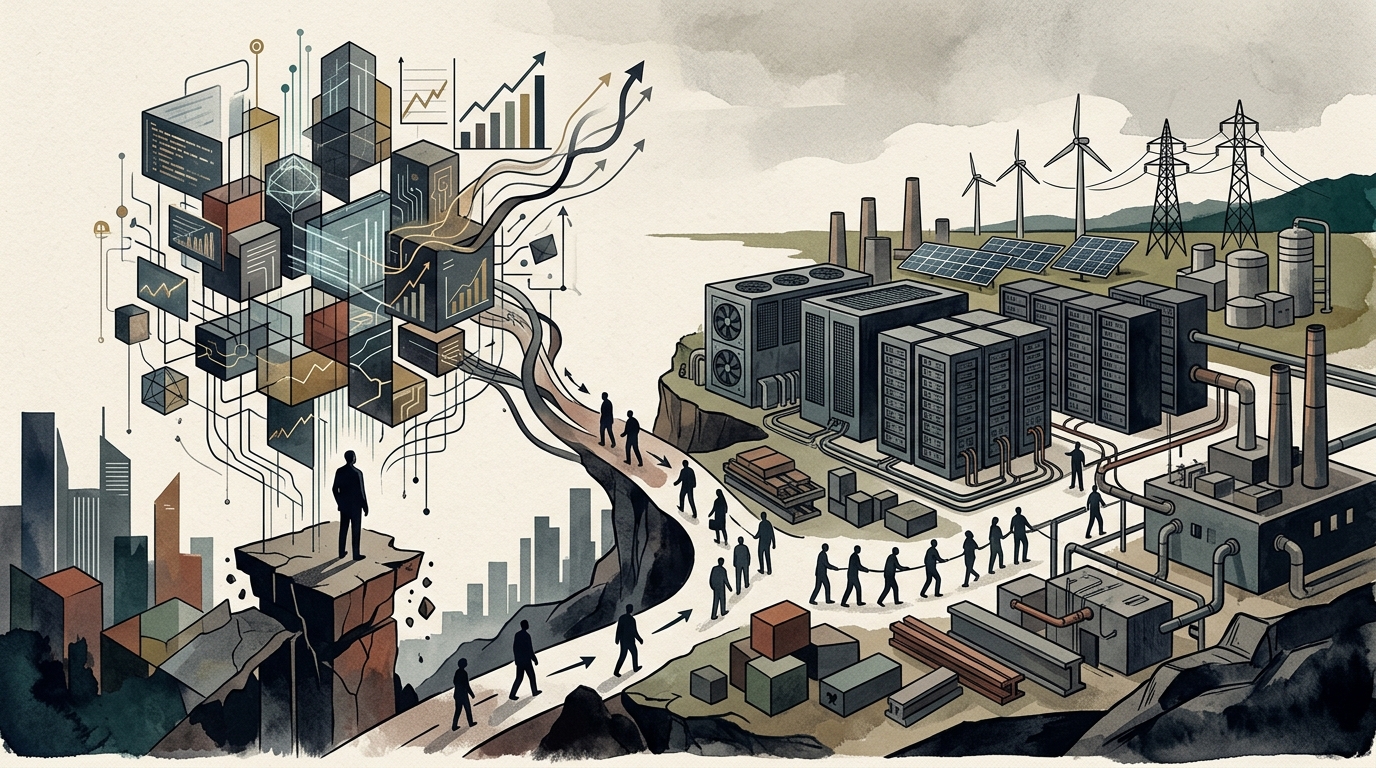

In my analysis, the current trajectory of artificial intelligence has moved beyond the ephemeral realm of software into a phase of heavy industrialization. We are witnessing a fundamental restructuring of global capital, where the focus has shifted to the physical backbone of the industry: chips, data centers, and energy grids. This transition is marked by an unprecedented surge in borrowing—over $500 billion since the start of the year—drawing clear historical parallels to the US railroad boom. However, as ancient Athenian governance taught us, rapid expansion without institutional frameworks often leads to instability.
The Debt Frontier and the Productivity Paradox
The scale of financing required for this new era is staggering. With 25% of private bond issuance now tied to AI, capital is concentrating in the hands of a few tech giants and specialized firms. We see organizations like SpaceX securing $40 billion packages for hardware acquisition, while established players like Oracle face challenges, including a 30% stock decline and the invocation of force majeure clauses. This financial pressure is compounded by what I term the 'productivity paradox.' While AI can boost individual task efficiency by up to 30%, only 37% of executives can currently link this usage to operating profits. This disconnect suggests that AI requires a structural redesign of workflows, a realization that is already driving radical staffing decisions, such as the proposed elimination of 70% of financial advisor roles at HSBC's UK wealth unit.
The Hellenic Corridor: A Governance Framework for Reliability
In response to these global shifts, a specialized strategy is emerging within the Hellenic market. Greece is positioning itself through the 'Hellenic Corridor' approach, which prioritizes institutional reliability over raw computational expansion. This framework aligns strictly with the EU AI Act, emphasizing 'Trusted AI' through mandated human oversight and explicit prohibitions on the collection of sensitive emotional or biometric data. From a diplomatic perspective, this represents a European commitment to transparency and citizen rights. By focusing on algorithmic management and institutional compliance, Greece aims to address the 'reliability gap' that remains a significant hurdle for democratic institutions. In this era of super-intelligence, the focus must remain on ensuring that technology serves the *polis* through accountability and rigorous governance structures.