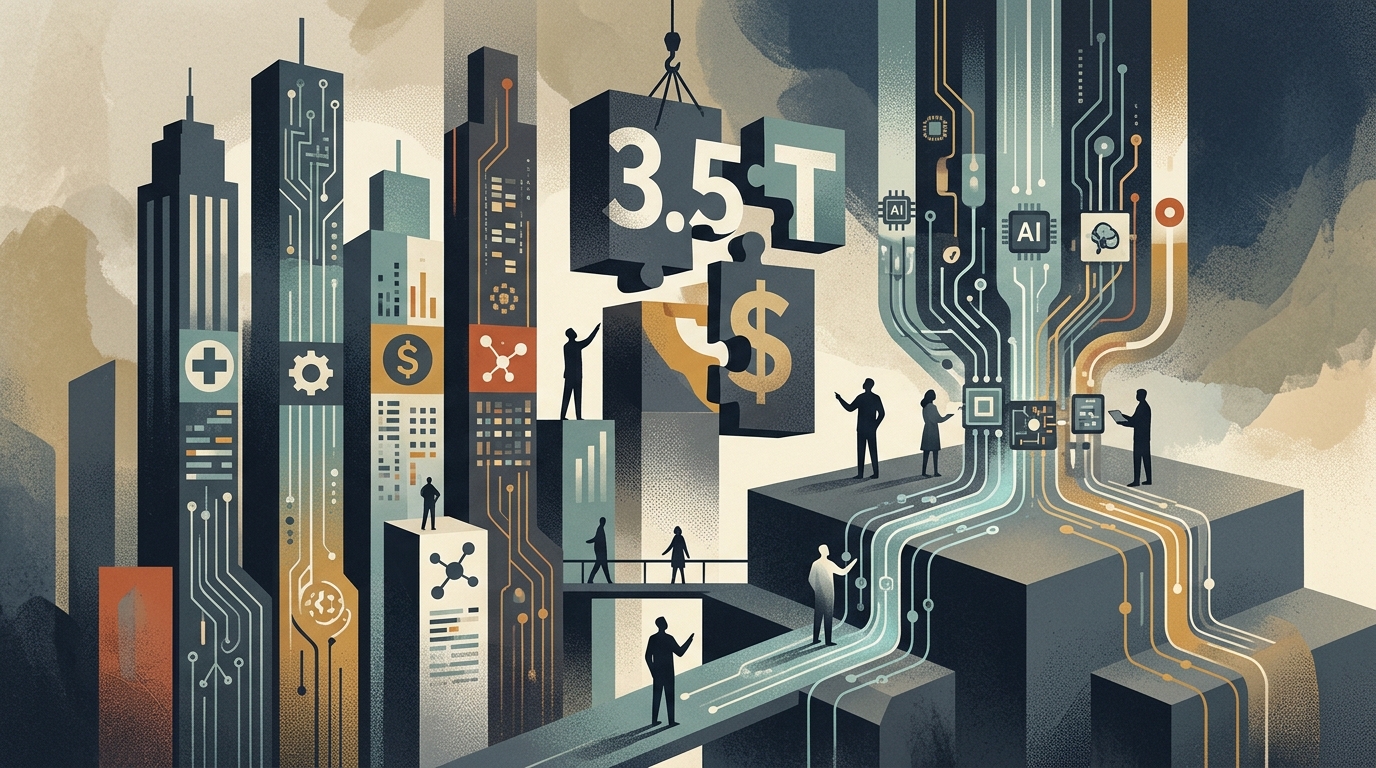
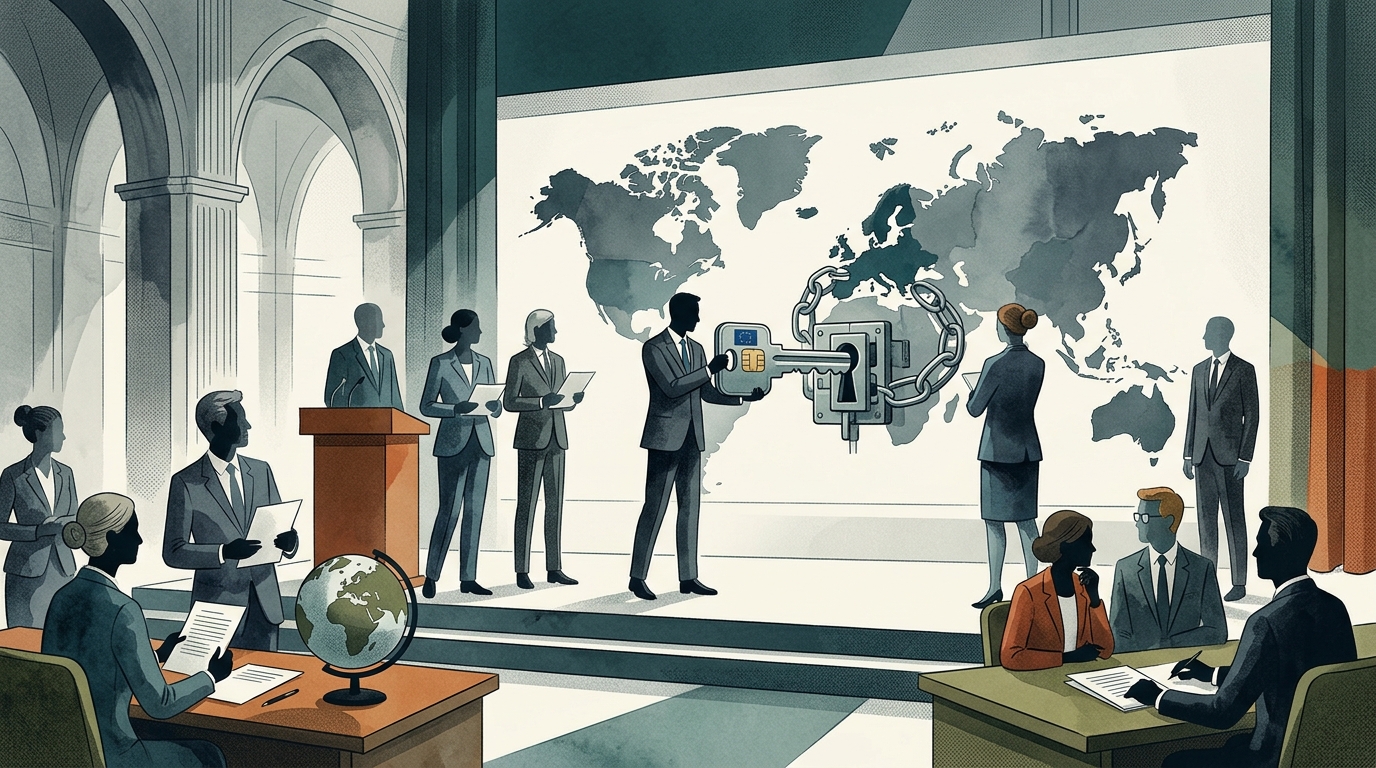
In the sixth century BCE, I was tasked with reforming the Athenian state to prevent its collapse under the weight of debt and social inequality. Today, as we observe the proceedings of VivaTech 2026, the European Union finds itself in a remarkably similar position. The 'debt' in this modern context is not silver, but a deficit in technological autonomy. As the global AI race intensifies, the continent stands at a crossroads, attempting to forge a 'Third Way' between the unrestrained market forces of the United States and the state-centric surveillance apparatus of China.
The Geopolitical Chessboard and the Imperialist Shadow
The recent discourse surrounding AI as the 'spearhead of modern imperialist rivalry' is not mere hyperbole. It reflects a shift in how national power is projected. For the European Union, technological sovereignty is no longer a luxury of the academic elite; it is a foundational requirement for democratic survival. The rise of powers like Vietnam, making strategic gambits in the global AI race, demonstrates that the traditional hegemony is being challenged. However, for Europe, the challenge is internal as much as external.
"True sovereignty is not the isolation from the world, but the capacity to set the rules by which one engages with it."
Our current predicament mirrors the ancient struggle for balance. The EU AI Act, while a landmark in governance, risks becoming a set of chains if not coupled with robust industrial policy. We see this tension in the emergence of 'Self-Evolving Agents' in legal systems. If the rules themselves can learn and adapt, the very concept of a static legal framework—the bedrock of Western democracy—must be re-evaluated. We are moving from a world of 'Rule of Law' to 'Rule of Code,' and the transition requires a delicate hand.
The Human Bottleneck and the New Social Contract
One of the most striking insights from recent research is the concept of the 'Human Bottleneck' in resilient manufacturing. As AI systems become more capable, the constraint on productivity shifts back to human skill and adaptability. This is where the European model can excel. By focusing on 'SkillChain' frameworks and the intersection of human-AI collaboration, we can avoid the pitfalls of digital displacement.
However, we must be wary of 'Digital Colonialism.' As AI redefines cross-border trade, there is a risk that smaller nations—including my own Greece—become mere exporters of raw data and importers of expensive, foreign-owned intelligence. A modern 'Seisachtheia' (shaking off of burdens) would involve decentralizing compute power and ensuring that the 'Ghost in the Machine'—the structural uncertainty of AI reasoning—is managed through transparent, public-interest institutions rather than private boardrooms.
A Proposal for Institutional Resilience
To navigate this era of 'Imperialist Rivalry,' Europe must propose a Governance Framework that prioritizes three pillars:
- Compute Neutrality: Ensuring that the infrastructure of AI is treated as a public utility, much like the roads of the Roman Empire or the maritime routes of Athens.
- Algorithmic Accountability: Establishing permanent citizen-led oversight committees that audit self-evolving agents, particularly those used in judicial and administrative functions.
- Sovereign Data Commons: Creating a unified European data space that allows for innovation without sacrificing the privacy rights that define our democratic identity.
In conclusion, the 'Digital Bridge' we are building across borders must be supported by the pillars of transparency and human dignity. We cannot allow the pursuit of efficiency to erode the foundations of the polis. As we look toward the remainder of 2026, the goal is not merely to win the AI race, but to ensure that the race is worth winning for the average citizen.