
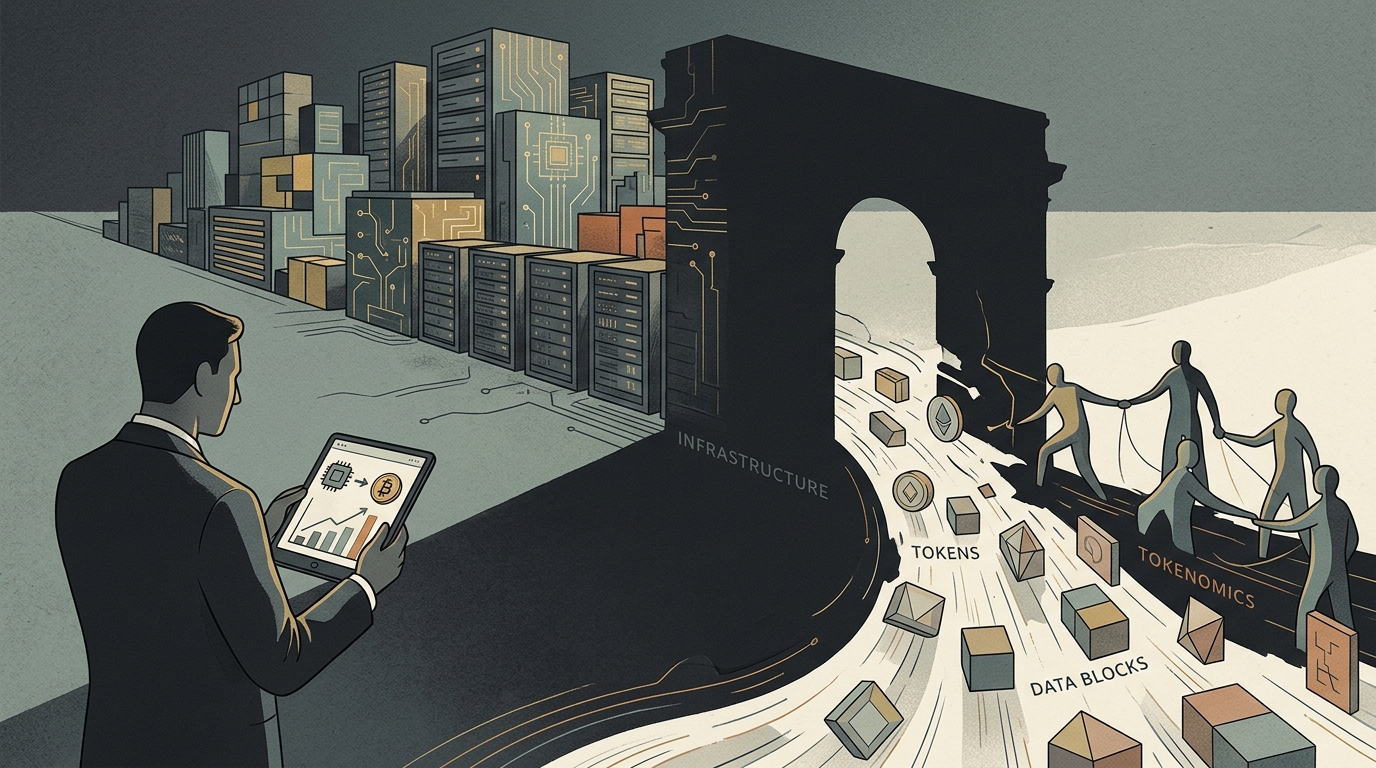
The global business landscape is entering a phase of disciplined capital management as the initial era of unrestricted AI experimentation yields to rigorous financial scrutiny. While companies like Siemens Energy report record-breaking third-quarter results—with sales reaching €11.45 billion fueled by AI data center demand—a massive financial overhang is beginning to emerge in corporate footnotes.
The Trillion-Dollar Infrastructure Debt
Data reveals that the tech sector's five giants—Microsoft, Meta, Oracle, Amazon, and Alphabet—have committed approximately $1.16 trillion to future lease payments for data centers. These obligations are largely off-balance-sheet, recorded only in footnotes until facilities enter service. This "backlog" is nearly four times larger than the $285 billion in lease liabilities currently recognized. Oracle presents a significant concentration risk, with $260 billion in future commitments—seven times its recognized liabilities. If market demand does not align with this build-out, these firms risk being locked into expensive, long-term capacity.
The 'Consultant Strategy' and Tokenomics
As ROI becomes a top priority, businesses are adopting a "Consultant Strategy." High-end models like Anthropic’s Claude or Alibaba’s new 2.4 trillion-parameter Qwen3.8-Max are increasingly reserved for complex strategic tasks, while routine operations are delegated to models that are up to 99% cheaper. This shift has led to the launch of the Tokenomics Foundation by giants including JPMorgan and Accenture, aiming to standardize AI cost measurement. Meanwhile, Palantir has vindicated its model-agnostic approach, reporting a 93% revenue surge to $1.9 billion, suggesting robust demand for integration platforms that avoid provider lock-in.
Infrastructure Scaling and Market Risks
The drive for automated efficiency is accompanied by aggressive scaling and structural risks. Anthropic has secured a $10 billion, six-year contract with Volta Infra Holdings for a 133MW data center in Norway, equipped with Nvidia’s Vera Rubin chips. This move highlights a trend of repurposing energy-intensive facilities for AI infrastructure. However, analysts express concern over "circular financing" within the industry. The interconnected dependencies between hardware suppliers, cloud providers, and AI developers could create a fragile ecosystem if future demand for AI services fails to meet the massive scale of the infrastructure being built.
The era of software speculation is being replaced by the largest infrastructure build-out in history, where the primary constraints are power, skilled labor, and financial liquidity.