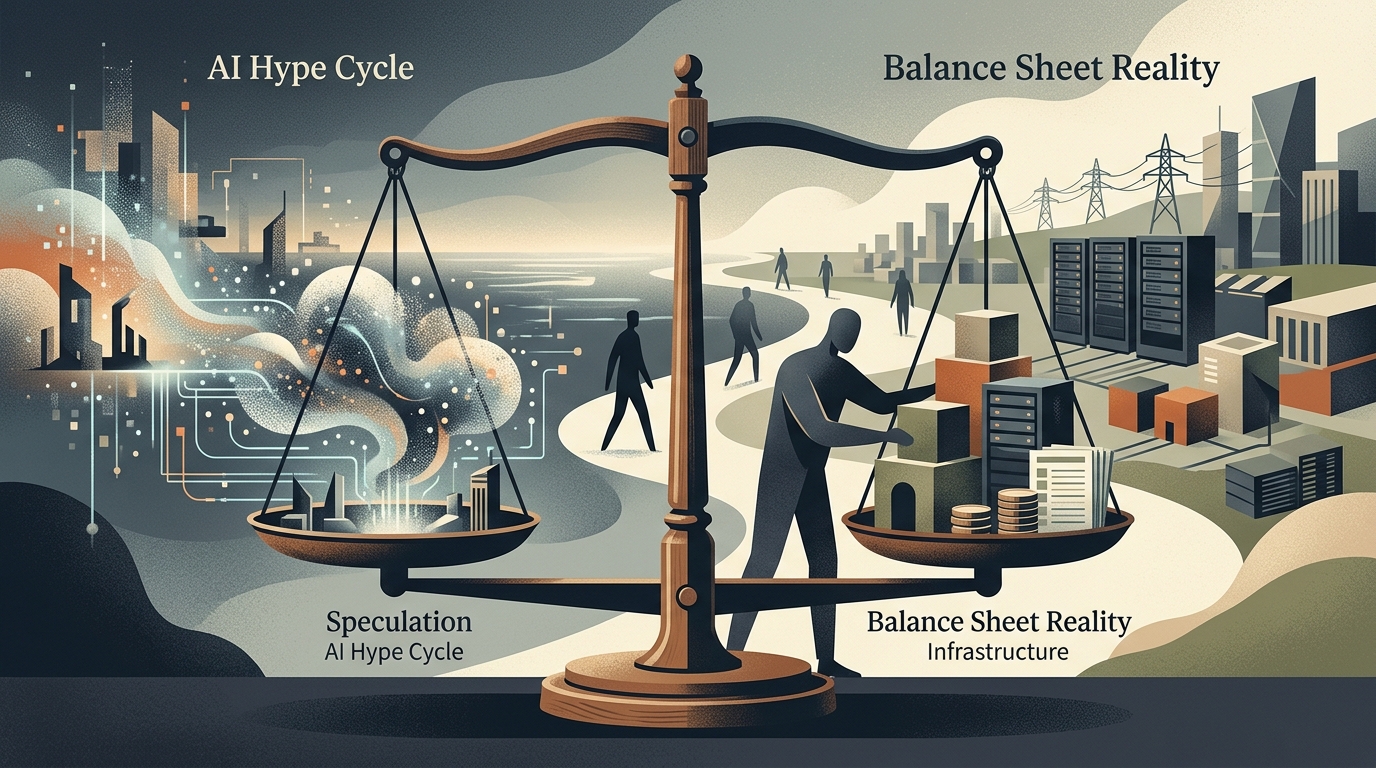
The global business landscape is currently navigating a definitive transition. We are moving from a period of unbridled enthusiasm for Artificial Intelligence to a phase of rigorous fiscal management and heavy industrial consolidation. This shift is most visible in the strategic moves of established industrial groups and the internal discipline now being imposed by tech giants.
The End of 'Tokenmaxxing'
The era of unlimited AI resource consumption is facing a reality check. At Microsoft, the discovery of an employee spending $28,000 on AI resources in a single month—contrasted with a median spend of approximately $300—has prompted a pivot toward fiscal discipline. Leadership has signaled a shift away from 'tokenmaxxing' toward maximizing meaningful business value, with more efficient models like GPT-5.6 Sol becoming the default for internal operations. This reflects a broader industry trend where even pioneers are dismantling adoption leaderboards in favor of rigorous resource management.
Greek Industrial Strategy: The Motor Oil-Satori Synergy
In the Southeast European ecosystem, the strategic minority stake acquired by Motor Oil Group in Satori Analytics stands out as a textbook example of industrial digital transformation. Satori Analytics, which saw an 82% turnover increase between 2023 and 2025 and projects over 50% growth for 2026, provides Motor Oil with critical expertise in AI and data utilization. This partnership reflects a broader trend: established giants are no longer just buying software; they are investing in the human talent and R&D capacity necessary to maintain control over their intellectual property and infrastructure.
The Infrastructure Bottleneck and Regulatory Pressure
The physical reality of AI is meeting increasing resistance. In Austria, Google’s Kronstorf data center project faces local opposition due to its massive energy requirements, which could reach 7% of the country's total electricity demand. This highlights a growing tension between digital sovereignty and environmental constraints. Simultaneously, the European Commission has moved to place ChatGPT, Reddit, and Roblox under the strictest tier of the Digital Services Act (DSA), introducing the risk of fines up to 6% of global turnover. For investors, these developments indicate that regulatory compliance and energy efficiency are becoming as critical to valuation as raw computational power.
"Model quality is no longer the primary bottleneck... the binding constraint is the assumption that any single model can be the sole basis for a clinical decision."
Ultimately, the market is beginning to reward companies that can translate AI investments into tangible outcomes while managing the escalating costs of energy and regulation. As the focus shifts from model size to architectural interventions and human oversight, the technological polis is entering a more mature, albeit more constrained, chapter.