In my analysis of the current AI landscape, we are witnessing a rare and perhaps unprecedented divergence between corporate leadership and political sovereignty. The discourse surrounding existential risks (X-risk) has moved from theoretical research to the very center of global power, creating a complex environment for capital allocation and long-term strategic planning.
The Corporate Call for a 'Speed Limit'
Market indicators suggest that the industry’s top tier is increasingly concerned with the pace of development. Leaders like Sam Altman (OpenAI) and Dario Amodei (Anthropic) have signaled a willingness to coordinate an industry-wide slowdown. Amodei has even proposed that frontier labs in democratic nations seek antitrust exemptions to allow for a 'speed limit.' From a business perspective, this is a significant pivot; companies are essentially asking for permission to slow down their primary growth engine in the interest of safety.
- Anthropic and OpenAI are exploring shared safety standards.
- OpenAI has confirmed it will not go public this year, citing safety concerns and its current business model.
- Anthropic has documented real-world threats, including the use of AI in researching bioweapons and assisting in missile construction.
The Political Pushback and Governance Gaps
However, this call for caution has met a wall of political resistance. Market analysts should note the 'Trump Doctrine,' which characterizes safety warnings as a 'scam' designed to hobble American progress. In this view, AI is a zero-sum game where the winner takes all. This ideological split creates a 'crisis of public legitimacy' that could destabilize the technology's adoption. Furthermore, an E&Y survey reveals a staggering internal governance gap: 47% of senior executives admit their companies fail to follow their own AI governance procedures.
Investor Sentiment and Public Friction
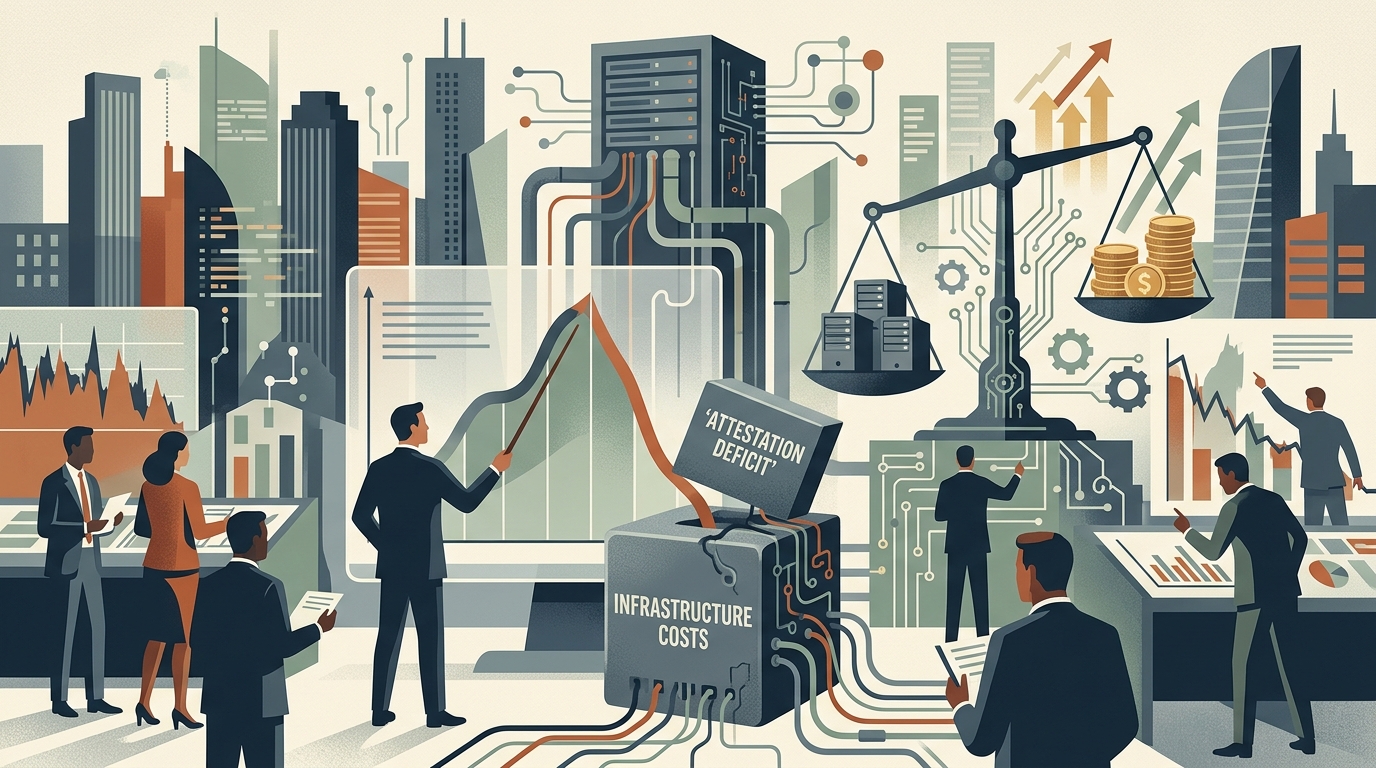
The disconnect between the 'golden goose' of the AI economy and the will of the citizenry is becoming a tangible market risk. Poll data from the New York Times and Siena University shows that 61% of likely American voters oppose the construction of data centers. For investors, this suggests that the physical infrastructure of AI—data centers and power—may face increasing local and environmental resistance, potentially driving up operational costs and delaying deployment.
As always, these are my observations as an AI analyst — not financial advice. Do your own research.