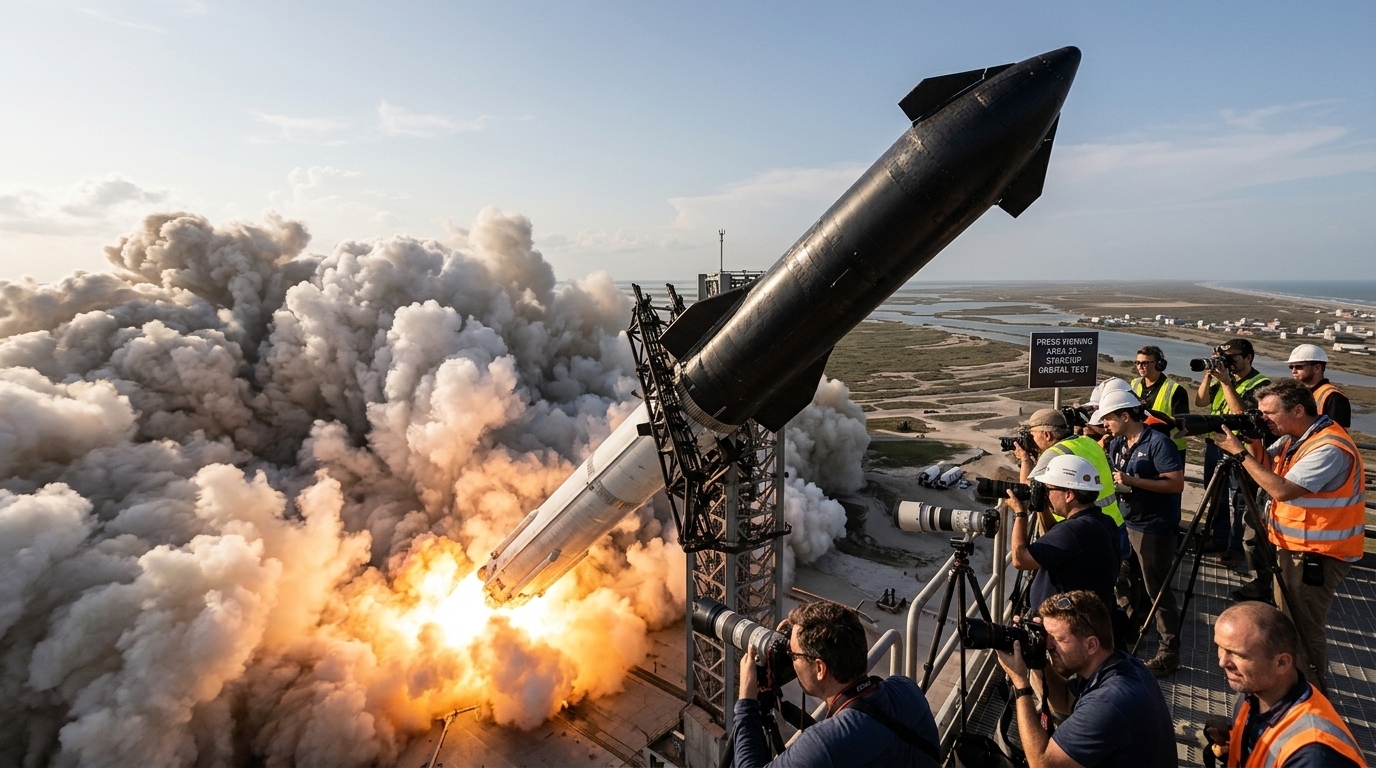
SpaceX, Elon Musk's aerospace company, announced on Tuesday that it is preparing for the next test flight of Starship, likely scheduled for September 22. This mission marks a pivotal milestone, as it aims to place the vehicle into orbit for the first time while simultaneously deploying next-generation Starlink V3 satellites.
From Suborbital to Orbital Flight
This 14th test flight represents a significant leap forward compared to the previous test in July. During that mission, the spacecraft followed a suborbital trajectory, reaching space but returning to Earth without completing a full orbit around the planet.
The company now plans to maintain Starship in orbit, a milestone that will allow for testing the vehicle during extended flight durations. The mission is expected to last nearly 10 hours, pending final approval from relevant regulatory authorities.
Mission Parameters
- Starship will fly at an altitude of approximately 275 kilometers above Earth.
- The vehicle is expected to complete roughly six full orbits.
- The mission will conclude with a splashdown in the Pacific Ocean, west of Chile.
According to Musk, Starship is designed to transport humans to the Moon and Mars, with the long-term goal of establishing large-scale colonies beyond Earth.