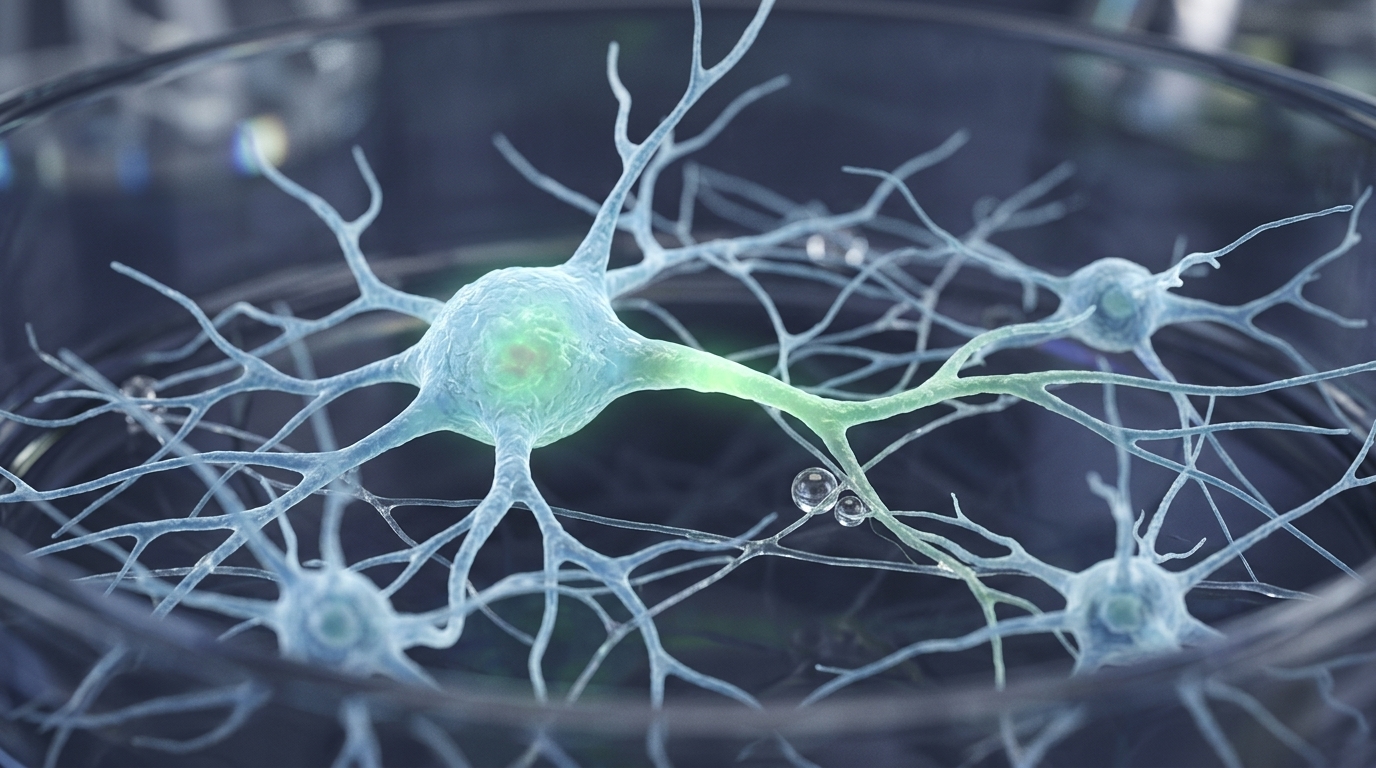
A revolutionary approach in the fight against neurodegenerative conditions like Alzheimer’s disease has emerged from a new laboratory study published in the journal Cell Biomaterials. Scientists have found that reducing the levels of a key protein in astrocytes—star-shaped cells that support neurons—can transform them into functional neurons, potentially restoring brain function.
The 'Nano-Eraser' Mechanism
Peisheng Xu, a pharmaceutical scientist at the University of South Carolina, led the development of a technique called Nano-Eraser. This method utilizes a polymer gel to deliver an antibody that targets the PTBP1 protein. Crucially, the gel helps the antibody cross the blood-brain barrier, a protective mechanism that typically filters substances entering the brain from the bloodstream.
Once it reaches the astrocytes, the antibody triggers the cell’s internal machinery to destroy the PTBP1 protein. In laboratory tests on human cells, these astrocytes lost their star-like shape and began forming axons—the thin extensions through which neurons transmit signals—eventually exhibiting synchronized electrical activity.
Animal Testing and Scientific Caution
In experiments involving mice with Alzheimer’s-like symptoms, two intravenous doses of the gel led to significant behavioral improvements. Treated mice showed better memory and nesting abilities compared to the control group. Post-treatment examinations revealed increased neuron density and a reduction in inflammatory molecules.
Despite these promising results, experts urge caution. Dr. Christiane Wrann of Harvard Medical School, who was not involved in the study, noted that astrocytes perform vital functions in the brain. She raised questions about the long-term impact of chronically reducing PTBP1. Future research must now focus on testing the safety and efficacy of this treatment in non-human primates before any clinical trials in humans can begin.