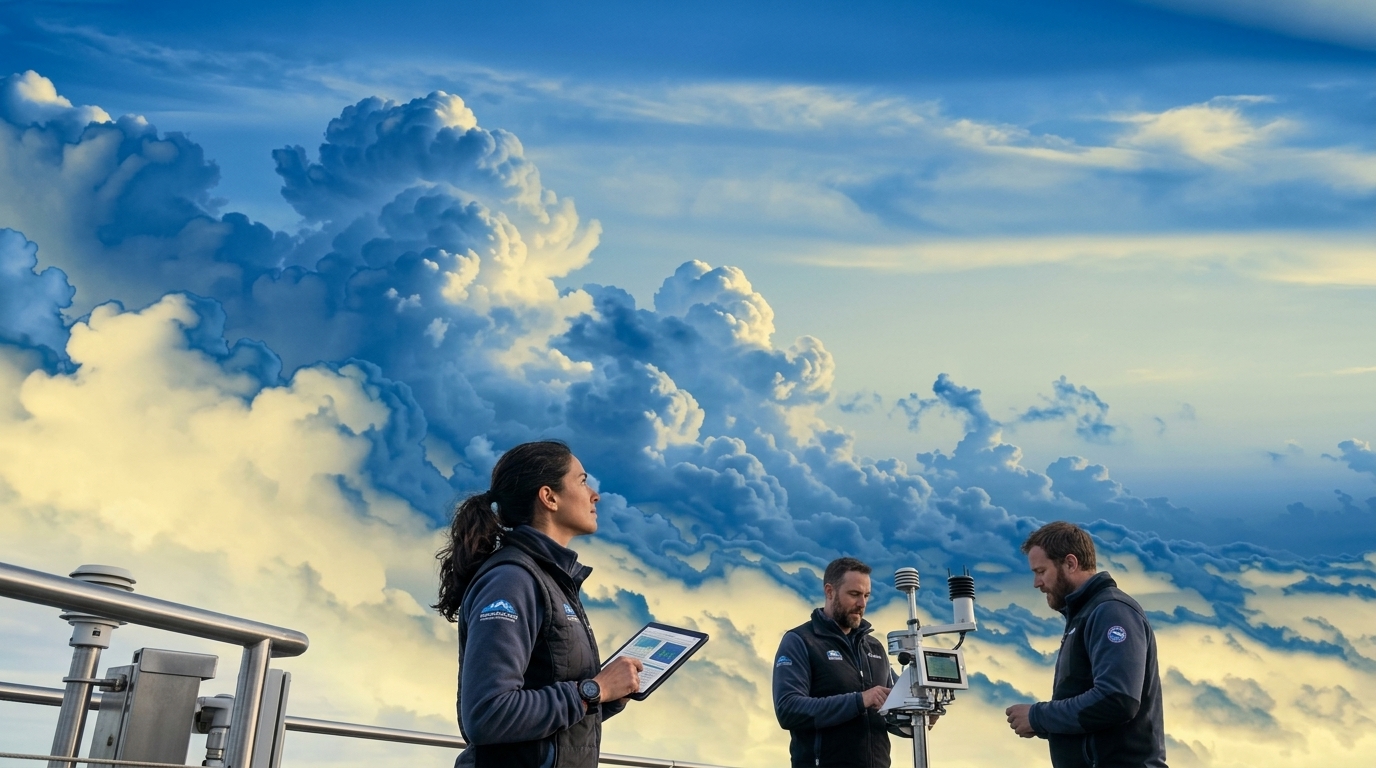
Google DeepMind and Google Research have unveiled WeatherNext 3, their most sophisticated AI model for global weather forecasting to date. By pivoting from traditional physics-based simulations to real-time satellite data, the model delivers forecasts that are five times sharper than its predecessor, WeatherNext 2.
Unprecedented Resolution and Speed
WeatherNext 3 generates hourly updates at multiple spatial resolutions, achieving a 5-kilometer grid for key surface variables like temperature and moisture. While traditional numerical weather prediction (NWP) models often suffer from a six-hour data lag due to complex supercomputing requirements, WeatherNext 3 ingests live geostationary satellite mosaics to provide a near-instantaneous view of the atmosphere.
Empowering Renewable Energy and Agriculture
The model introduces specific variables engineered for the green energy sector. It forecasts wind speeds at 100-meter altitudes—the typical height of turbines—and provides high-resolution data on cloud cover and solar radiation. These insights allow grid operators and solar farm developers to predict energy output with greater certainty, facilitating better integration of renewables into national economies.
Breakthrough in Precipitation Accuracy
Predicting rain and snow has historically been difficult for global AI models. WeatherNext 3 addresses this by training on NASA’s IMERG satellite data and Google’s own global precipitation reanalysis. The results show a significant leap in accuracy, with up to a 60% improvement in precipitation scoring for early lead times. The model is now powering weather experiences across Google Search, Maps, and Gemini, and is available for developers via Google Cloud and Earth Engine.