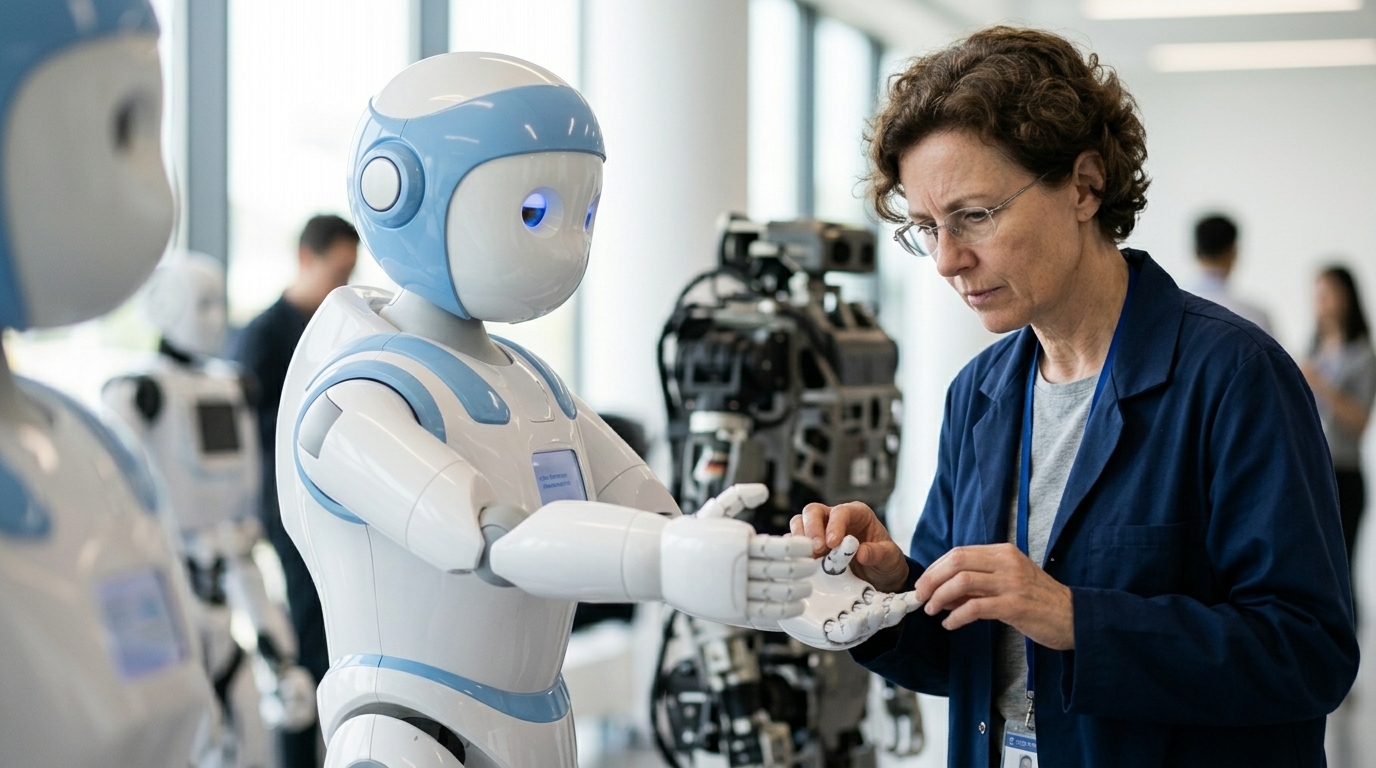
The effort to make robots more human and expressive may backfire. According to a new study published in the journal Science Robotics, people become significantly more suspicious of a humanoid robot that makes errors, especially when that robot is designed to be an expressive conversation partner.
The Oxytocin Paradox
Researchers observed 50 participants interacting with the commercial humanoid robot Pepper. In some scenarios, the robot was animated, using gestures and eye contact; in others, it remained motionless. When the expressive robot committed conversational errors—such as interrupting or offering illogical advice—participants' oxytocin levels spiked.
While oxytocin is popularly known as the "love hormone" for its role in social bonding, the study found it tracked with suspicion rather than affection in this context. Higher oxytocin levels during the robot's mistakes correlated with lower trust and a decreased likelihood of participants following the robot's advice.
Social Violation vs. Technical Malfunction
Using portable brain-imaging sensors (fNIRS), the team monitored activity in the dorsolateral prefrontal cortex and the medial prefrontal cortex. These regions are responsible for monitoring uncertainty and "mentalizing"—inferring the intentions of others. When the animated robot erred, these regions worked harder and more closely together.
The findings suggest that expressiveness shifts the perception of a mistake. An error from a motionless robot is viewed as a mechanical malfunction. However, the same error from an animated robot is perceived as a "social violation," engaging the same cognitive machinery humans use to judge one another.
Limitations and Future Steps
The study was limited to young men and a single robot design. Future research will focus on whether these oxytocin-linked reactions appear in women, diverse cultures, and different robot models. Additionally, researchers want to explore if robots can repair trust through apologies or acknowledging their mistakes, much like humans do after awkward interactions.