One of the greatest challenges in modern genetics is schizophrenia. Unlike diseases caused by a single mutation, this disorder appears to arise from a combination of hundreds of genetic variants, each with small effects on different brain processes. Some influence neural development, while others alter communication between neurons or the organization of brain connections.
The Role of Artificial Intelligence
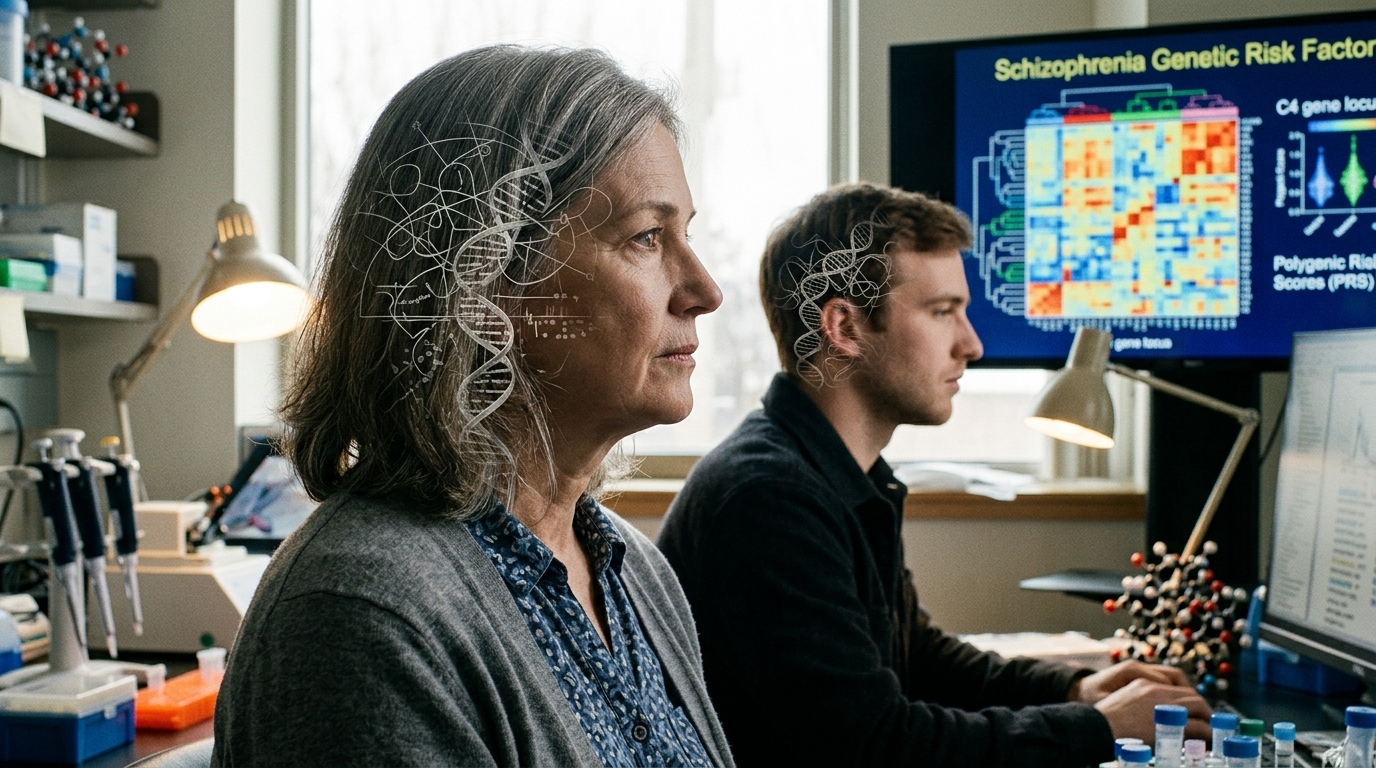
Understanding this complex genetic architecture requires more than just identifying a single root cause. Scientists need to understand how genes interact with one another and whether they form biological networks capable of amplifying risk. To answer that question, they used AI-based computational models to reconstruct the coordinated activity of thousands of genes within the human brain.
A study published in Nature Genetics now provides one of the most detailed pictures to date. The team identified 766 genes associated with schizophrenia, including 641 that had not appeared in previous transcriptomic analyses. Many of these genes were identified thanks to long-range genetic regulatory signals—evidence that reinforces the idea that the genes involved in the disease function as an interconnected network rather than as isolated elements.
A Detailed Genetic Map
The researchers compare the finding to turning on the lights in an entire neighborhood. Until now, they could only observe a few lit houses, but now they can make out a much larger portion of the disease’s genetic map. Instead of acting separately, the variants appear to coordinate and collectively contribute to the risk of developing the disorder.
The study analyzed genetic data from more than 102,000 people, as well as brain tissue samples from six brain regions obtained from hundreds of donors. Researchers from the Lieber Institute for Brain Development, the University of Bari, and dozens of psychiatric centers worldwide participated in the project. The World Health Organization estimates that schizophrenia affects about 23 million people globally—approximately one in every 345.