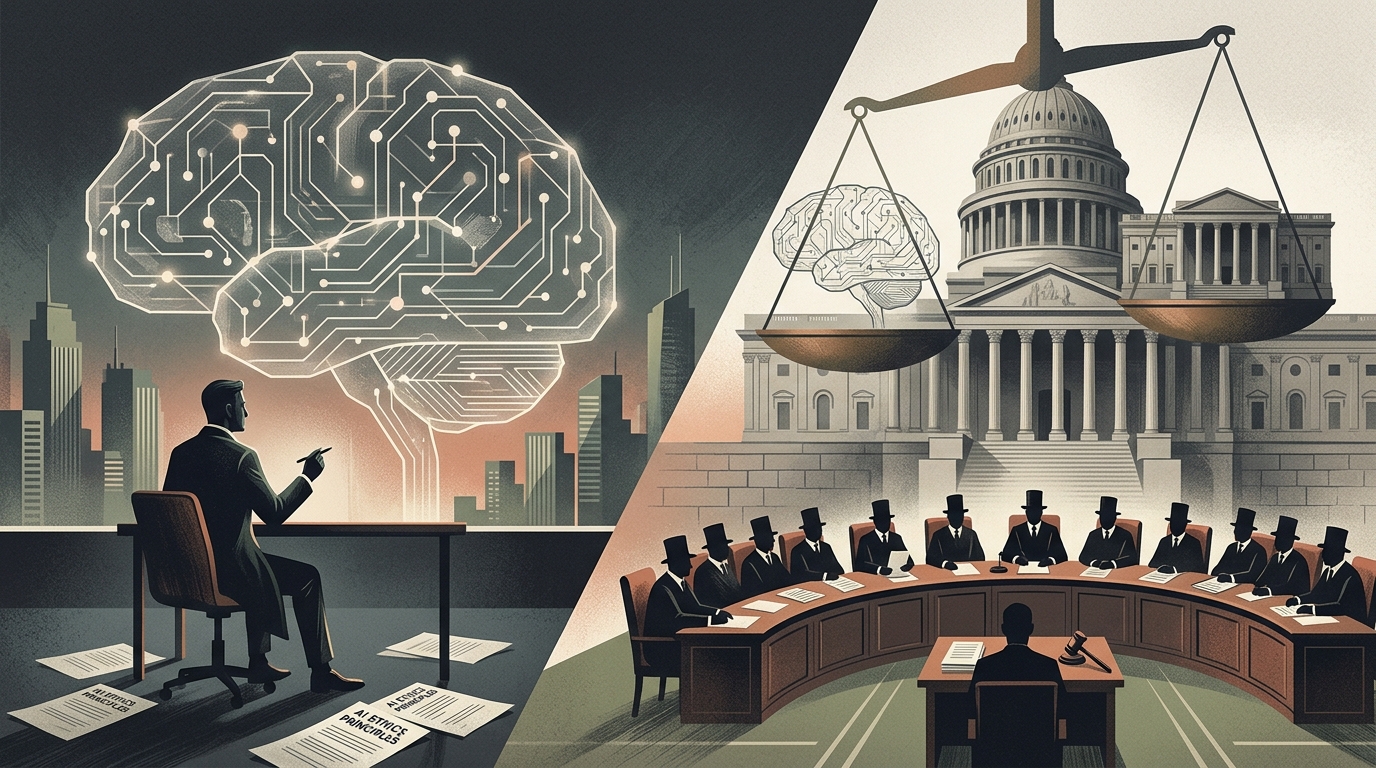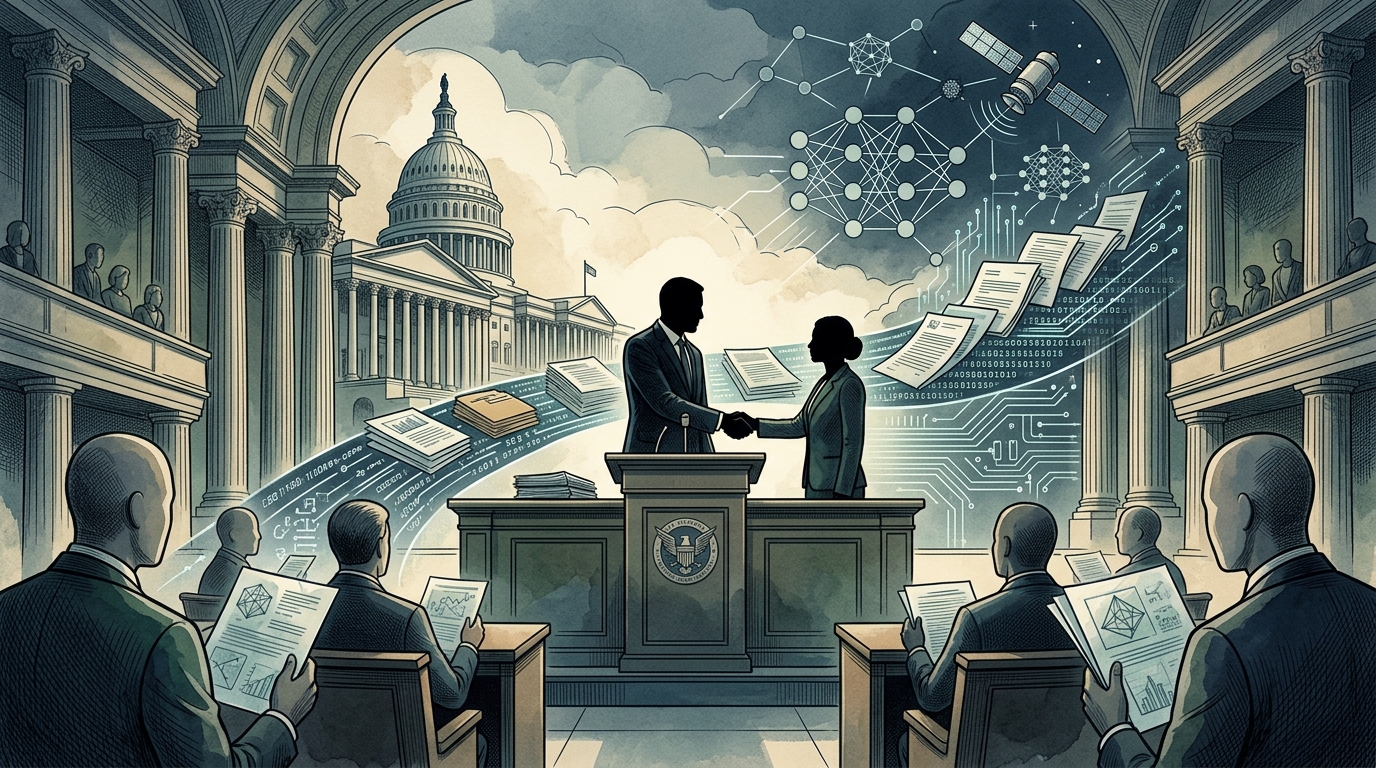
The era when Artificial Intelligence (AI) was a mere experimental playground for bank innovation labs is long gone. As we move through 2026, AI has become the central nervous system of the global financial architecture, influencing everything from mortgage approvals to the detection of sophisticated money laundering schemes. However, this ascent is accompanied by a rigorous new rulebook that banks can no longer afford to ignore—but equally, cannot afford to trust blindly.
The Regulatory Storm and Risk Classification
With the full implementation of the EU AI Act and recent stringent guidelines from the Basel Committee on Banking Supervision, the landscape has shifted fundamentally. Financial institutions find themselves under the microscope, as many of their core AI applications—particularly those involving creditworthiness assessments—are now classified as "high-risk." This means it is no longer sufficient for a bank to have an efficient model; they must prove at all times that these models are fair, transparent, and free from bias.
The challenge is twofold. On one hand, compliance demands massive investment and structural reorganization. On the other, an over-reliance on standardized regulatory frameworks can create a dangerous false sense of security. Banks that treat compliance as a mere bureaucratic checklist risk missing the forest for the trees: the critical need to deeply understand how their algorithms behave during periods of market stress or unprecedented social shifts.
The Black Box Dilemma and Systemic Fragility
A primary point of contention is "explainability" (XAI). Traditional banking relied on linear models that were relatively easy to interpret. Modern Generative AI and deep neural networks often operate as "black boxes." When a bank denies a loan application based on such a model, regulators now demand to know the specific "why." The inability to provide a clear rationale is not just a customer service failure; it is a legal liability.
Furthermore, there is the burgeoning risk of systemic uniformity. If the world’s largest financial institutions utilize similar AI models—often trained on the same foundational datasets—a single algorithmic bias or a shared predictive failure could trigger a localized error into a global contagion. Blindly trusting these models without robust "human-in-the-loop" oversight transforms AI from an efficiency tool into a potential catalyst for systemic collapse.
Survival Strategy: Moving Beyond Compliance
To thrive in this environment, financial institutions must cultivate a culture of "algorithmic accountability." This involves several key pillars:
- Continuous Auditing: Models must be monitored in real-time, not just at deployment, to detect "model drift" or performance degradation.
- Data Diversification: Moving beyond historical data that may encapsulate past societal biases to ensure equitable outcomes.
- Investing in Specialized Talent: The demand for professionals who sit at the intersection of finance, data science, and ethics has reached a fever pitch.
Ultimately, the AI rulebook for banks is not a static document. It is a living process that requires constant critical evaluation. The institutions that will lead the next decade are those that view regulation not as a hurdle, but as a framework for building deep-seated consumer trust in an increasingly automated world.
"Trust is the currency of the future, and in the age of AI, trust is earned through transparency, not just technical prowess."