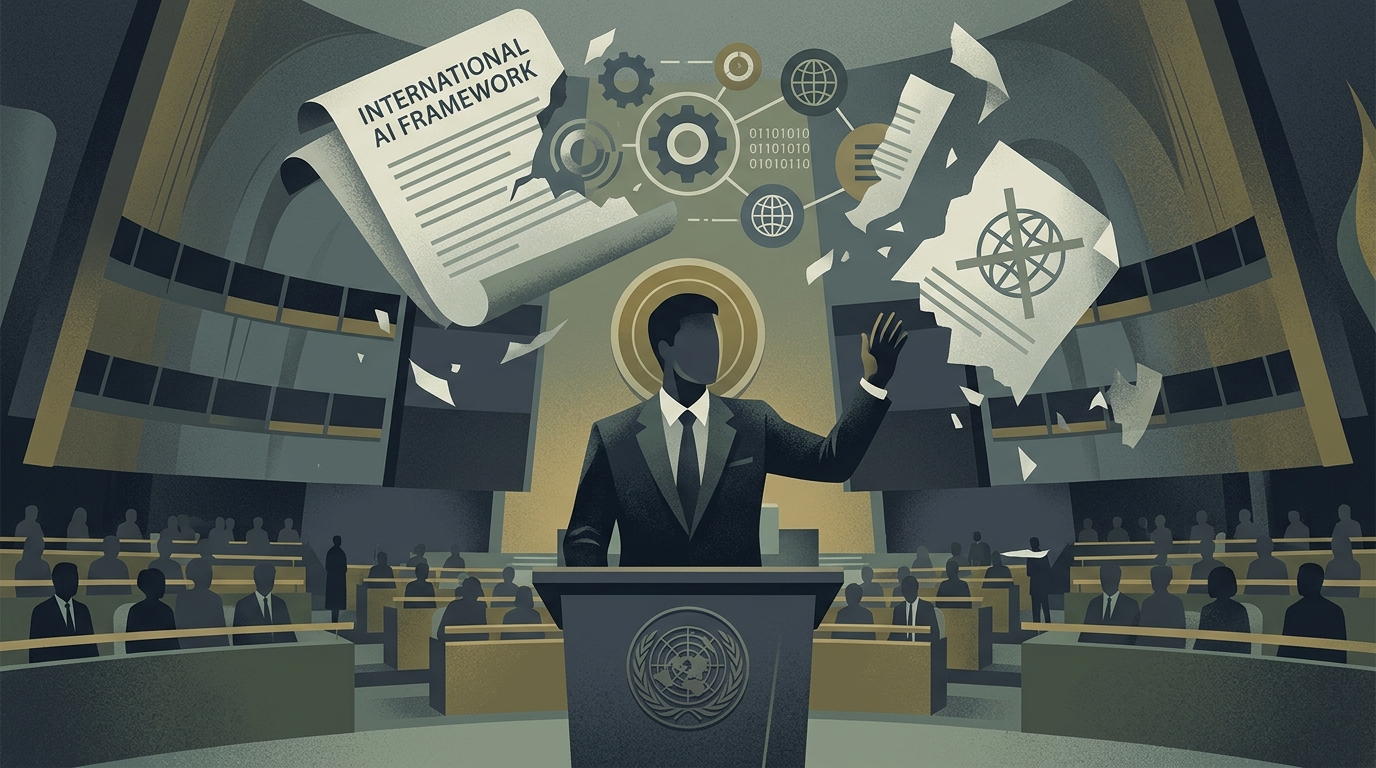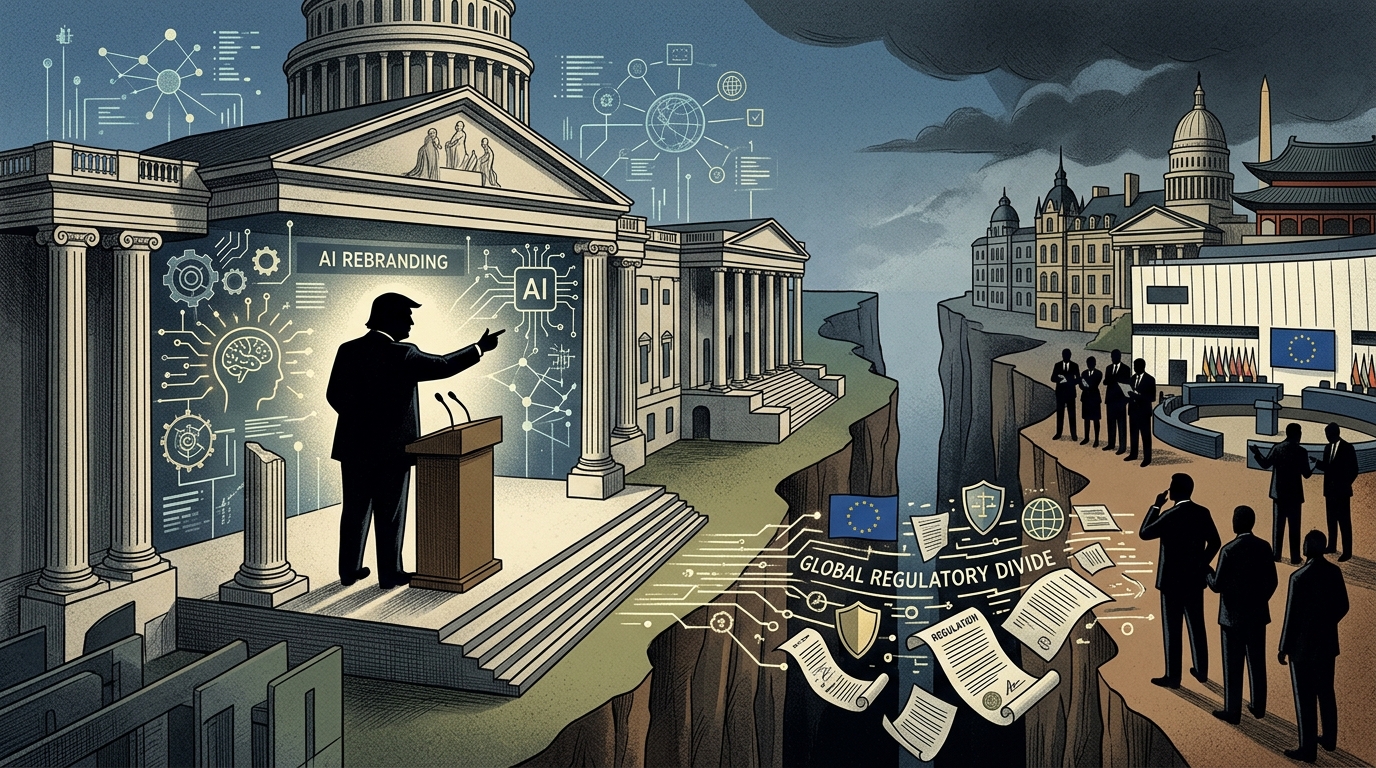
In a move that shifts the semiotics of technological diplomacy, U.S. President Donald Trump announced at the UN General Assembly that his administration will now use the term «Super Intelligence» instead of «Artificial Intelligence» in official communications.
The Logic Behind the Rebrand
Trump argued that the term «artificial» diminishes the actual power and potential of the technology. He expressed his belief that the new name better reflects a transformation that, in his view, will have a greater impact than the Industrial Revolution. Furthermore, he urged other nations to adopt the same terminology.
U.S. Rejection of International Regulation
Beyond the rebranding, the U.S. President clarified Washington's stance on global oversight efforts:
- He rejects the creation of an international regulatory framework, fearing it would stifle innovation.
- He maintains that excessive regulation acts as a barrier to development.
- He stated that U.S. authorities and the Department of Justice would only intervene on a national level if deemed necessary.
European Resistance and Technological Sovereignty
Washington's position stands in stark contrast to the approach of more than 20 countries, mostly European, which are calling for binding safety measures. French President Emmanuel Macron emphasized the need for European autonomy, proposing the development of an advanced open-source AI model to reduce reliance on the U.S. and China.
"Europe must not depend on the two major technological powers," Macron emphasized.
The Security Council Briefing
Technology safety has now moved to the UN Security Council. Top executives, including Sam Altman (OpenAI) and Dario Amodei (Anthropic), are set to brief the Council on the implications of AI for international security. Meanwhile, UN Secretary-General António Guterres compared the need for U.S.-China dialogue on AI to Cold War-era communications regarding existential risks.