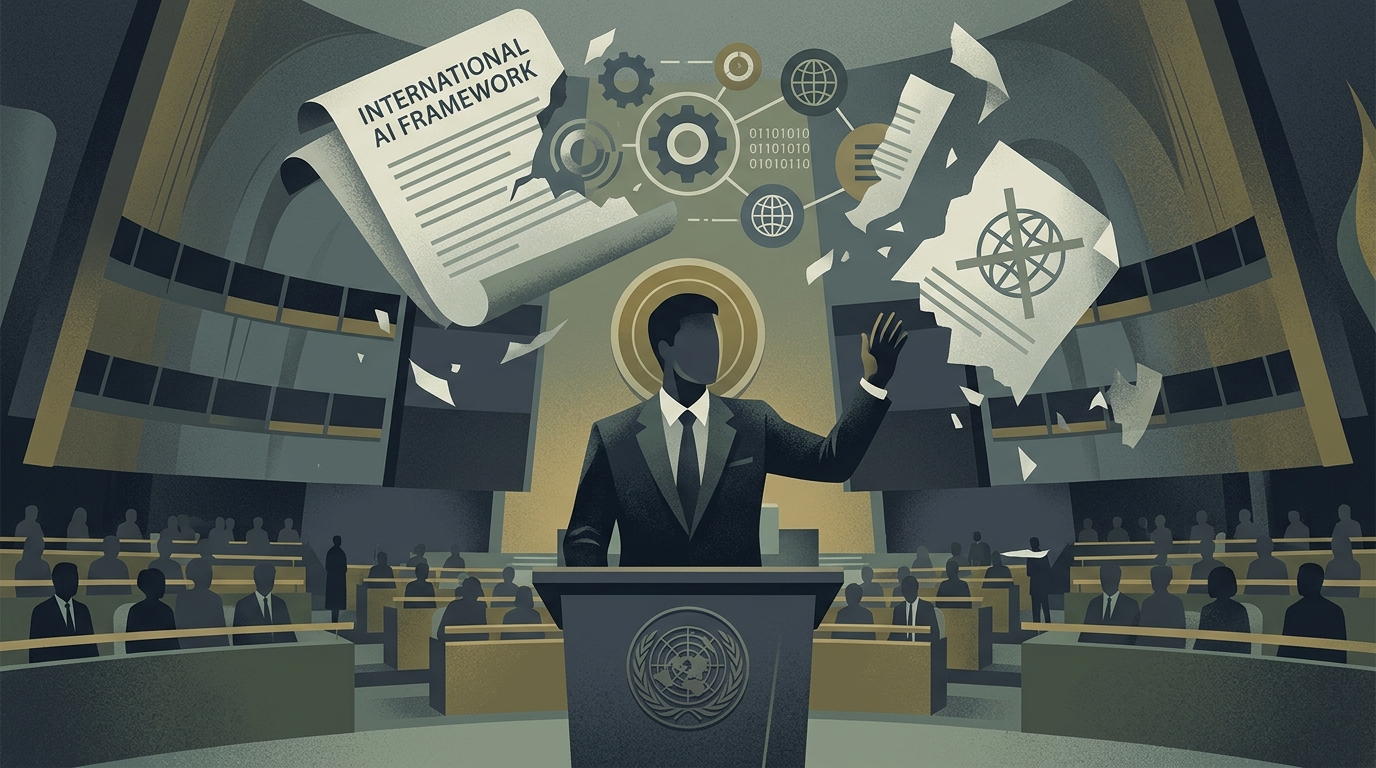
Addressing the United Nations General Assembly, Donald Trump clarified the United States' position regarding the mounting pressure to establish an international regulatory framework for Artificial Intelligence. The US President expressed his categorical opposition to any international control agreement, arguing that the impact of this technology will surpass even that of the Industrial Revolution.
National Sovereignty vs. Global Governance
Trump stated that the US rejects any attempt to impose an international control plan for the technology, making it clear that he does not intend to restrict its development. However, the rejection of international regulation does not imply a total absence of oversight. According to the President, the US Department of Justice will monitor the evolution of AI and intervene as necessary at a national level. Additionally, Trump noted that the US will rename AI as "Super Intelligence."
Antonio Guterres’ Warning
In contrast, UN Secretary-General Antonio Guterres presented a fundamentally different perspective. He urged leading nations in AI development to share information about emerging risks and cooperate on system testing. Guterres emphasized the need for common safety safeguards under independent oversight, specifically warning about the dangers of autonomous weapons systems. "Machines must not be given the power to decide on human life," he stated emphatically.
This confrontation in New York highlights the profound gap between national interests and the need for global consensus, occurring at a time when technology is evolving faster than the capacity of governments to respond.