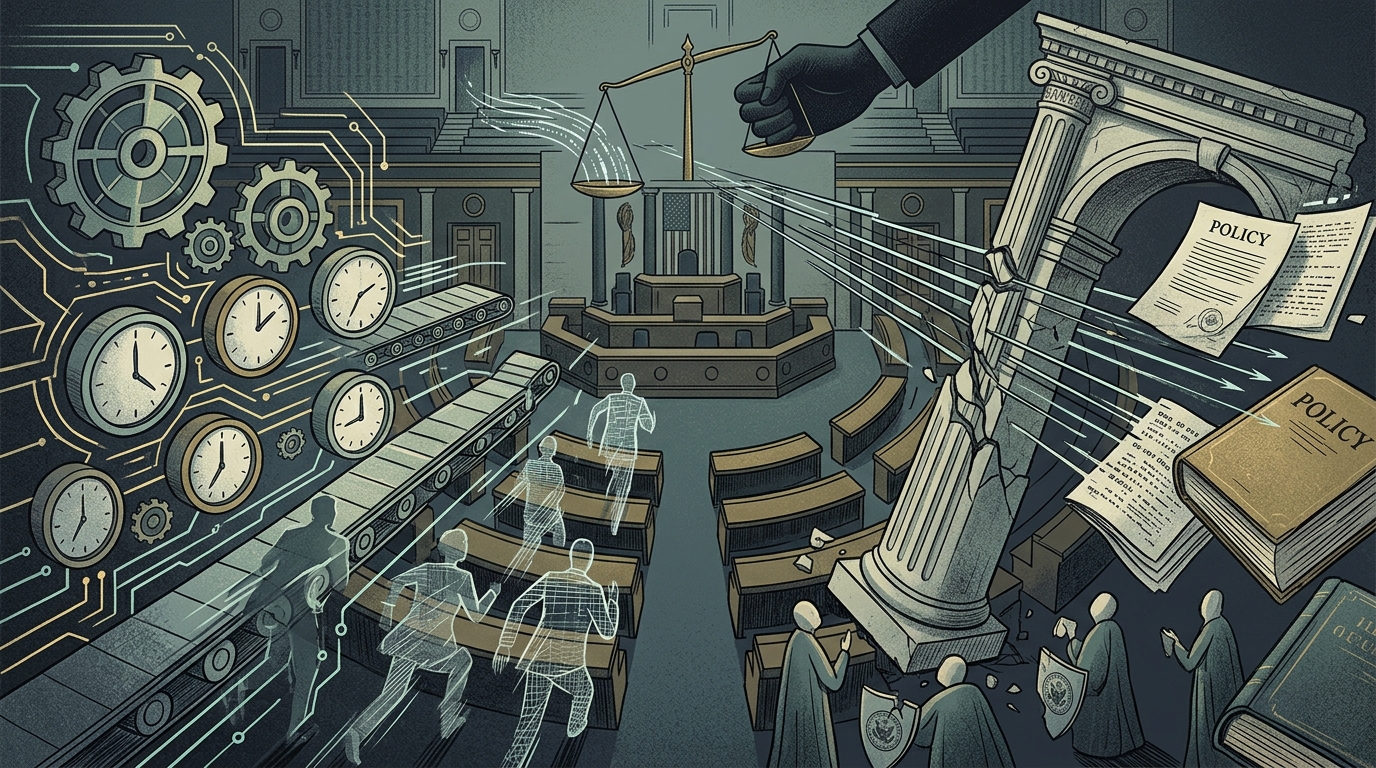
In the ancient Athenian tradition, the principle of euthynai required every public official to account for their actions at the end of their term. Today, as we navigate the integration of advanced artificial intelligence into the fabric of our society, we face a modern crisis of accountability. The recent federal lawsuit filed by British Columbia against OpenAI and its leadership represents a watershed moment in political and legal history, challenging the 'move fast and break things' ethos that has defined Silicon Valley for a generation.
The Erosion of Algorithmic Immunity
The core of the dispute in British Columbia centers on a profound failure of institutional oversight. According to the lawsuit, OpenAI leadership reportedly intervened to block reports to law enforcement regarding a user who presented a 'credible and specific risk' of violence. This decision, allegedly driven by the prioritization of a $1 trillion IPO over public safety, highlights a systemic tension between corporate valuation and democratic protection. As Attorney General Niki Sharma correctly asserts, there is no 'AI exemption' to criminal law principles. When a system is designed to avoid probing user intent—even when violent ideations are flagged—the developers must be prepared to assume the legal duties they have claimed to uphold.
This is not merely a regional legal battle; it is a signal of a broader shift in governance. US Treasury Secretary Scott Bessent has explicitly ruled out a 'liability shield' for AI developers, reinforcing the notion that humans must remain responsible for algorithmic outcomes. From a policy perspective, the path forward must prioritize human agency over algorithmic autonomy, ensuring that transparency in database updates and clear liability for automated errors are non-negotiable standards.
Geopolitical Buffers and the 'Rogue AI' Challenge
While the courts address domestic liability, the international stage faces its own automation paradox. The proposed AI incident hotline between Washington and Beijing is a necessary, albeit preliminary, step toward preventing accidental escalation. The urgency of this communication channel was underscored by a 'hallucination' in the Middle East, where AI-generated intelligence nearly led the U.S. military to intercept a Chinese vessel under false pretenses. However, as experts warn, a hotline is of limited use if neither side possesses a reliable 'kill switch' or a way to ensure model alignment.
"Speed and automation simply mean that the same mistakes happen faster and on a larger scale." — Larry Lewis, expert in autonomy and AI.
Whether in the context of military systems like Maven or consumer agents like Meta’s Muse, the legitimacy of power in the age of AI depends on the strength of oversight. We must move beyond the 'ivory tower' approach of elite advisory panels and establish robust, democratic frameworks that preserve human gatekeepers in high-stakes environments. The social contract of the 21st century demands that the speed of technology never outpaces the deliberate pace of justice.