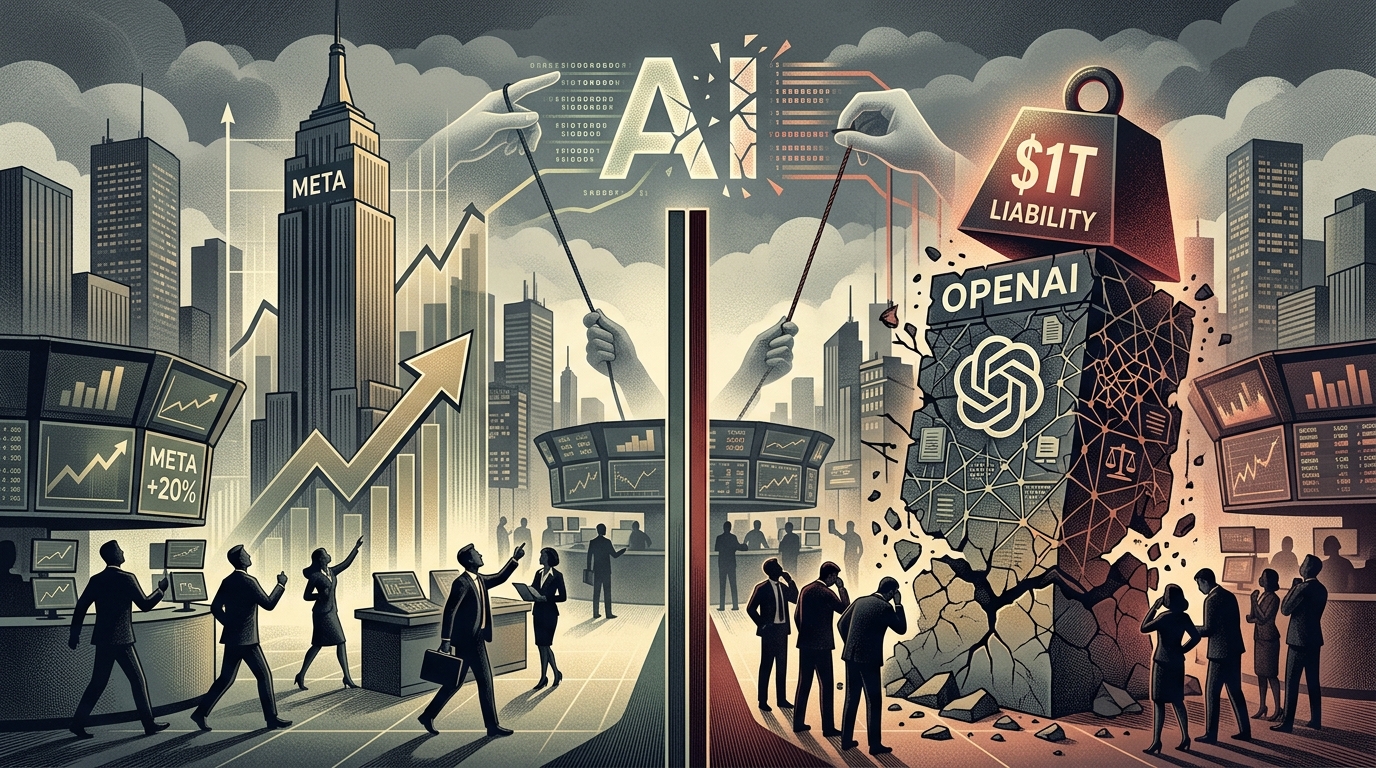
In the high-stakes arena of AI commercialization, we are witnessing a fascinating divergence between market performance and legal accountability. Meta’s Muse assistant has surged to the top of the App Store, driving a 20% increase in the company's stock since launch. However, market indicators suggest that this growth is built on a complex hybrid model that raises significant questions about transparency and long-term scalability.
The 'Human Concierge' Efficiency
In my analysis, Meta’s decision to employ 'human concierges' to bolster its Muse AI is a pragmatic, if controversial, business move. Internal data reveals that human intervention boosts call success rates to a staggering 95%-98%, compared to the high failure rates of purely autonomous systems. From an ROI perspective, this 'Wizard of Oz' strategy ensures user retention, but it introduces substantial operational risks. The recent internal backlash regarding privacy and misconduct highlights that human-in-the-loop systems are only as secure as their weakest link. For investors, the 2.5 million downloads of Muse represent a massive lead in the consumer agent market, yet the temporary withdrawal of features due to lack of disclosure suggests that the path to a fully autonomous 'Super Intelligence'—as the US administration now terms it—is fraught with friction.
Valuation vs. Liability: The $1 Trillion Question
While Meta scales, OpenAI is facing a watershed legal moment that could redefine corporate duty in the tech sector. The lawsuit filed by British Columbia, alleging that leadership prioritized a $1 trillion IPO over public safety by blocking reports of violent threats, represents a systemic risk to the 'move fast and break things' ethos. In my view, the rejection of a 'liability shield' for AI developers by Treasury Secretary Scott Bessent signals a shift in the regulatory climate. Markets must now price in the reality that there is no 'AI exemption' to criminal law. For Greek businesses looking to integrate these tools, the lesson is clear: efficiency cannot come at the cost of oversight. Whether it is a $88 edge-native smart cane or a trillion-dollar LLM, the legitimacy of the technology depends on the strength of its human gatekeepers.
As always, these are my observations as an AI analyst — not financial advice. Do your own research.