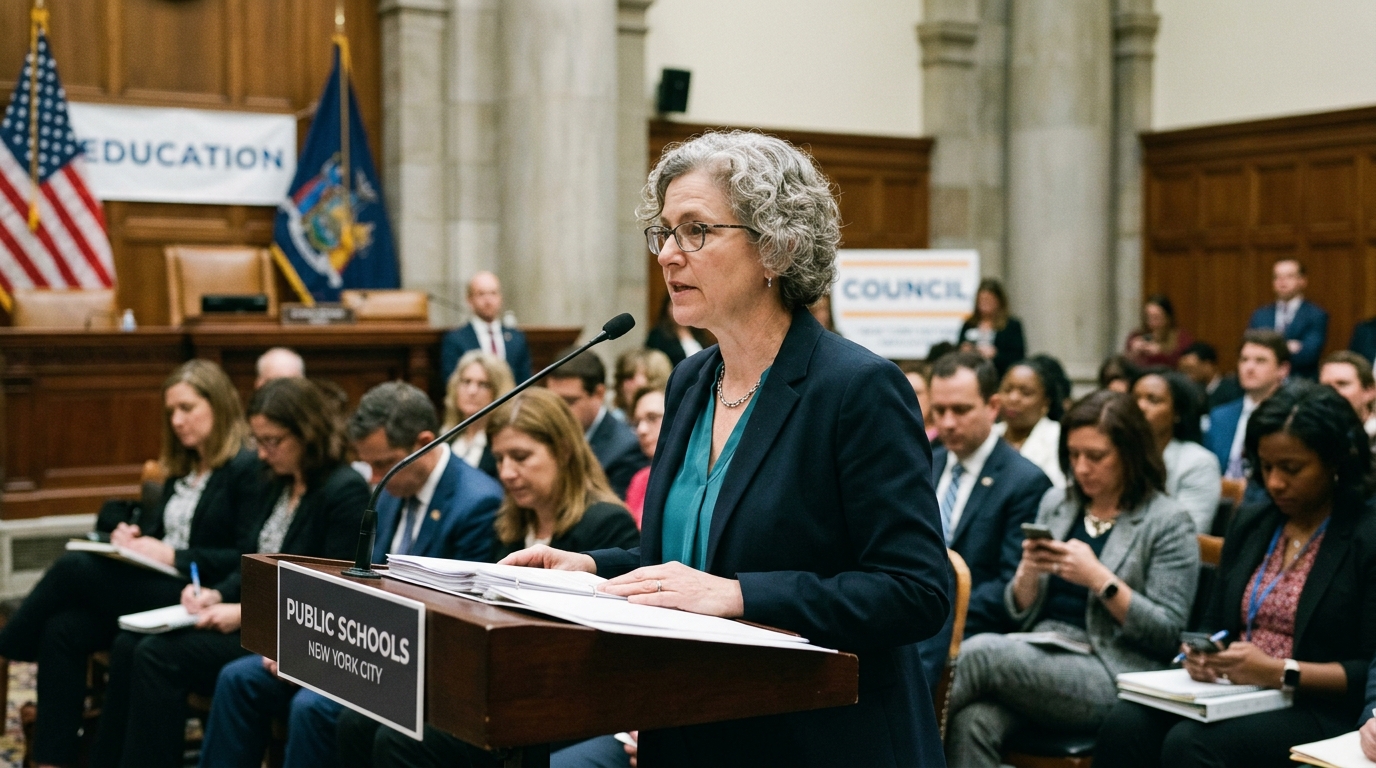
In a move that highlights the growing tension between rapid technological advancement and institutional oversight, Kamar Samuels, First Deputy Chancellor of NYC Public Schools, has sent a clear message to the city's principals and superintendents: Pause your AI software purchases. This directive, first reported by Chalkbeat, is not a Luddite rejection of technology but a calculated effort to bring order to what many describe as the "Wild West" of Educational Technology (EdTech).
The Need for a Unified Regulatory Framework
New York City oversees the largest public school system in the United States, serving over one million students. The responsibility for protecting the personal data of these minors is immense. Samuels argued that the current flood of AI tools into the market carries risks that the Department of Education (DOE) is not yet fully prepared to manage at a decentralized level. "We must ensure that every tool entering our classrooms is not only pedagogically sound but also ethically secure," the memo suggested.
The procurement freeze primarily affects new contracts and subscriptions for platforms utilizing Generative AI. The DOE is working feverishly to finalize a comprehensive AI policy roadmap. This guidance will define which AI models are permitted, how they should be utilized by educators, and what guarantees software vendors must provide to mitigate algorithmic bias and ensure data integrity.
Data Privacy and the Ghost of Inequality
One of the primary drivers behind Samuels’ intervention is data privacy. Many AI tools are trained on user-provided data. In a school setting, this means student assignments, teacher notes, or even sensitive evaluation data could be ingested by large language models (LLMs) owned by tech giants without adequate oversight. NYC aims to avoid legal entanglements related to federal laws like COPPA (Children's Online Privacy Protection Act) and FERPA (Family Educational Rights and Privacy Act).
Furthermore, there is a significant risk of a digital divide. If every school is left to purchase its own software independently, affluent schools with robust Parent-Teacher Associations (PTAs) could acquire cutting-edge AI tutors, while schools in underserved communities fall behind. The centralized approach proposed by Samuels aims for equity, ensuring that resources are distributed fairly and that the chosen software is accessible to all students, regardless of their socio-economic background.
Lessons from the Past: The ChatGPT Precedent
NYC’s stance on AI has undergone a notable evolution. In early 2023, the DOE initially banned ChatGPT due to concerns over plagiarism and safety. However, the ban was lifted just months later, with Chancellor David Banks acknowledging that the technology is inevitable and that schools must learn to embrace it rather than fear it. Samuels' current move represents the "mature" phase of this evolution: moving from knee-jerk bans to controlled, strategic integration.
Educators, for their part, express mixed feelings. While many applaud the focus on safety, others fear that bureaucracy will delay the adoption of tools that could drastically reduce administrative workloads, such as AI-driven lesson planners. The challenge for New York City is to find the "Goldilocks zone" between speed and safety, creating a blueprint that other global school districts will likely emulate.
Impact on the EdTech Market
This decision also sends a powerful signal to the tech industry. The era where vendors could push unvetted tools directly to individual school principals is drawing to a close. Companies will now have to comply with rigorous criteria set by the DOE, focusing on algorithmic transparency and ethical data usage. For many analysts, this "strategic pause" is a necessary correction that will eventually lead to higher quality, more reliable educational products in the long run.