

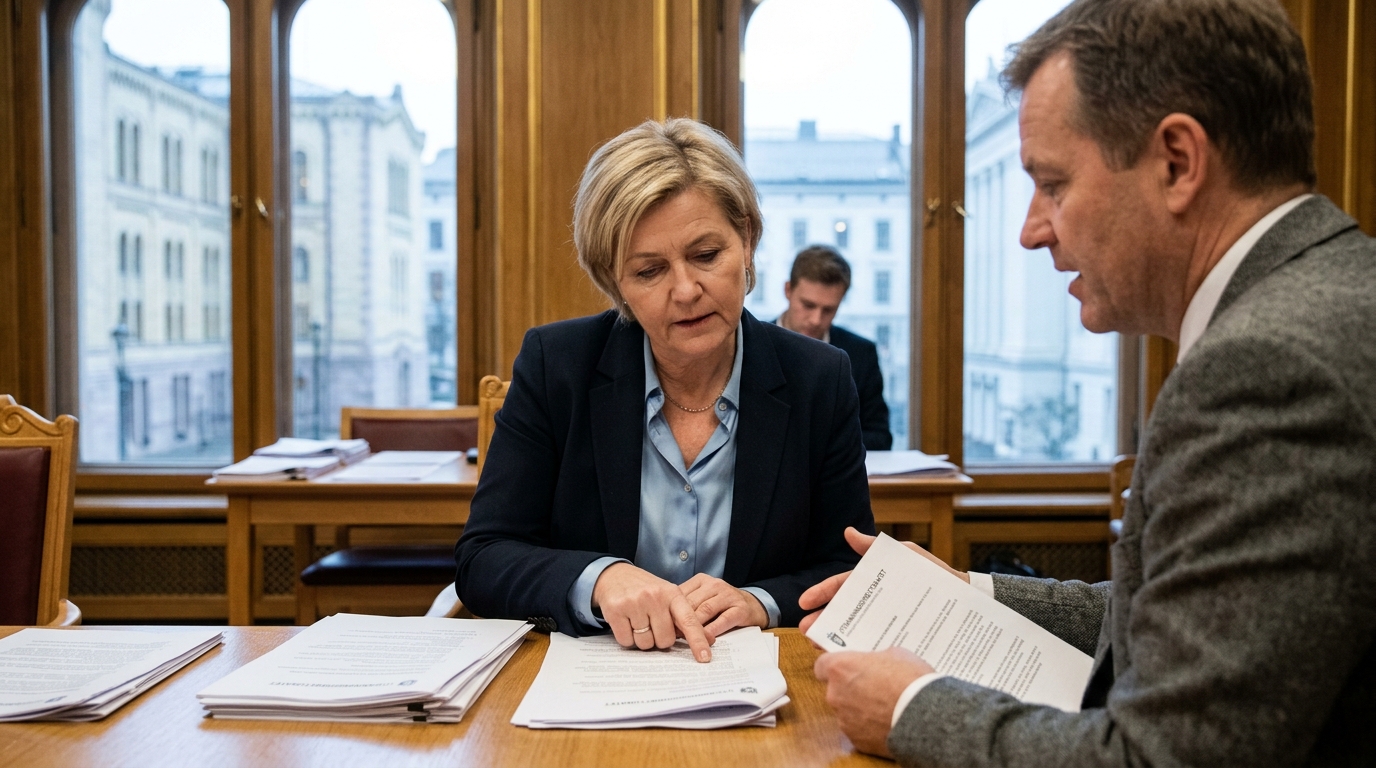
In an era where the rest of the world seems to be racing at breakneck speed toward the full integration of Artificial Intelligence (AI) into every facet of daily life, Norway—a nation traditionally at the forefront of digital innovation—has decided to hit a resounding “brake.” The Oslo government, led by Minister of Education Kari Nessa Nordtun, has announced a series of strict restrictions on the use of AI and digital media in primary schools, signaling a historic shift back to traditional learning methods.
This decision was not made in a vacuum. It represents the culmination of an intense national debate over declining student performance in reading and concentration—phenomena that many experts link directly to excessive screen exposure and premature contact with generative AI tools. For Norway, the stake is not the denial of progress, but the protection of children's cognitive development at a critical age.
The Decline in Performance and the PISA Warning
The primary catalyst for this policy shift was the recent results from the PISA international assessment, which showed a worrying decline in Norwegian students' reading skills. Norway, which was among the first countries to replace traditional books with tablets and laptops (often at a one-to-one ratio), found itself facing a harsh reality: technology did not necessarily lead to better learning outcomes.
Minister Nordtun has been clear in her statements: “Children must first learn to read on paper and write by hand before being exposed to the complexity of digital tools.” The government argues that while AI offers immense possibilities, in the hands of a primary school child, it can act as a “cognitive crutch,” hindering the development of critical thinking and linguistic proficiency. A student's ability to compose a text or solve a problem without the help of an algorithm is now considered fundamental to their subsequent academic path.
The Philosophy of “Digital Detox” in Education
Norway’s new strategy includes reintroducing physical books into classrooms and limiting access to tools like ChatGPT for younger students. This is not a total ban but a move toward “controlled use.” Educators are now encouraged to use AI as a supportive tool for lesson preparation but are urged to prevent students from using it to complete their assignments.
According to the report by the “Screen Committee” (Skjermutvalget), which advises the government, constant switching between apps and the distractions caused by digital environments undermine so-called “deep reading.” Deep reading is the process by which the brain does not just absorb information but analyzes, connects, and critiques the content. In the digital age, this ability tends to disappear as students become accustomed to fast scrolling and ready-made AI answers.
AI: Threat or Tool for the Future?
Norway's move is triggering reactions within tech circles. Some analysts argue that limiting AI in schools will leave students unprepared for the future labor market, where “algorithmic literacy” will be essential. However, the Norwegian government responds that this literacy is not built through premature use but through a proper foundation.
“We cannot ask a child to drive a racing car before they learn to walk,” ministry circles have noted. The challenge for the coming years will be finding the middle ground. Norway does not intend to become a “digital desert,” but seeks to create an educational model where technology is the servant rather than the master of the learning process. This shift follows the example of Sweden, which also withdrew tablets to reinvest in libraries, showing that Scandinavia—the region that first embraced the digital future—is also the first to recognize its side effects.
“Technology must support pedagogy, not replace it. The return to paper is not a step backward; it is the reclamation of human attention.” — Kari Nessa Nordtun, Minister of Education, Norway.




