

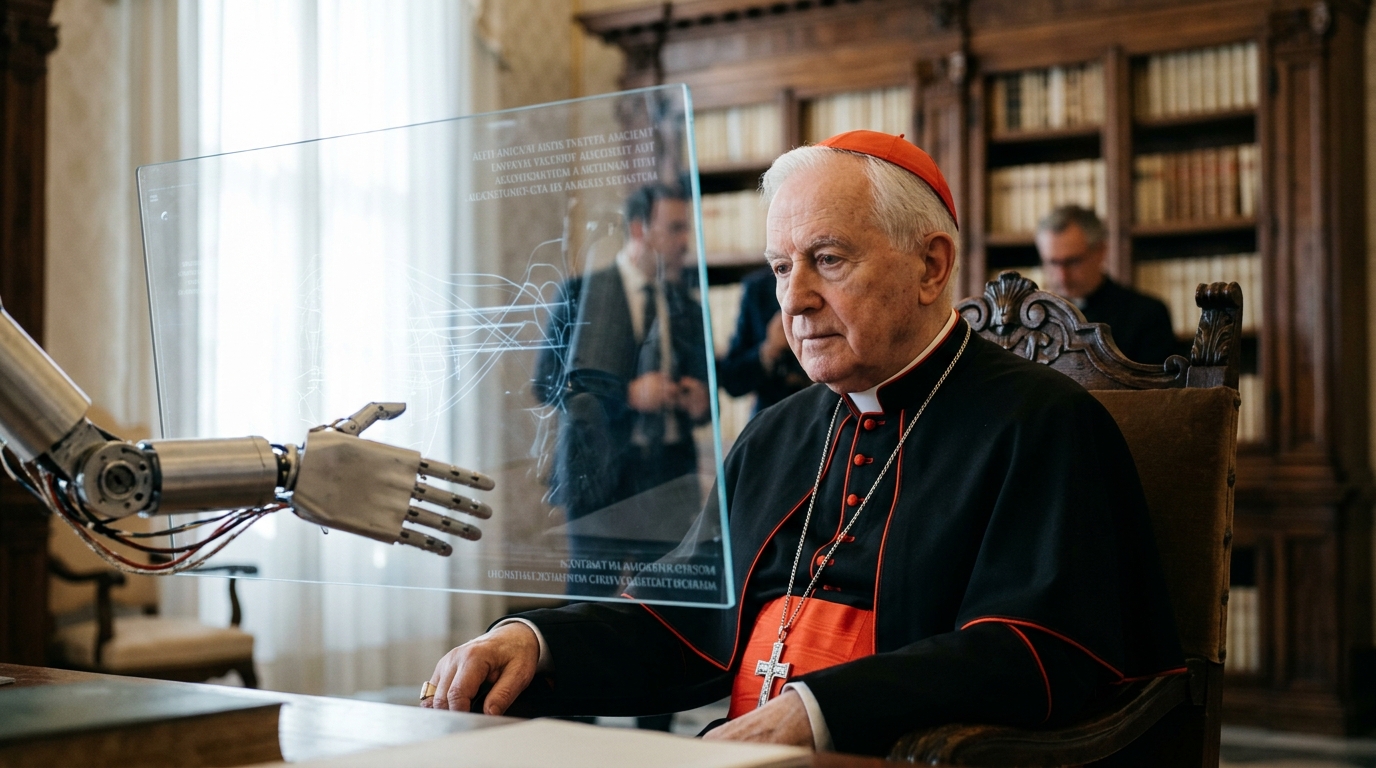
In a world increasingly fragmented by the velocity of digital advancement, the Vatican has stepped forward with a profound philosophical and ethical proposition: the urgent need to rebuild the "grammar of 'we'." As we navigate mid-2026, Artificial Intelligence is no longer a speculative future; it is an omnipresent fabric influencing every dimension of human interaction. The Holy See, through its recent interventions, argues that technology, if left without an ethical compass, risks transforming society into a collection of isolated "I's," eroding our collective identity and the very foundations of community.
The Concept of 'Algor-ethics'
The term "algor-ethics," championed by the Vatican, is more than a linguistic novelty. It represents a fundamental shift in how we approach the programming and deployment of AI systems. The core argument is that algorithms are not morally neutral tools. Every line of code encapsulates the values, biases, and priorities of its creators. Rebuilding the "grammar of 'we'" demands that algorithms be designed with the common good in mind, rather than solely for profitability, surveillance, or efficiency.
According to the Pontifical Academy for Life, the ethics of AI must be anchored in three pillars: transparency, inclusion, and accountability. In an era where decisions regarding healthcare, employment, and social welfare are increasingly dictated by automated systems, the loss of the human element can lead to a new form of technocratic despotism. Rebuilding the "we" means ensuring that no machine ever has the final word on human destiny without meaningful human oversight and moral consideration.
The Challenge of Digital Isolation
One of the most concerning aspects of modern technology, as highlighted by the Vatican, is the creation of "digital echo chambers." AI, through recommendation engines, tends to feed users content that reinforces pre-existing beliefs. This leads to a polarization that makes genuine dialogue nearly impossible. The "grammar of 'we'" serves as an antidote to this fragmentation. It is a call to return to the authentic encounter, where difference is not viewed as a threat but as a source of richness and growth.
- The necessity for inclusive technology that does not marginalize vulnerable communities.
- Protection of at-risk populations from algorithmic manipulation and exploitation.
- Promotion of digital literacy as a tool for critical thinking and social cohesion.
- International cooperation to regulate AI beyond national and corporate borders.
The Vatican emphasizes that fraternity is not an abstract sentiment but a political and ethical category that must be integrated into technological development. If AI is used to build walls instead of bridges, then we have failed as a civilization. The goal is to ensure that the "we" is not just a collection of data points, but a living community of persons.
Towards a New Digital Humanism
The challenge for the coming years is the establishment of a "digital humanism." This implies that technology must serve humanity, and not the other way around. The Vatican invites scientists, policymakers, and industry leaders to ask a fundamental question: "Does this innovation make us more human? Does it help us care for one another and our common home?"
"Technology is a gift from God, but it must be used to build a world where everyone feels recognized and loved," states the Holy See's latest communication.
In conclusion, rebuilding the grammar of "we" is an invitation to a new social contract for the digital age. It is not a rejection of progress, but a demand that progress possesses a human face—the face of our neighbor. As AI continues to evolve and integrate into the very marrow of our existence, the need for an ethics that unites us rather than divides us will only become more imperative. The grammar of "we" is the only language that can truly narrate a future worth living.




