

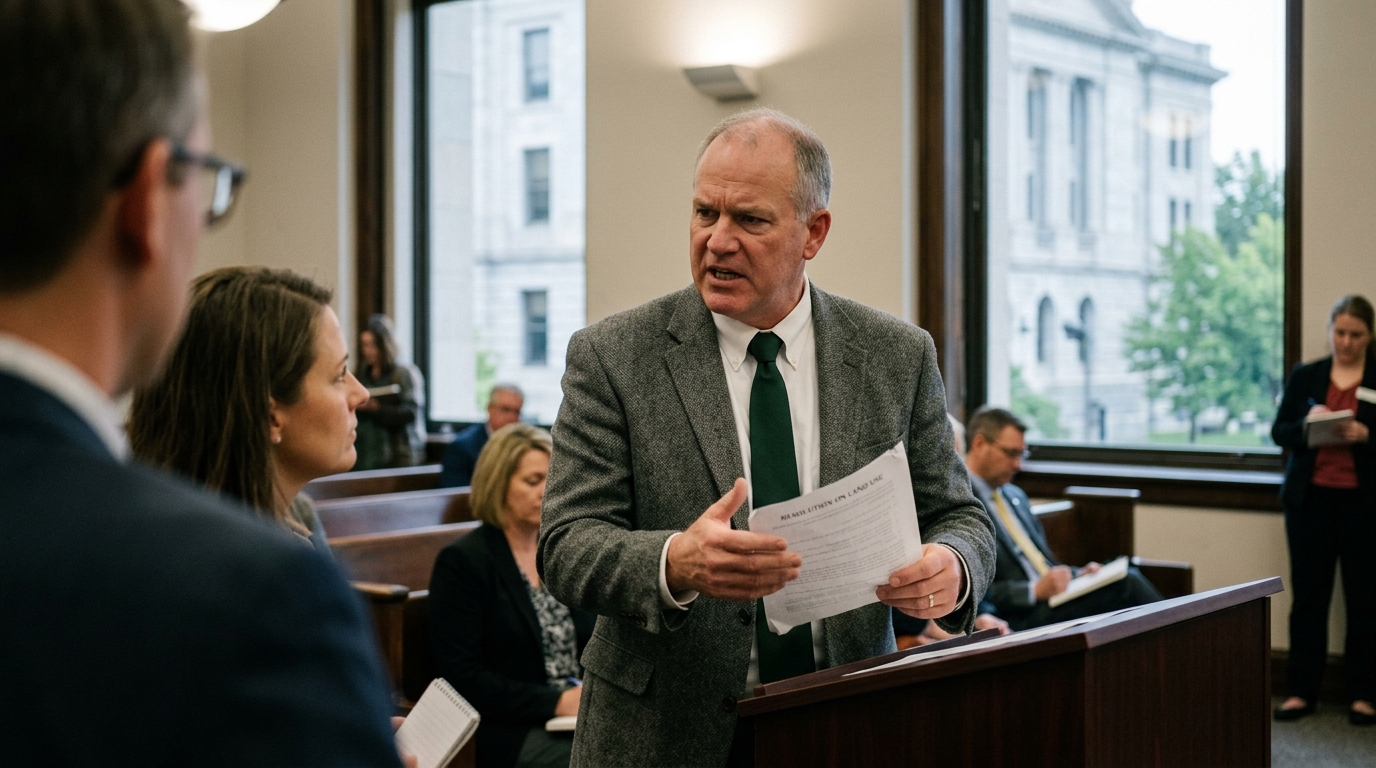
In the shifting political landscape of the 2026 midterms, a surprising rift is opening within the Republican Party. While President Donald Trump continues to champion a doctrine of "energy dominance" and the rapid expansion of Artificial Intelligence (AI) infrastructure, a growing number of GOP candidates are breaking ranks. The drive for local votes is proving more potent than party loyalty, as massive data center complexes become the latest flashpoint for voters in rural and suburban districts across the United States.
The Collision of National Strategy and Local Survival
The White House's strategy is transparent: America must win the AI arms race against China, a goal that necessitates a vast network of new data centers. Trump has repeatedly promised Silicon Valley titans that his administration will slash red tape and bypass environmental hurdles to facilitate this expansion. However, in the trenches of local politics, this pro-industry stance is hitting a wall. Republican candidates in key battlegrounds like Virginia, Georgia, and Ohio are finding that endorsing these projects is a political liability.
Voters are increasingly vocal about three core issues: noise pollution, excessive water consumption, and, most critically, the surge in electricity costs. Data centers require immense amounts of power to operate and cool their servers, often straining the local grid to its breaking point. This forces utility companies to raise rates for residential consumers to fund infrastructure upgrades, creating an economic burden that hits voters directly in their pockets. Coupled with the industrialization of previously scenic landscapes, the resulting backlash is formidable.
Unlikely Allies: From AOC to the Conservative Base
Perhaps the most striking aspect of this development is the ideological convergence. Just two years ago, opposition to data center sprawl was largely the domain of progressive Democrats like Alexandria Ocasio-Cortez and Bernie Sanders, who focused on environmental degradation and corporate excess. Today, GOP candidates are adopting similar rhetoric, albeit framed through a different lens. Instead of "climate justice," they speak of "property rights" and "local sovereignty."
"We cannot sacrifice our residents' quality of life just so Silicon Valley giants can train their algorithms on our dime," a GOP candidate in Northern Virginia recently stated, directly challenging the Trump administration's narrative.
This trend highlights a deepening fracture within the conservative movement: the clash between the traditional pro-business wing and a newer, populist movement that prioritizes the local community over global corporate interests. Candidates are realizing that while Trump may be courting tech CEOs in Mar-a-Lago, they are fighting for their political lives in neighborhood town halls.
Implications for the Tech Industry
For the technology sector, this political pivot is a burgeoning nightmare. Giants like Microsoft, Google, and Amazon have poured billions into these facilities, operating under the assumption that political support from the right was guaranteed. The sudden hostility from Republican lawmakers suggests that future projects will face a gauntlet of legal challenges, stricter zoning laws, and potential tax hikes on infrastructure.
- Delays in AI deployment as local litigation stalls construction.
- Requirement for investment in more expensive, "green" cooling solutions to pacify local opposition.
- A potential flight of capital to international markets, though the proximity to US fiber networks remains a significant anchor.
In conclusion, the battle over data centers has transcended technical and economic spheres to become a central political issue. As the November 2026 elections approach, the ability of candidates to balance national AI ambitions with local preservation will not only dictate election results but also the very pace of technological progress in the United States.





