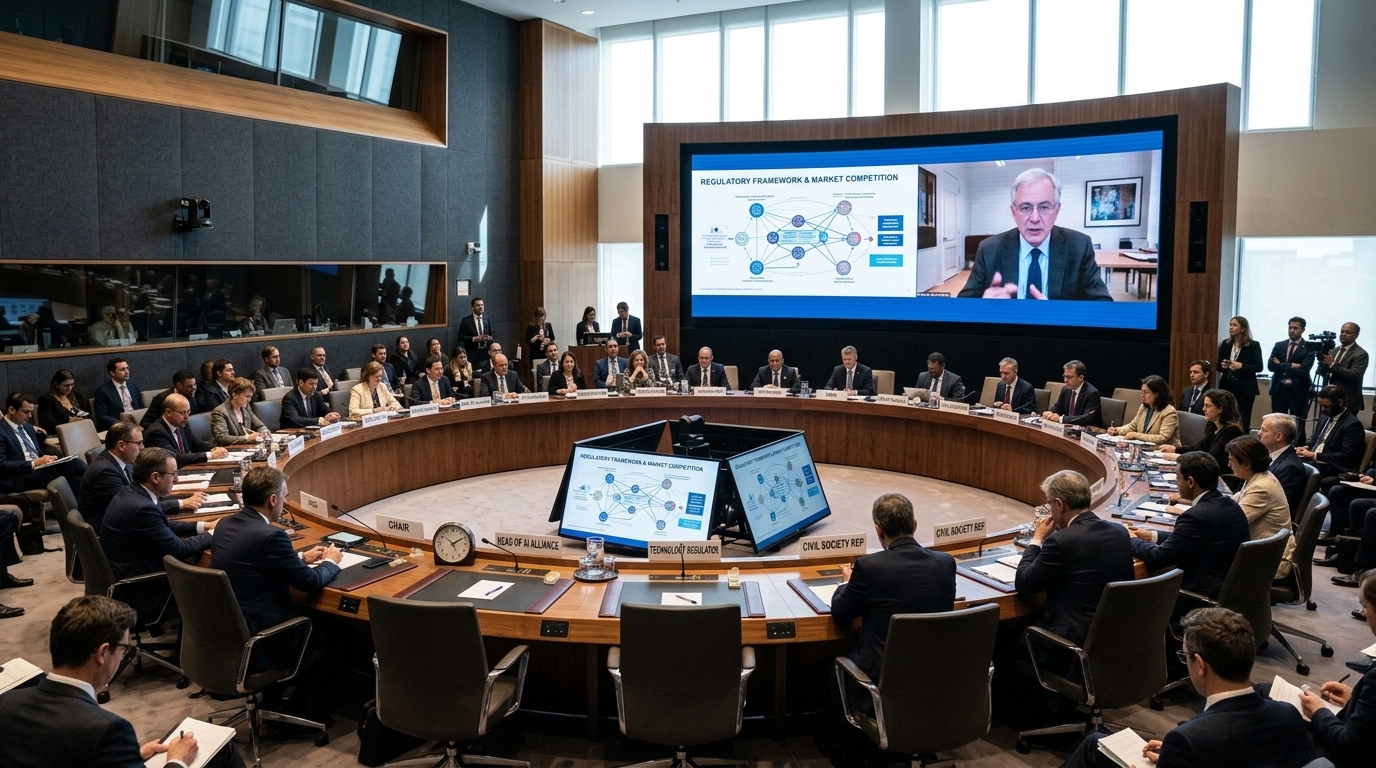
Recent meetings in New York have exposed a profound divide within the international community regarding the regulation of artificial intelligence. A new initiative, backed by 22 leaders from 20 countries—including the President of the European Commission—calls for stricter controls on the most advanced AI models. However, the absence of the industry’s two dominant powers, the US and China, calls into question the effectiveness of any global framework.
The Drive for Human Agency
Led by Finnish President Alexander Stubb and Norwegian Prime Minister Jonas Gahr Støre, the declaration establishes the maintenance of human control over AI systems as a fundamental principle. The signatories, which include Germany, Canada, and Australia, acknowledge the technology's benefits but emphasize the urgent need for reliable risk assessment.
The proposal outlines specific demands for technology companies:
- Public disclosure of safety protocols.
- Rigorous testing prior to the release of new models.
- Granting independent evaluators access to examine potential risks.
Washington’s Stance vs. the UN's Warning
Speaking at the UN General Assembly, US President Donald Trump explicitly rejected the idea of an international regulatory framework. He framed AI as a massive opportunity for the United States and made it clear that his administration does not intend to limit its development through global plans, favoring national oversight if deemed necessary.
In contrast, UN Secretary-General António Guterres warned of the risks posed by unmanaged technology, specifically focusing on autonomous weapons. Guterres argued that it is imperative that machines are never allowed to make life-and-death decisions.
An Uncertain Future for Global Cooperation
Despite the participation of nations across Asia, Africa, and the Middle East, the refusal of the US and China to sign the declaration leaves the initiative as a political appeal rather than a binding agreement. Without consensus from the world's primary AI competitors, the creation of an international institution to set safety standards remains a distant prospect.