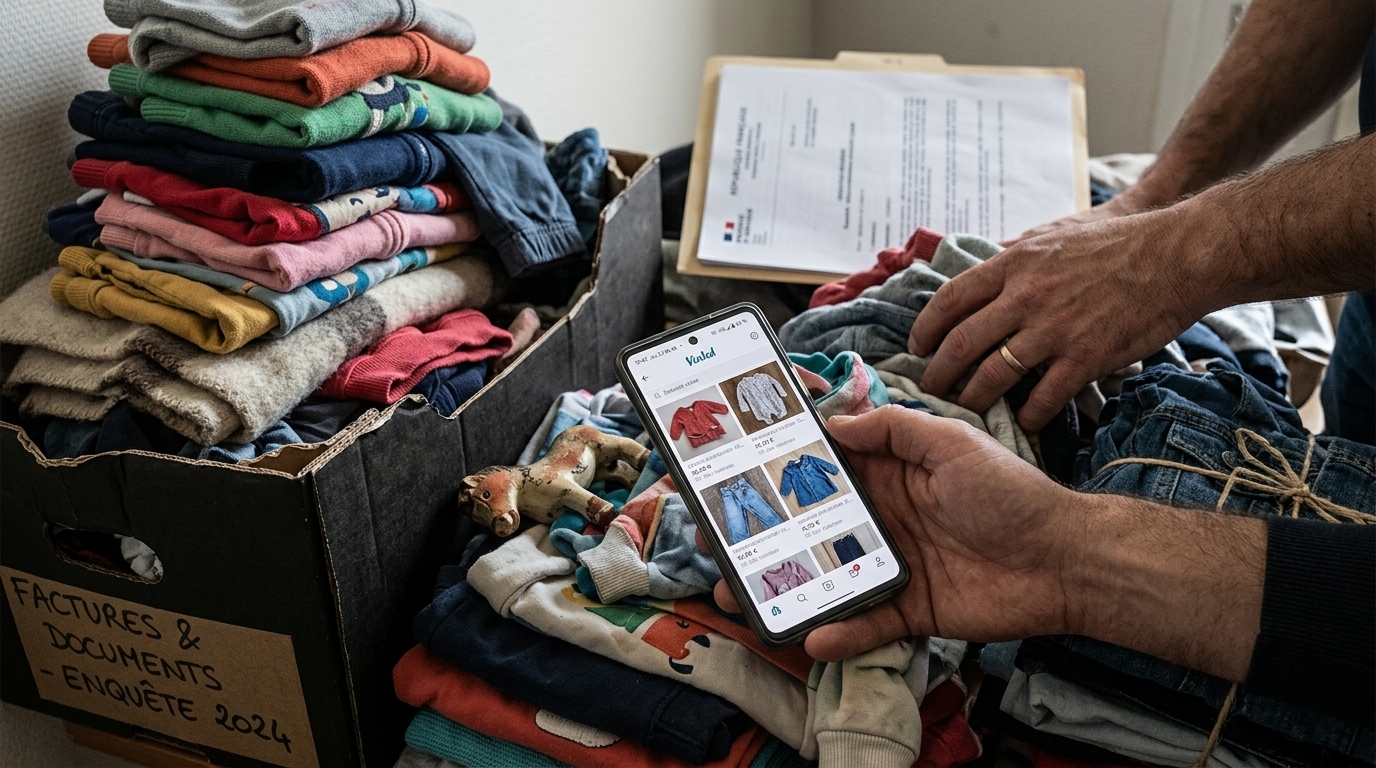
In an era where the circular economy is championed as a pillar of sustainable growth, Vinted, the Lithuanian 'unicorn' that has come to dominate the European second-hand market, finds itself facing one of the darkest allegations a digital platform can encounter. The Nanterre prosecutor's office in France has confirmed the opening of a preliminary investigation following a wave of complaints regarding suspicious listings which, according to social media users, may serve as a front for child trafficking.
The issue first gained traction through 'digital detectives' on TikTok and X (formerly Twitter), who flagged listings for simple children's clothing or toys with price tags reaching tens of thousands of euros. What sparked intense concern was not just the absurdity of the cost, but the product descriptions, which allegedly contained coded language, children's names, and unintelligible strings of numbers. While Vinted maintains these are merely 'glitches' or 'trolling,' French authorities are duty-bound to investigate whether something far more sinister lurks behind the screen.
The Timeline of Complaints and Judicial Response
The investigation has been handed over to the Central Office for the Combating of Violence against Persons (OCRVP), a specialized unit of the French national police. The mobilization of such a high-level agency reflects the gravity of the claims, even though no concrete evidence has yet been presented linking these listings to specific cases of abduction or trafficking. However, the legal basis for the probe is not limited to potential trafficking; it extends to the platform's potential negligence in moderating its content.
Legal analysts suggest the case bears a striking resemblance to the 'Wayfair' conspiracy theory that gripped the US in 2020. At that time, the furniture giant was falsely accused of selling children inside expensive cabinets named after missing persons. In Vinted's case, the situation is complicated by the platform's peer-to-peer (C2C) nature, which makes monitoring millions of daily posts a Herculeable task for AI-driven moderation systems.
Between Conspiracy Theories and Real Threats
It is crucial to distinguish between online paranoia and actual risks. Cybersecurity experts point out that such listings are frequently used for money laundering or transferring funds from illicit activities (such as narcotics), as Vinted provides a relatively anonymous environment for micro-payments. While human trafficking is the most extreme and difficult scenario to prove, the mere existence of these listings exposes vulnerabilities in the company's oversight mechanisms.
"Trust is the only currency that matters in the platform economy. If users feel the marketplace is tainted by criminal elements, a collapse is inevitable," states a French digital market analyst.
Vinted, for its part, issued a statement claiming it is "fully cooperating with the authorities" and maintains "zero tolerance for illegal activities." However, the delay in removing the controversial listings—some of which remained active for days despite user reports—is a primary point of contention under European law.
Platform Responsibility and the EU Regulatory Framework
This case brings the European Union's Digital Services Act (DSA) into sharp focus. This regulation imposes strict obligations on large platforms to combat illegal content and protect minors. If Vinted is found to have failed in implementing adequate control mechanisms, it faces fines of up to 6% of its global annual turnover.
- Automated Oversight: Algorithms often fail to recognize coded language, irony, or context-specific threats.
- Human Factor: A lack of sufficient moderators who speak local languages and understand cultural nuances remains a systemic issue.
- Algorithmic Transparency: The growing demand for platforms to explain how they prioritize and approve listings.
In conclusion, the French investigation serves as a wake-up call for the entire e-commerce sector. Whether this turns out to be a case of mass hysteria fueled by social media algorithms or a genuine criminal infiltration, the outcome is the same: an urgent demand for absolute transparency and stricter state oversight of the digital empires that now shape our daily lives.