

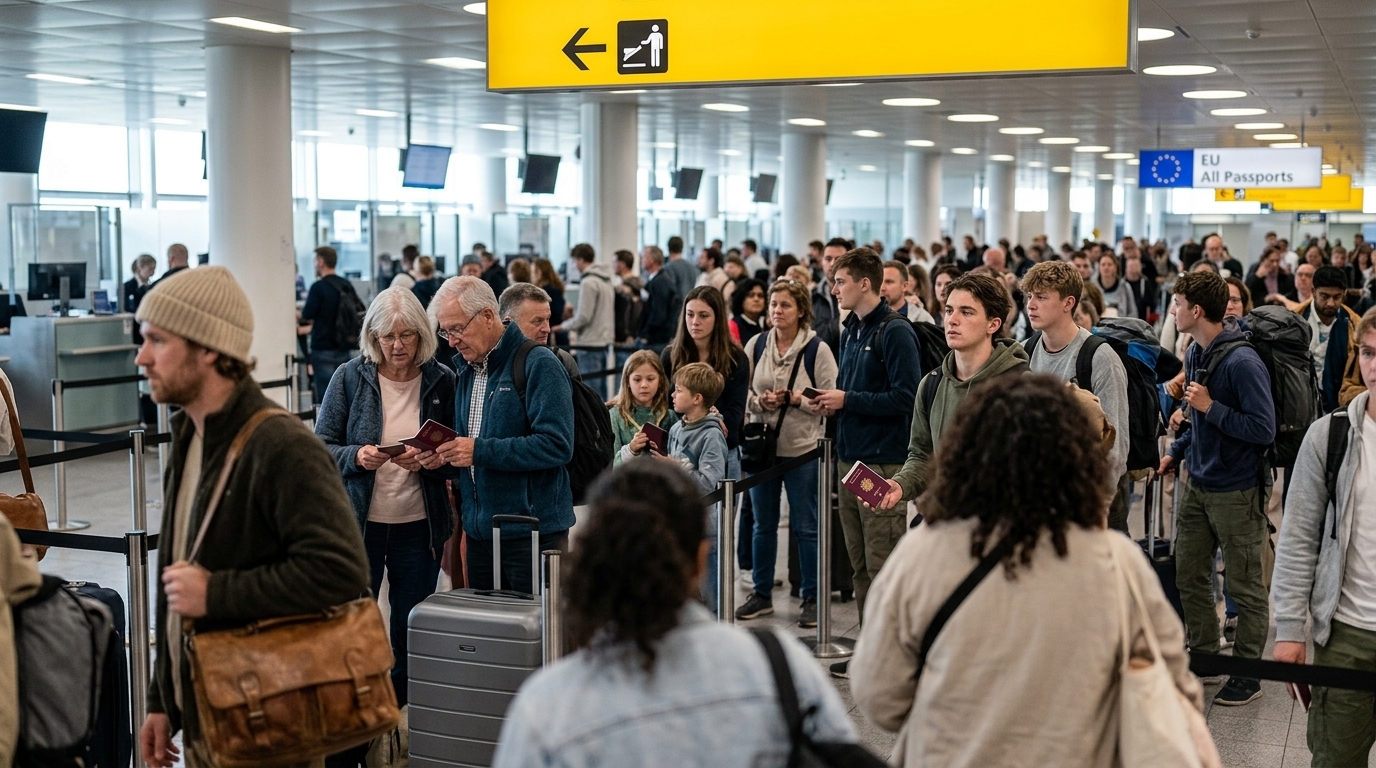
European bureaucracy and technical challenges seem to have won another round in the battle to digitize the Old Continent's borders. The European Travel Information and Authorisation System (ETIAS), originally scheduled to launch years ago, appears to be headed for another significant postponement. According to recent reports and insights from Brussels, the full implementation of the system may not be feasible until late 2026 or even early 2027, raising questions about the readiness of European Union infrastructure.
The EES Enigma and System Interdependence
The primary cause of the delay is not found solely within ETIAS itself, but in its prerequisite, the Entry/Exit System (EES). The EES is the foundation upon which the electronic travel authorization will stand, as it will replace manual passport stamping with an automated recording of biometric data for third-country travelers. Without a fully functional EES, ETIAS remains a paper tiger.
The difficulties in implementing the EES are multi-layered. Many member states face serious issues installing the necessary hardware at airports, seaports, and land borders. The requirement to capture fingerprints and facial images in real-time from millions of travelers annually demands a level of computing power and network speed that many border stations currently lack. Furthermore, the interoperability of national databases with the central system managed by eu-LISA (the EU Agency for the Operational Management of Large-Scale IT Systems) is proving to be a technological nightmare.
Technological Hurdles and Bureaucratic Obstacles
The complexity of the project is unprecedented. ETIAS will affect citizens from over 60 countries who currently enjoy visa-free entry to the Schengen Area, including the US, UK, Canada, and Australia. This involves approximately 1.4 billion people who will need to apply online and pay a €7 fee before their journey.
Delays are also attributed to software bugs discovered during testing phases. Ensuring General Data Protection Regulation (GDPR) compliance is another hurdle, as the system must cross-reference traveler data with international security databases (Interpol, Europol) without infringing on civil liberties. The European Commission insists that security cannot be sacrificed for the sake of speed, making these postponements inevitable.
Economic and Social Implications
For the tourism industry, this new delay is a double-edged sword. On one hand, travel agents and airlines are breathing a sigh of relief, fearing that a rushed implementation would cause chaos at airports and deter tourists. On the other hand, prolonged uncertainty makes long-term planning difficult.
Particularly for countries like Greece, which relies heavily on non-EU tourism (especially from the US and UK), a smooth transition to the new regime is vital. The delays provide more time for public awareness campaigns but simultaneously highlight the EU's struggle to execute large-scale digital projects within deadlines. The cost of delay is not just financial but political, as "Fortress Europe" appears unable to complete even its digital gates.
The Future of European Borders
Despite the setbacks, ETIAS remains a central pillar of the European security strategy. The goal is to identify individuals who may pose a security or public health threat before they even reach the border. Digitization is the only way forward, but the path is proving to be fraught with obstacles.
In the future, the process of entering the EU will more closely resemble the experience of travelers to the US using the ESTA system. The application will be simple, approval will be granted within minutes in the vast majority of cases, and the authorization will be valid for three years. However, until we reach that point, travelers and authorities alike must remain patient as Brussels' digital bureaucracy continues to find its footing.





