

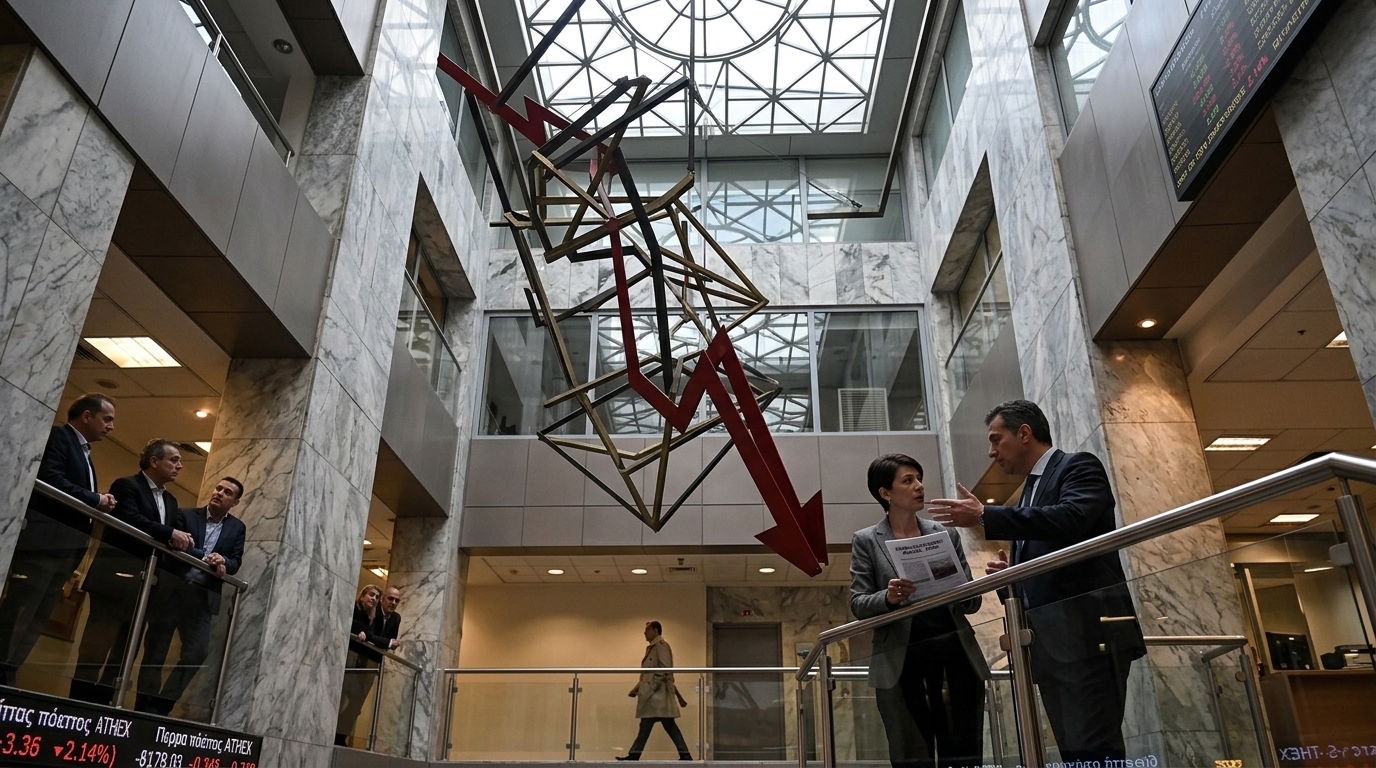
July 9, 2026, will be remembered as a day of intense volatility for the Athens Stock Exchange (ASE), as the General Index recorded a significant drop of 2.14%, closing near critical technical support levels. The domestic market, despite showing signs of relative autonomy in the previous period, could not remain unaffected by the global wave of risk aversion sweeping international capital markets. The resurgence of conflict in the Middle East, combined with Donald Trump's latest statements regarding foreign policy and tariffs, created an explosive cocktail of uncertainty.
The Middle East and Energy Costs
The primary cause of the turmoil lies in the escalation of tensions in the Middle East, which now directly threatens energy supply routes. Investors fear that a wider conflict could drive oil prices to levels that would trigger a new wave of inflation, forcing central banks to keep interest rates high for longer. On the Athens Stock Exchange board, the pressure was horizontal, with banks leading the decline, as they are considered the "mirror" of the economy and the first to be affected by changes in the international climate.
- Banking stocks recorded losses exceeding 3% in some cases.
- The energy sector showed high volatility, with investors seeking safety in more defensive titles.
- Trading volume increased significantly, suggesting that the sell-off was not just a corrective move but a conscious exit of capital towards safer havens.
The Trump Factor and the International Chessboard
Beyond the geopolitical front, Donald Trump's rhetoric continues to be a source of instability for the markets. His recent statements about imposing new tariffs and re-evaluating trade relations with Europe and China have sparked concerns about global growth. The prospect of a new trade war in 2026 scares institutional investors, who prefer to reduce their exposure to emerging and regional markets like Greece. Uncertainty regarding the direction of US policy directly affects the dollar and, by extension, liquidity in European markets.
"The market hates nothing more than uncertainty. When geopolitical crises intersect with political instability in major powers, the reaction is always violent," notes a market analyst.
The Greek Market at a Crossroads
Despite the sharp decline, many analysts point out that the fundamentals of Greek listed companies remain strong. The retreat in prices may provide an entry opportunity for long-term investors; however, the short-term trend remains bearish. Attention is now turning to the announcements of second-quarter corporate results, which will show whether the Greek economy can withstand external shocks. Maintaining the support levels of the General Index is crucial to avoid a further slide towards lower price levels, which would negate the gains of the previous year.
Conclusion and Outlook
The close of the session leaves a bitter taste and many questions. The dependence of the Athens Stock Exchange on the international climate is a given, and as long as the Middle East remains a "boiling cauldron," volatility will be the main characteristic of the market. Investors are called upon to show composure and avoid impulsive moves, focusing on companies with strong cash flows and low debt. The coming period will be decisive in shaping the trend for the remainder of 2026, with everyone's eyes fixed on both the trading screens and the news from the conflict fronts.





