

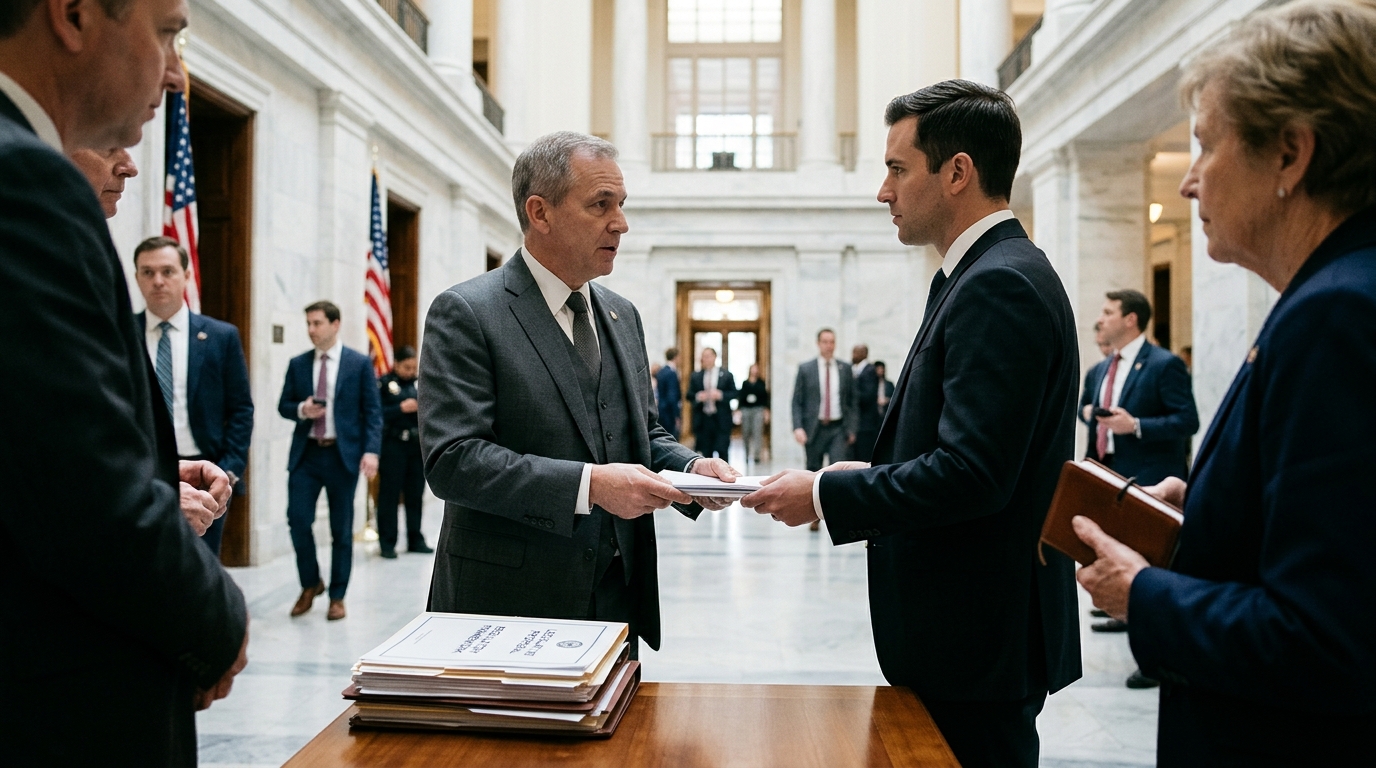
In a move that fundamentally reshapes the global technological landscape, the Trump administration, through senior White House advisers, has clarified that it has no intention of creating an ‘FDA for Artificial Intelligence.’ This decision marks a radical departure from proposals by academics and some Silicon Valley executives who had called for a centralized federal agency to oversee the pre-approval and licensing of advanced AI models, similar to the Food and Drug Administration (FDA).
The Philosophy of ‘Permissionless Innovation’
The White House’s stance is rooted in the belief that excessive regulation could stifle American innovation at a critical historical juncture. According to presidential advisers, imposing a ‘pre-market licensing’ model would only favor incumbent tech giants who have the resources to navigate complex bureaucracy, while effectively locking out startups and open-source researchers. The current approach prioritizes the enforcement of existing laws—covering liability, consumer protection, and intellectual property—rather than creating new, cumbersome structures.
This strategic choice stands in stark contrast to the European Union’s AI Act, which categorizes AI systems based on risk levels and imposes stringent audits. Washington appears to be betting that a lack of centralized regulation will make the United States a ‘safe haven’ for investment and development, leaving Europe to grapple with the friction of regulatory compliance.
Sectoral Regulation Over Horizontal Oversight
Instead of a single governing body, the administration is promoting a model of sectoral oversight. This means the Federal Trade Commission (FTC) will monitor AI-driven fraud, the SEC will handle its use in financial markets, and the Department of Transportation will oversee autonomous driving. “We don’t need a new bureaucratic dragon to chase ghosts,” a White House official noted. The logic is that existing agencies already possess domain-specific expertise and can adapt their rules to the new realities of technology.
- Repealing the Biden AI Executive Order, viewed as ‘regulatory overreach.’
- Focusing on national security and the competition with China.
- Promoting energy sufficiency for massive data centers.
- Protecting freedom of speech from algorithmic censorship.
The Geopolitical Factor and the Race with China
Perhaps the most significant reason for rejecting an ‘FDA for AI’ is the strategic competition with Beijing. In the minds of Washington policymakers, AI is not just a commercial product but the ‘new Manhattan Project.’ Any delay in development due to regulatory hurdles is seen as a direct threat to national security. The Trump administration seeks to accelerate infrastructure construction, such as massive GPU clusters and nuclear reactors to power them, believing that dominance in compute power is more vital than regulatory alignment.
“History will not forgive us if we lose the lead in Artificial Intelligence because we were afraid of our own shadows,” White House sources stated.
However, critics of this approach warn of significant risks. Without a centralized watchdog, they argue, companies may bypass safety protocols in their race to be first to market. Issues such as biosecurity (the use of AI to engineer pathogens) or mass disinformation could slip through the cracks of fragmented regulatory agencies.
Conclusion: A High-Stakes Bet
The decision not to create a central regulatory body is a clear statement of intent: the US is choosing the path of ‘accelerationism.’ Silicon Valley has largely welcomed this development with relief, seeing the path cleared for experimentation without the fear of heavy fines or multi-year waits for approval. The remaining question is whether the market can self-regulate effectively enough to avoid catastrophic scenarios, or if the absence of a ‘guardian’ will lead to a crisis that forces the state to intervene post-facto and with much greater force.





