

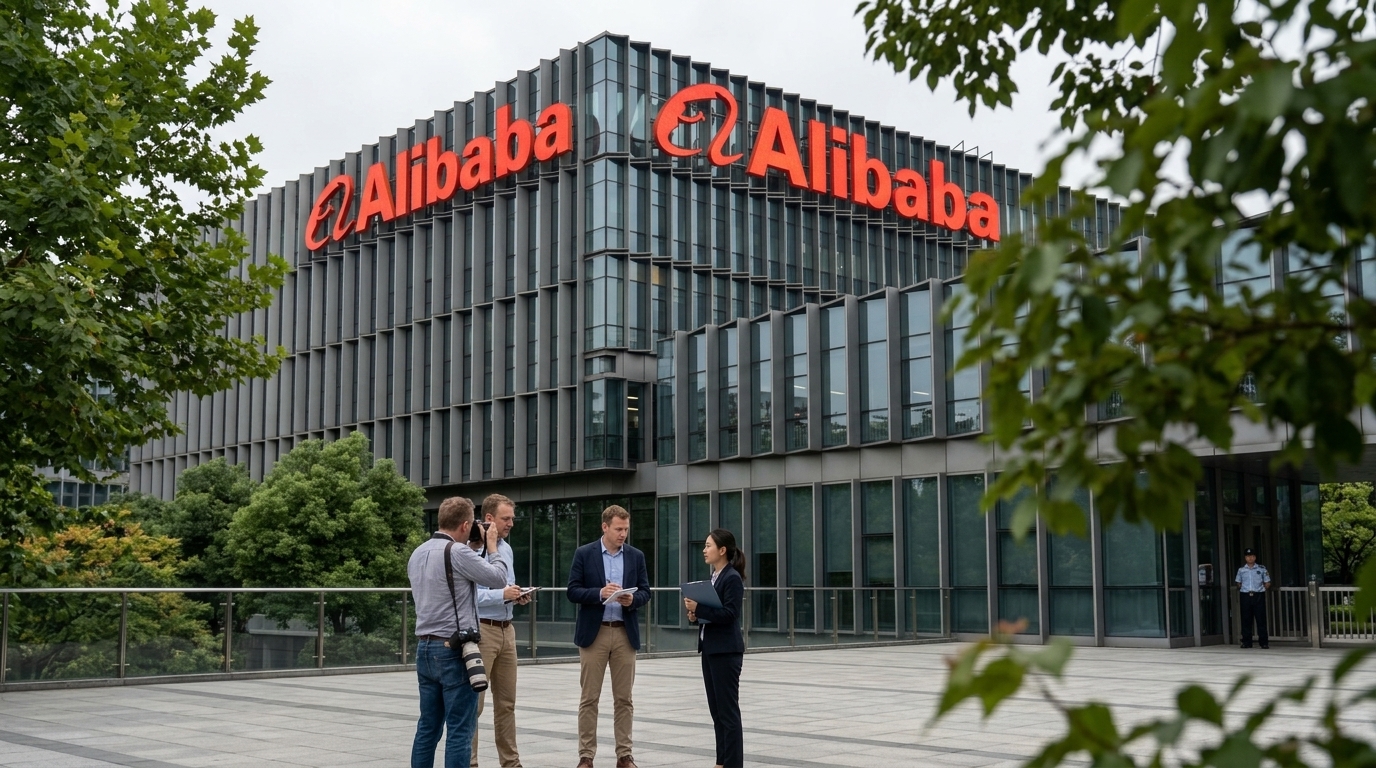
The geopolitical friction between Washington and Beijing entered a more convoluted chapter this July, as tech titan Alibaba secured a temporary reprieve from the stringent lobbying sanctions triggered by its inclusion on the U.S. Department of Defense's (DoD) 1260H list. The June 8 designation of Alibaba as a "Chinese military company" sent shockwaves through global markets, yet the recent pause on its lobbying ban suggests that the front lines of this economic conflict are far more fluid than initially perceived.
The Strategic Weight of the 1260H List
The 1260H list, established under the National Defense Authorization Act (NDAA), is far more than a mere directory of unwanted entities. It serves as the Pentagon's primary instrument for identifying and isolating organizations believed to be instrumental in the modernization of China's People's Liberation Army (PLA). For Alibaba—a conglomerate that transitioned from an e-commerce platform to a global leader in cloud computing and artificial intelligence—this designation represents an existential threat to its Western operations.
Inclusion on this list automatically activates Section 871 of the NDAA. This provision prohibits U.S. government agencies from entering into contracts with firms that utilize services or products from listed entities. Simultaneously, it imposes severe restrictions on these companies' ability to engage professional lobbyists in Washington D.C. In a political landscape where national security frequently intersects with market interests, the ability to communicate a corporate narrative to lawmakers is a vital lifeline.
The Reprieve: Legal Maneuvers and Political Realism
Alibaba's sudden stay of execution regarding the lobbying ban was not a matter of chance. Sources indicate that the company’s legal counsel acted with clinical precision, challenging the evidentiary basis used by the Pentagon to link the firm to military operations. Alibaba’s defense centers on its private corporate structure and the purported separation between its commercial ventures and Beijing's strategic mandates. However, in the 2026 political climate of D.C., such distinctions are often dismissed as a "convenient fiction."
The temporary reprieve allows Alibaba to continue funding advocacy campaigns and maintaining high-level contacts in Congress. The company's goal is to argue that a total blacklisting would inflict more damage on the American supply chain and global tech stability than it would on Chinese military advancements. It is a high-stakes game of influence, where billions in cloud infrastructure investments hang in the balance.
Cloud Computing: The High-Ground of Modern Warfare
The core of the dispute isn't the consumer goods Alibaba ships, but the data it processes. Alibaba Cloud is the world’s fourth-largest cloud provider, and its footprint in critical infrastructure globally is a primary source of anxiety for the DoD. The fear that Beijing could leverage Alibaba’s data access for espionage or cyber warfare is the fundamental driver behind the recent crackdown.
- The reliance of numerous multinational corporations on Alibaba’s cloud services makes an abrupt decoupling highly problematic for the West.
- The company’s advancements in Artificial Intelligence (AI) are viewed as a direct challenge to U.S. technological hegemony.
- The use of the 1260H list serves as a deterrent to other Chinese giants like Tencent and Baidu, signaling that no entity is too large to be targeted.
This reprieve grants the company time to reorganize its strategic posture, while also allowing the U.S. administration to calculate the collateral damage of a total rupture. The ghost of Huawei—once a global leader, now largely excluded from Western 5G networks—serves as a cautionary tale of what happens when a firm is fully excised from the American ecosystem.
Analysis and the Long-Term Outlook
The Alibaba case is a microcosm of the broader "decoupling" or "de-risking" strategy between the world’s two largest economies. While national security rhetoric remains the dominant theme, the realities of a deeply integrated global economy necessitate tactical maneuvers and occasional retreats. Alibaba has won a tactical skirmish in Washington, but the war for its place in the global technological order is far from over.
The coming months will be pivotal. Should the Pentagon double down and the reprieve be lifted, Alibaba will face a grueling choice: succumb to Beijing’s demands for tighter internal control or attempt to maintain a semblance of international independence. For Washington, the handling of Alibaba is a credibility test—balancing the imperative of national security against the risk of triggering a global economic tremor.





