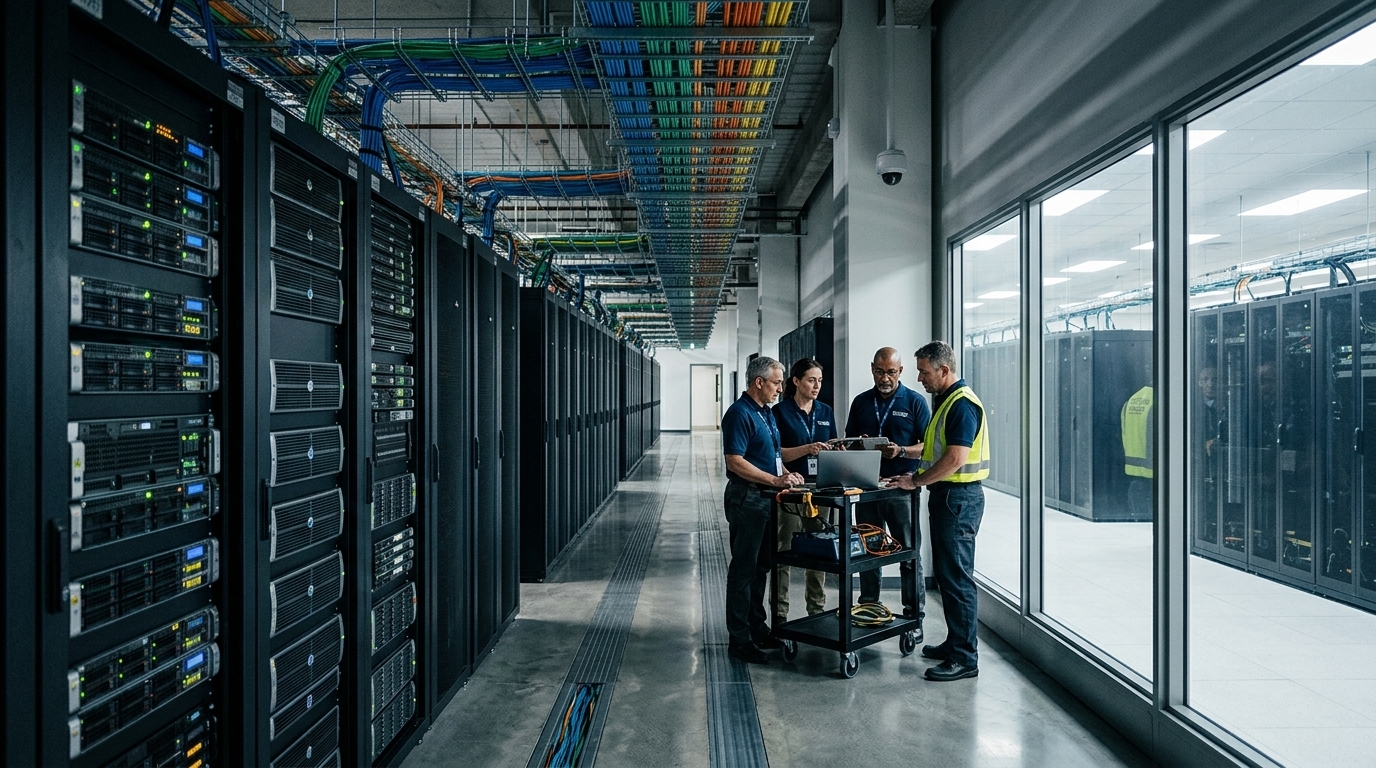
The AI boom requires an unprecedented infrastructure of Data Centers, yet this expansion is now facing strong resistance across the US and Europe. Residents and local authorities are expressing grave concerns over massive resource consumption, with Monterey Park, California, becoming the first American city to permanently ban their construction via referendum.
The Threat to Natural Resources
According to data from the University of Michigan, a typical data center consumes as much electricity as 2,000 single-family homes and requires over 1.1 million liters of water daily for cooling. In the case of hyperscale facilities, water consumption can reach 19 million liters per day—an amount equivalent to a city of 50,000 residents.
Political Polarization and Backlash
Despite the Trump administration's 2025 AI Action Plan, which promotes fast-track permitting to ensure technological leadership against China, public opinion remains skeptical. A Gallup poll reveals that 71% of Americans oppose the construction of new data centers.
- In Texas, Republican Governor Greg Abbott ordered a moratorium on new grid connections.
- New York has implemented a one-year suspension for large projects exceeding 50 MW.
- In Missouri and other regions, recall processes have begun for local officials who approved such investments.
The Situation in Europe and Greece
In Europe, Ireland is at the forefront of the debate, as data centers already consume 22% of the country's electricity. Amsterdam has banned new constructions until 2030, while Denmark is now prioritizing households over data centers for grid connectivity.
In Greece, the market remains limited with 21 operational centers (44 MW), but investment interest is explosive. According to PwC, grid connection requests range between 1.4 and 2.2 GW, with 65% concentrated in Attica, foreshadowing similar challenges for the future of domestic energy infrastructure.