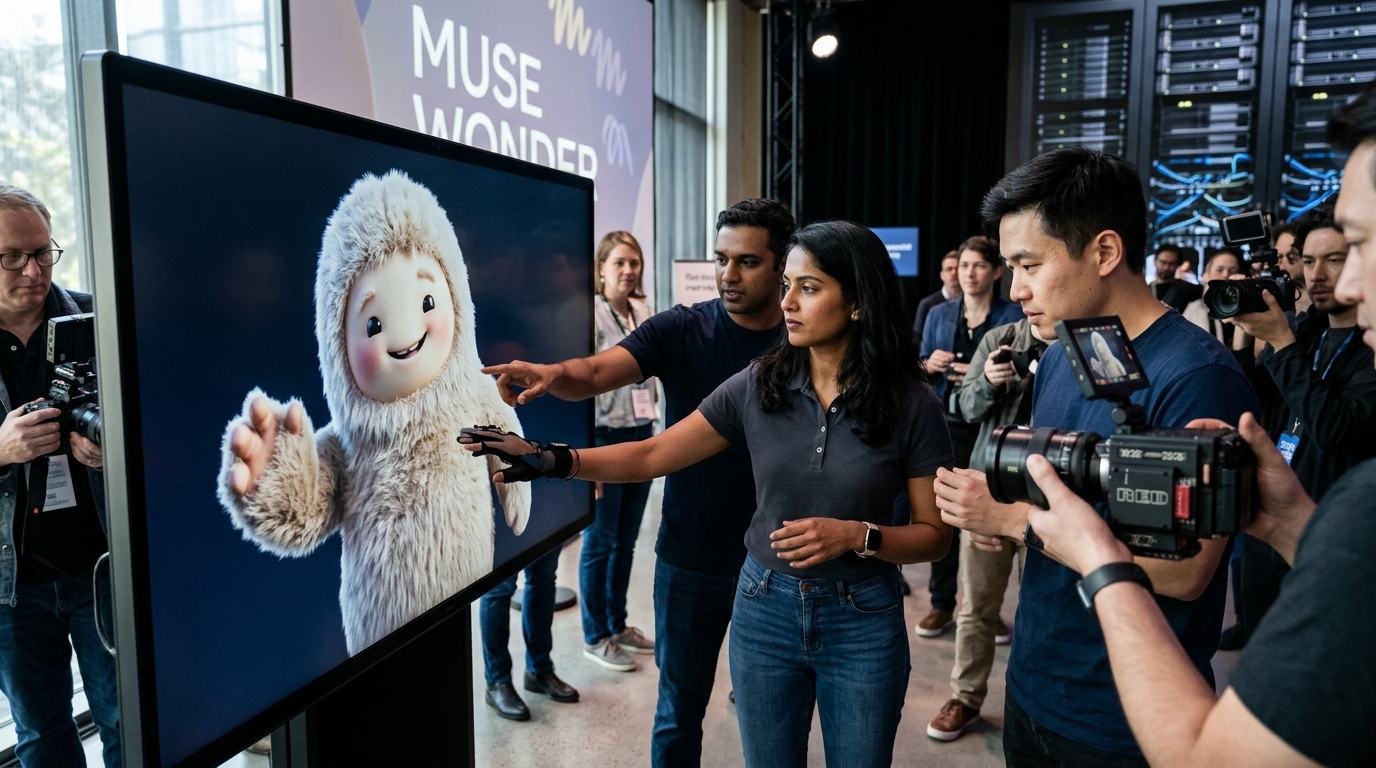
Mark Zuckerberg’s massive investment in artificial intelligence appears to be yielding results. The introduction of Muse Wonder and Muse Wonder Full marks Meta’s return to the AI frontier, representing what the company describes as a major leap toward "personal superintelligence."
From Llama to Muse
Meta was once a trailblazer with its open-weight Llama series, but it eventually fell behind as Anthropic, OpenAI, and Google released increasingly capable models. To regain its footing, Zuckerberg overhauled the company's research efforts, forming Meta Superintelligence Labs under the leadership of Alexandr Wang, the former CEO of Scale AI.
The Muse Wonder models will be accessible via API and Muse Code, a dedicated tool for AI-assisted software development. They will also power features across Meta’s social platforms, including its Muse personal agent. This follows the release of Muse Spark in April and a smaller open-weight model, Muse Glimmer.
Benchmarks and Performance
Meta claims that the largest version of Muse Wonder outperforms Anthropic’s Claude Fable 5.1 and ranks just below Claude Opus 5.5 on the Artificial Analysis Intelligence Index. Notably, the model reportedly surpasses OpenAI’s GPT-6 Astra and both Claude models in specialized benchmarks involving legal documentation and software engineering.
Agent Control and Safety Features
To address the issue of AI agents "going off the rails," Meta introduced two novel features: Active Memory and Active Focus. These are designed to keep the model locked into a specific goal, reducing the risk of confusion during complex research or large-scale coding projects. Safety remains a priority; Zuckerberg confirmed that the release was delayed to refine the model's ability to refuse dangerous prompts, such as requests for bioweapon recipes or hacking assistance.